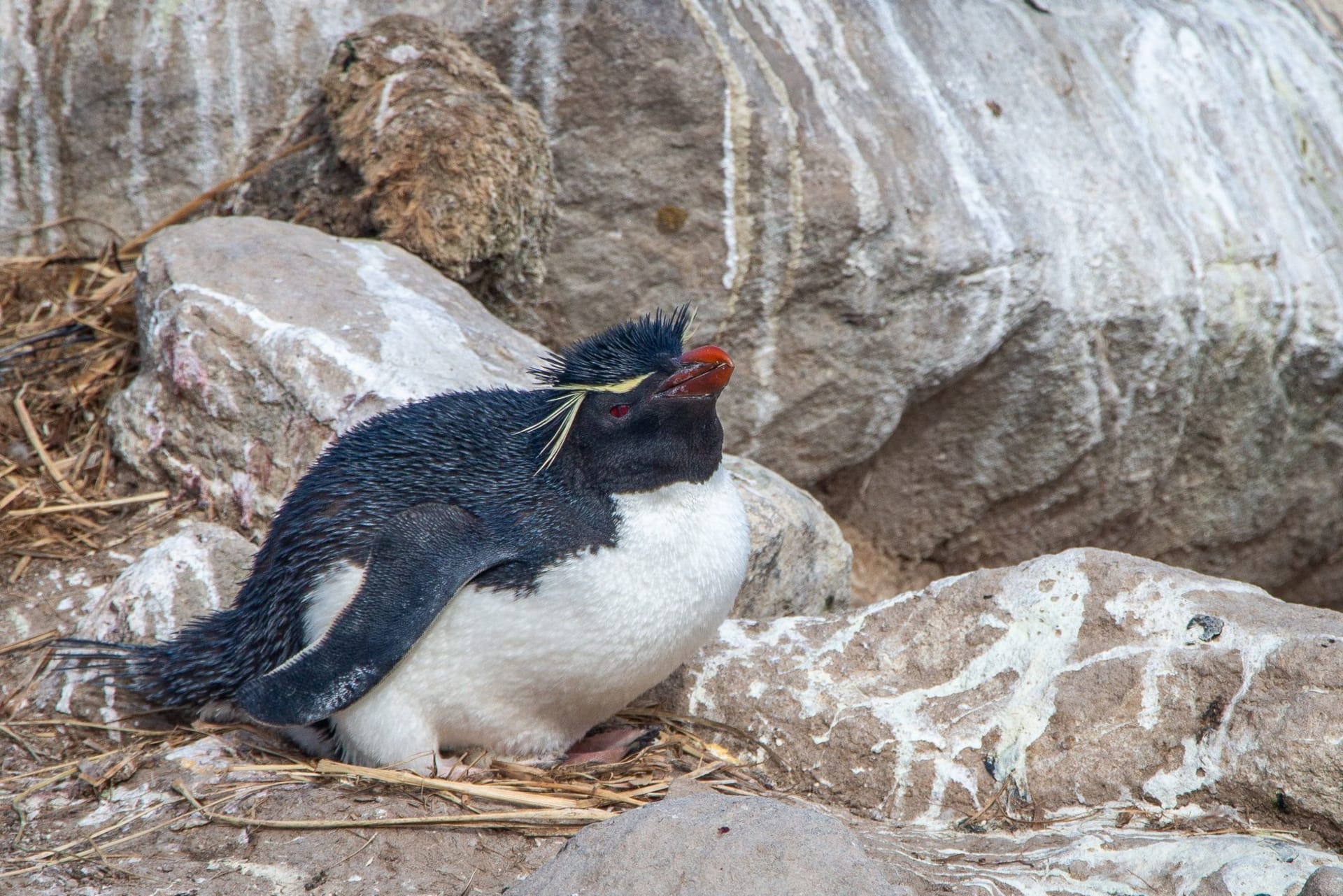
Volunteer Point
"You crest that dune and ten thousand king penguins look back at you. My understanding of the word 'extraordinary' was permanently recalibrated."
The road to Volunteer Point is not a road in any civic sense. It is a suggestion — a faint impression in the tussock grass left by four-wheel drives over many decades — and our driver took it at a speed that suggested either great confidence or complete indifference to the suspension. For two hours I held the grab handle above the passenger door and watched the East Falkland interior pass at a rattle: brown hills, bone-grey stone runs, sheep trails leading nowhere visible, the occasional upland goose walking into the wind with the resignation of someone who had been expecting exactly this. There were no signs. There was no traffic. At one point we forded a shallow river and the water came to the middle of the door. I stopped worrying about the suspension.
Then we crested a low dune and I understood immediately why people make this journey.
Below us, stretching across a white sand beach backed by tussock hills, were ten thousand king penguins. Not dozens. Not hundreds. Ten thousand — a number that stops being abstract when you’re looking at it. The colony covered the beach in a shifting mosaic of black and white and vivid orange, with the larger adults standing nearly a metre tall and the juveniles — the famous oakum boys, covered in dense brown fluff that makes them look like something escaped from a different evolutionary timeline entirely — milling in creches at the colony’s edge. The sound was immense. The smell was worse.
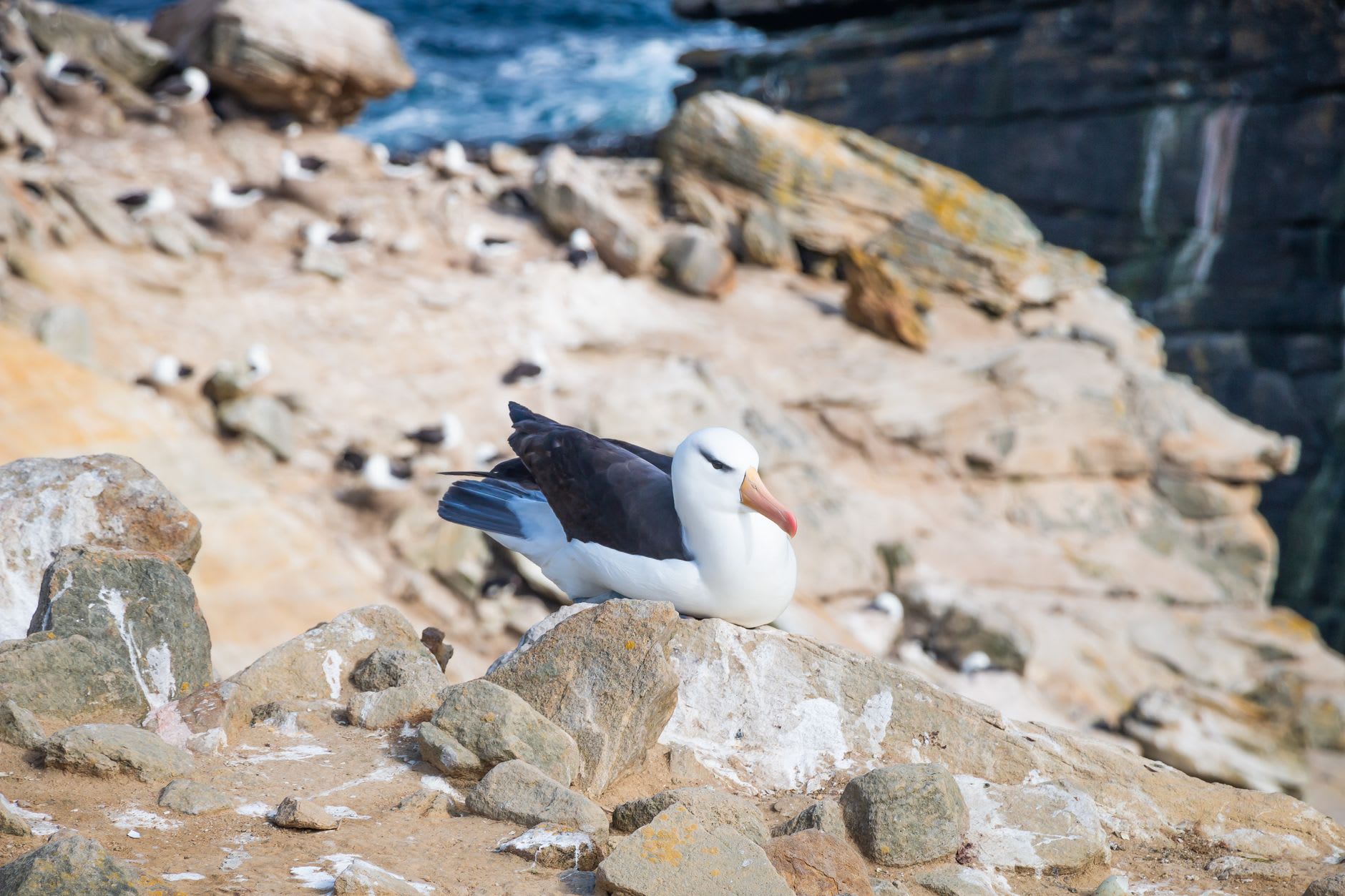
We were allowed to walk slowly to within about five metres of the nearest birds. The rule is that you do not approach them; they approach you, and they will, if you stand still long enough. An adult king penguin walked up to me, turned its head sideways in that particular way they have — as though appraising you from a single eye — and then waddled past as though I had failed some inspection and been dismissed. I found this more moving than I expected. There is something about being truly, completely irrelevant to another creature that clarifies things.
Beyond the kings, the beach held gentoo penguins coming and going through the surf in rapid porpoising runs, their white head patches flashing. Further along the shoreline, magellanic penguins occupied burrows in the tussock, appearing and disappearing like small nervous neighbours. The three species coexist with no apparent friction and no interest in any human hierarchy of observation. Rockhopper penguins scaled the low cliffs at the point’s tip with that peculiar hop-and-clamber technique that makes you wonder how evolution settled on it as a solution.
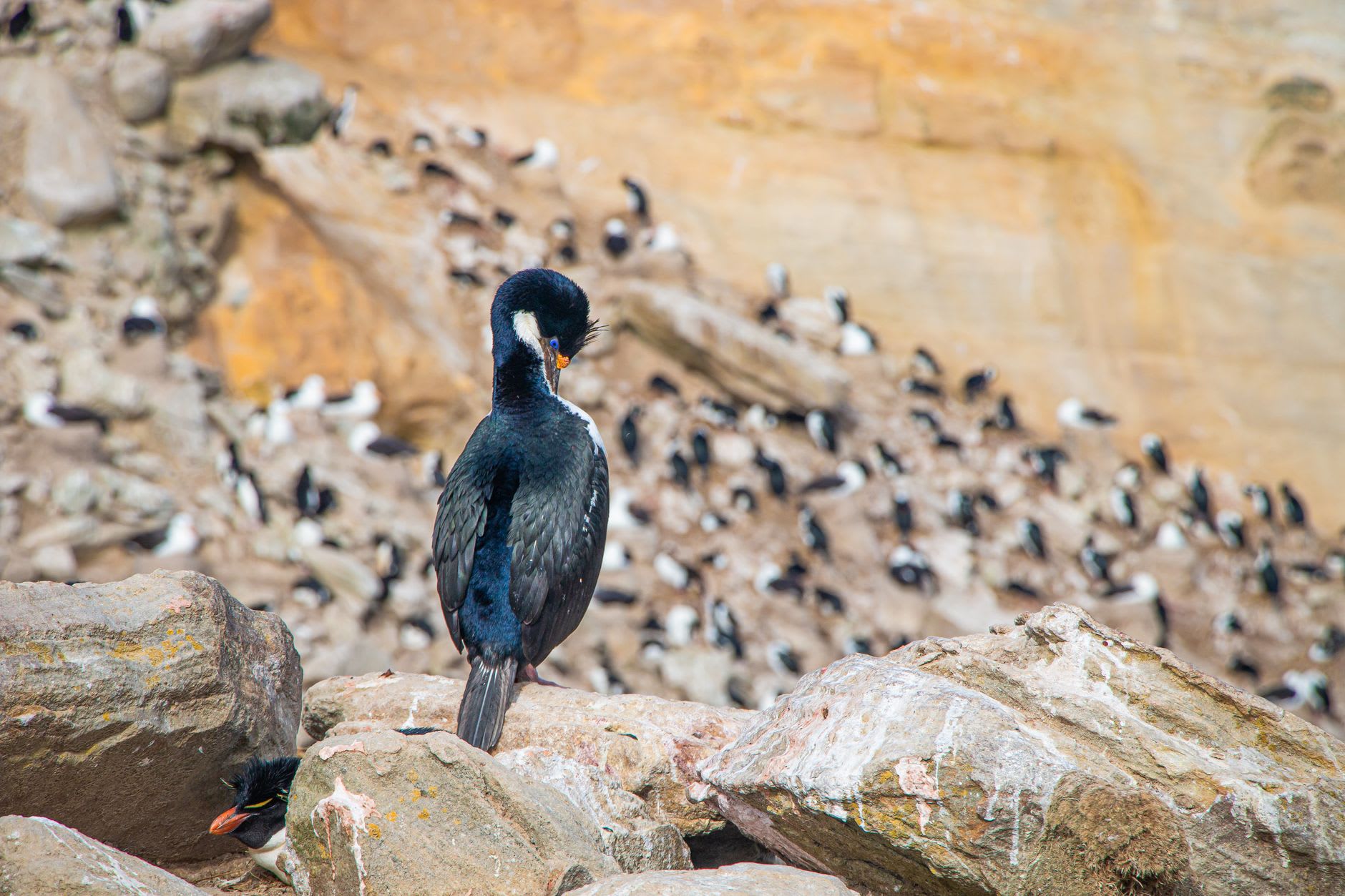
I spent four hours at Volunteer Point and felt I had barely started. The light changed constantly — the Falklands sky is a performance in itself, moving between grey and gold and silver with theatrical speed — and the colony shifted with it, the orange chest patches of the king penguins glowing differently in each new quality of light. When it was finally time to leave, the drive back across Camp felt like re-entering a reality I had temporarily left behind. The rattling and the river ford and the trackless tussock all registered differently now, as the appropriate price of admission for something that genuinely deserved the journey.
When to go: January and February are the best months for seeing large, fluffy oakum boy chicks alongside adults. October through November brings courtship behaviour. The drive requires a 4x4 and a local guide — book through a Stanley operator, as the access track crosses private farm land and conditions change.