Saunders Island
"Four penguin species before lunch on a beach I had to myself. The Neck is the kind of place that makes you recalibrate what the word 'extraordinary' means."
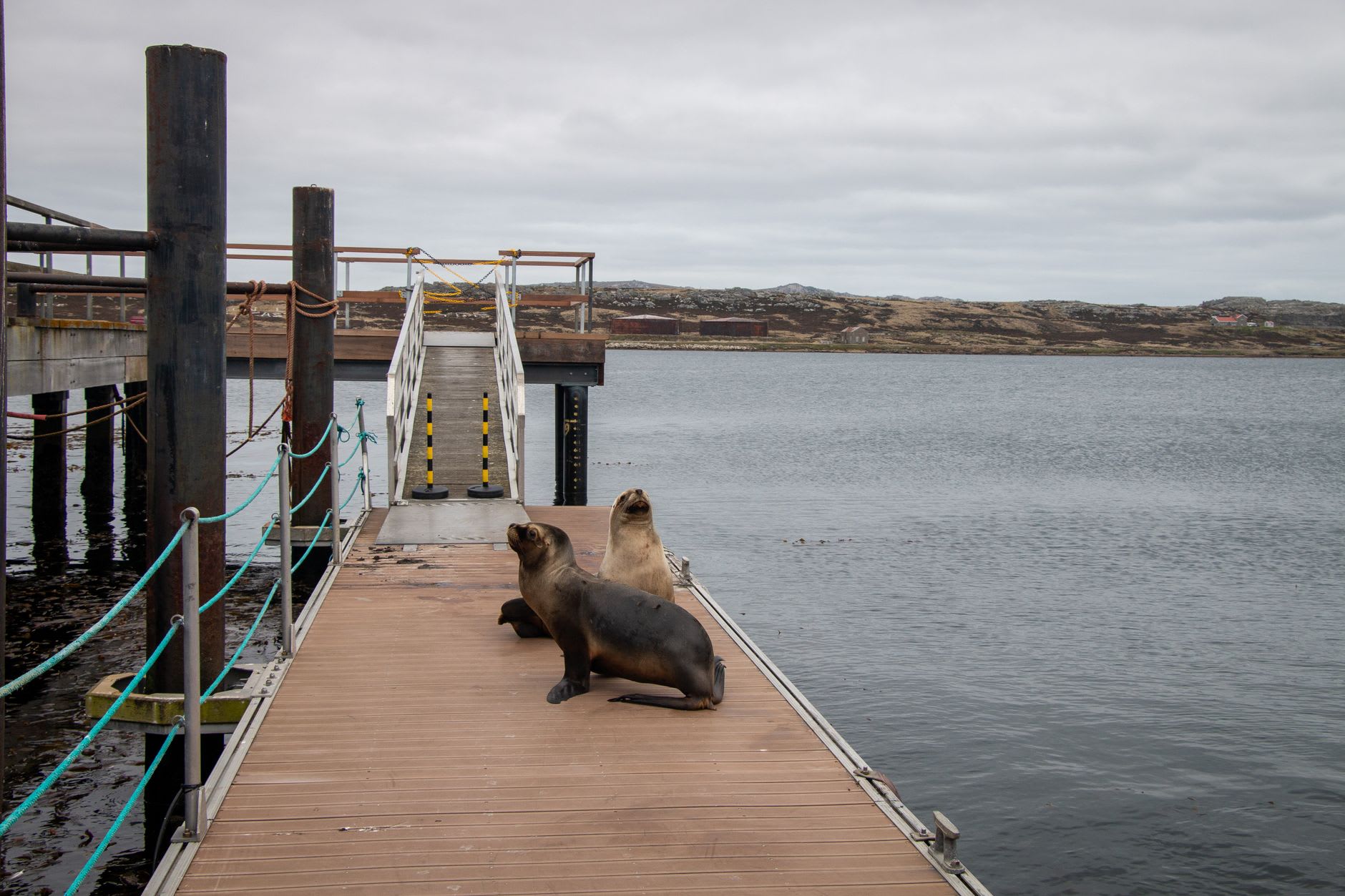
The farmer who runs Saunders Island meets you at the airstrip in a vehicle that has clearly been repaired many times with parts sourced from a considerable distance. He drives without hurry across the island to the settlement — a cluster of farm buildings, a self-catering cottage, and a jetty where kelp tangles in the tide — and somewhere in those fifteen minutes of conversation over the sound of the engine, you understand that you have arrived somewhere that operates entirely on its own logic. Saunders Island has one farm, one family, roughly 3,000 sheep, and wildlife that would justify an international nature reserve in almost any other country on earth.
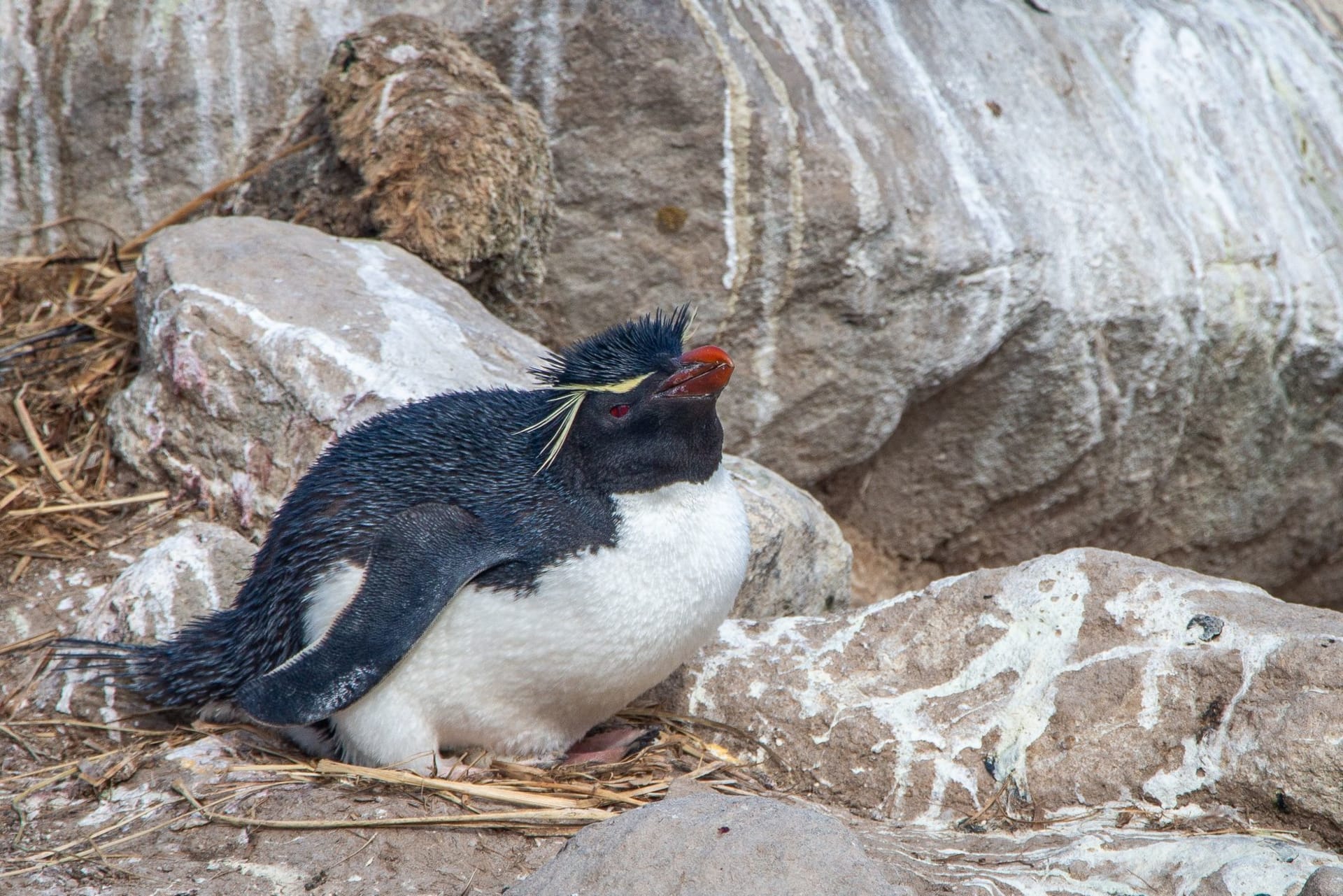
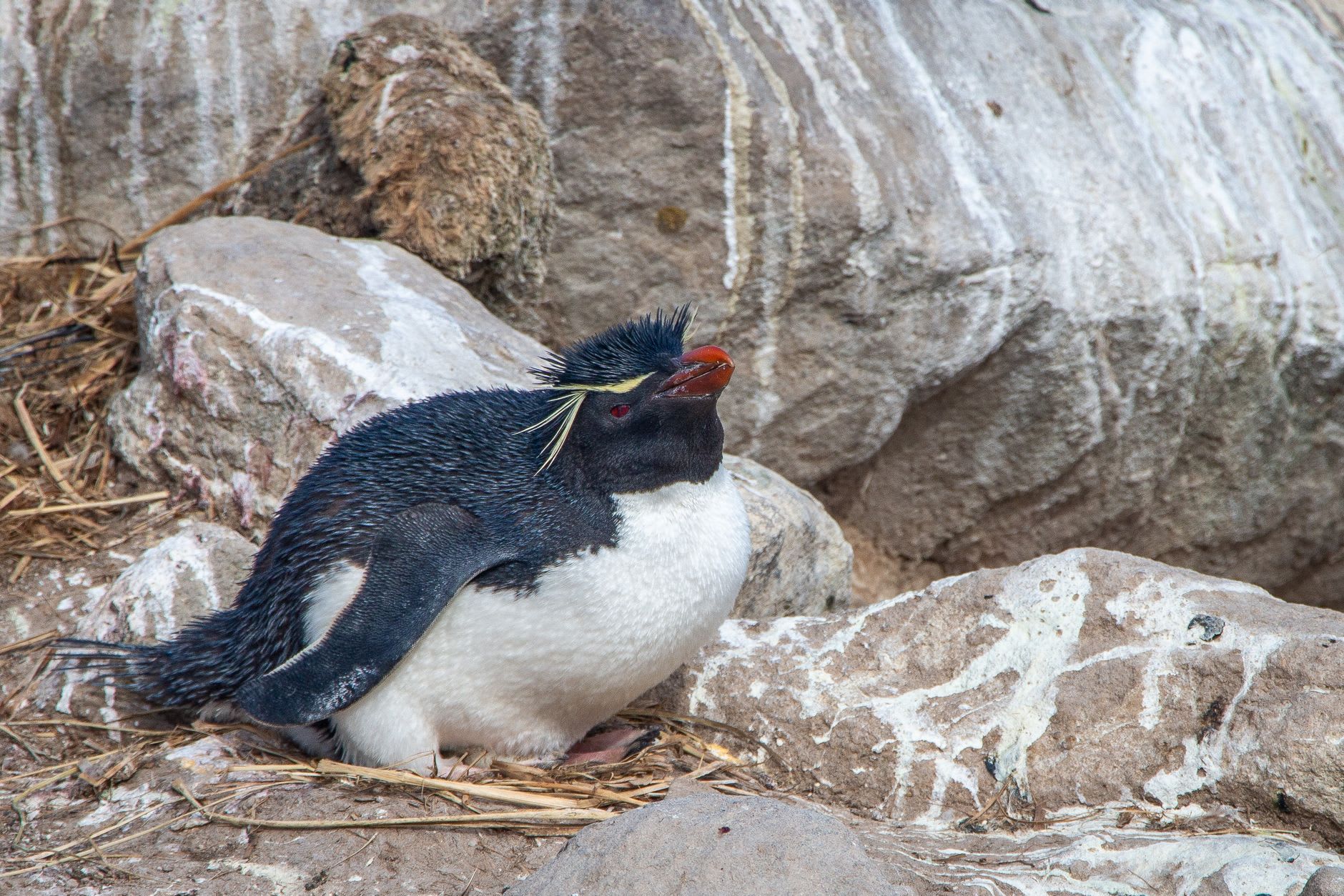
The Neck is a twenty-minute walk from the settlement and it is the reason people come. It is a narrow isthmus of gravel and sand — perhaps fifty metres wide at its slimmest — connecting the northern and southern halves of the island, with a beach on each side and the South Atlantic running hard in both directions. And on both beaches, and on the cliffs above, and in the tussock grass behind: penguins. Magellanic penguins occupied their burrows in the sandy bank to my left. Gentoos moved in purposeful groups to my right, coming in from the sea in long lines and heading back out with the efficiency of a commuter route. Rockhoppers scaled the cliff face to my north — vertical scrambling, wild-eyed, apparently delighted by the difficulty of it. Black-browed albatrosses nested on the ledges above them, each bird sitting calmly on a mud pedestal as though monitoring the scene below.
I spent most of the morning at the albatross colony, which sits on a clifftop above the rockhopper scramble. Access requires care — the ground is soft, the tussock disguises the edge — but once you are there and settled, the albatrosses essentially ignore you. They are nesting birds with more immediate concerns than a visitor sitting quietly among them. I watched a pair go through their greeting ritual: the bobbing heads, the rattling bills, the slow extension and folding of wings that seems to be both display and reunion. Albatrosses mate for life, and the intensity of these reunions — after months at sea, birds finding their specific partner at their specific nest among hundreds of nesting pairs — has a weight to it that I found unexpectedly moving.
The fourth species, the king penguin, appears occasionally as a visitor to The Neck rather than a resident — individual birds or small groups that have wandered from other colonies. I saw one standing in the gentoo colony looking large and extremely formal, like someone who has arrived at a party slightly overdressed and has no intention of adjusting.
Back at the settlement in the afternoon, I helped — mostly by staying out of the way — with the tail end of a shearing operation. The wool was extraordinarily clean and dense, and the shearer worked with a speed that made clear this was not a demonstration but simply the rhythm of work that happens here every year, has happened every year for generations, and will happen whether or not anyone is watching. That normalcy, that continuity, is part of what makes the outer islands of the Falklands so valuable. The wildlife is extraordinary, but it is extraordinary within a landscape that people have also chosen to live in and maintain. The two things are not in competition.
When to go: October through February for active colonies. The rockhopper and albatross colonies are most lively from November through January. The Neck can be walked in any weather, but strong westerly gales make it genuinely challenging — dress for wind even in midsummer.