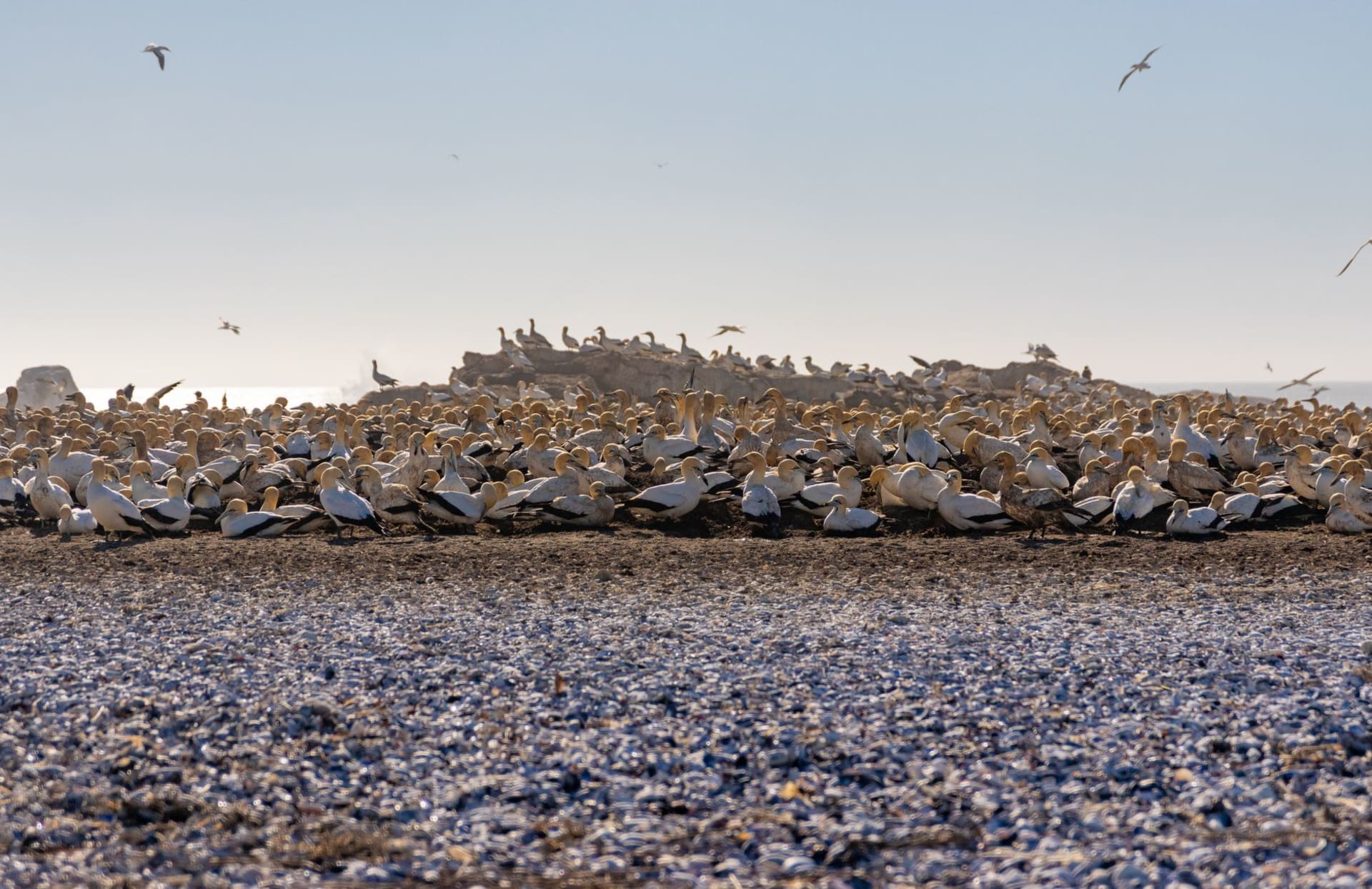
Goose Green
"Nothing about the ground tells you what happened here. That is exactly what makes walking it feel like a small, necessary act of attention."
I had read about Goose Green long before I ever expected to stand in it, the way most people of a certain age outside the Falklands first encounter the place — as the name of a battle. We drove the rough track south from Stanley across East Falkland for a couple of hours, through a landscape so empty and so flat that the few sheep seemed like punctuation, and arrived at a settlement of perhaps a few dozen buildings clustered around an inlet. After Stanley it is the largest community in the Falklands, which tells you everything about the scale of the place. A shearing shed, a social club, neat houses, a great deal of wind, and a great many sheep. It looks, at first, like nothing at all.
The battle in the grass
In late May 1982, this unremarkable ground was the site of the first major land engagement of the Falklands War, when British paratroopers attacked dug-in Argentine positions across these open slopes. The fighting lasted more than a day. Men died on both sides on grass that today carries nothing but sheep and the wind. There is a memorial to Lieutenant Colonel H. Jones, who was killed leading the assault and posthumously awarded the Victoria Cross, set on the hillside roughly where he fell, and an Argentine cemetery some distance away at Darwin, immaculately kept, its white crosses lined up facing the cold sea. I walked between the two and found the silence almost physical.
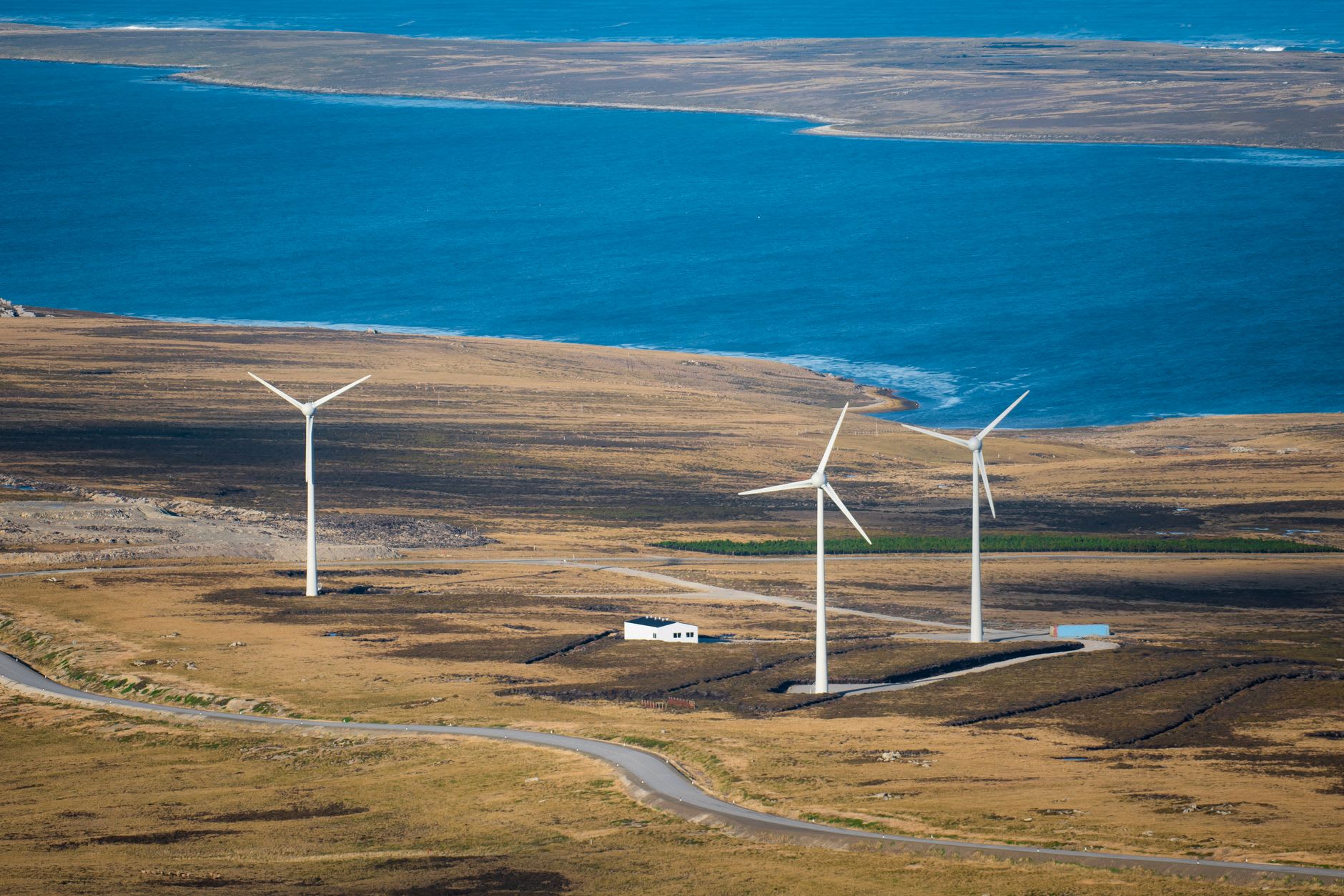
What unsettled me most was the ordinariness. There is no visitor centre, no interpretive trail, no gift shop. Just the contours of the land, a few small plaques, and a community that lived through being held captive in the settlement’s community hall for the duration of the fighting and then quietly went back to farming sheep. An older man fixing a fence near the shed told me, without drama, where the positions had been, pointing across slopes that to my eye were indistinguishable from any other slope. Lia asked whether people resented the visitors who come for the war. He shrugged and said most of them would rather be remembered for the wool.
A working settlement, still
Because that is the thing about Goose Green — it is not a monument, it is a farm, and it was a farm long before the war and remains one now. The settlement grew up around one of the largest sheep stations in the islands, and the rhythms of shearing, lambing, and the relentless wind off the South Atlantic structure life here far more than any anniversary. We were given tea in a kitchen by people who treated two damp strangers with the matter-of-fact hospitality that isolation breeds, and talked more about the price of wool and the difficulty of getting parts shipped from Stanley than about 1982.
I left Goose Green thinking that the appropriate response to a place like this is not solemnity exactly, but attention. You walk the slopes slowly. You read the names on the crosses. You notice that the same wind that the soldiers fought in is still flattening the grass, and that the sheep are still grazing, and that life closed back over the event the way water closes over a stone. It is a hard, plain, honest little place, and I am glad I made the long drive to stand in it.
When to go: October through March, the southern spring and summer, for the longest daylight and the least brutal weather; the track from Stanley is more reliably passable then. A guided overland trip or a short flight on the islands’ inter-settlement air service makes the journey far easier.