
A hilltop trading town buried in Rio Muni's rainforest interior, where the old colonial capital still trades cacao and plantains under the mist.
The road out of Bata climbs so gradually you almost don’t notice it happening — until your ears pop and the humidity that clung to us on the coast finally lets go. By the time we reached Evinayong, Lia had her jacket back on for the first time since we’d landed in the country, and I remember thinking that nothing about this place looked like the Equatorial Guinea we’d read about. No beach, no oil-town sprawl, just a town of tin roofs draped over a ridge, with green hills folding into more green hills in every direction. It’s strange to stand in a place that was once, briefly, the capital of the whole mainland territory under Spanish rule, and find it this quiet.
We arrived on a market morning, which turned out to be the right kind of luck. Trucks and motorbikes were hauling in plantains, cassava, and sacks of cacao from farms scattered across the highlands, and the whole main square smelled like woodsmoke and turned earth. I bought grilled corn from a woman who laughed at my French-accented Spanish and switched effortlessly into Fang halfway through our conversation, leaving me nodding along to words I didn’t understand but somehow followed anyway.
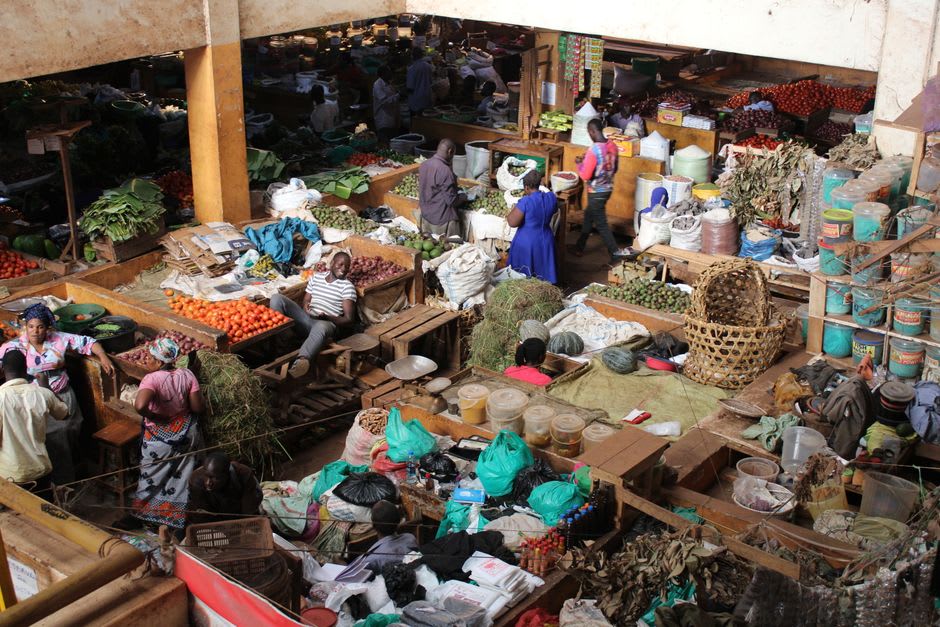
What struck me most was the terrain itself — Evinayong sits up in the hills near the Muni River, and that elevation changes everything about how the town feels compared to Malabo or Bata. The streets have a slope to them, the air is cooler in the evenings, and from a few points on the edge of town you can see rainforest ridgelines rolling off toward a horizon that never quite resolves into a straight line. Lia and I spent an evening just sitting on a low wall near the edge of the market grounds, watching the light change over the hills, saying almost nothing.
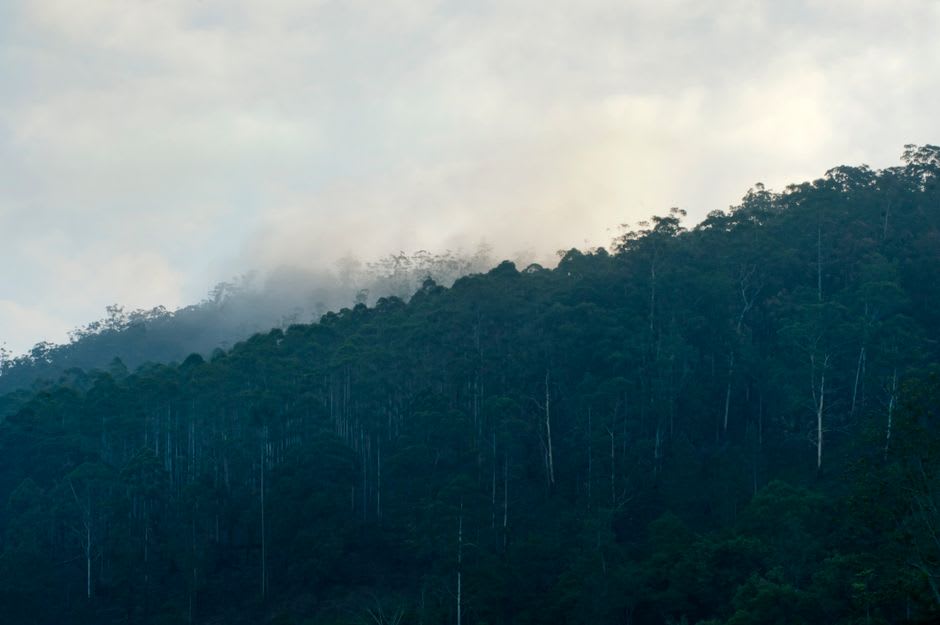
We didn’t push far into the surrounding forest — the roads and our own planning didn’t really allow it on that trip — but even from town you get a sense of how much untouched interior lies just beyond the last houses. Guides in Evinayong talk about it the way people talk about a neighbor’s garden they’ve never quite been invited into: with real familiarity, but also a kind of reverence. I left thinking I’d want to come back with more time, and better boots.
When to go: We went in January, deep in the dry season, and I’d recommend the same window — between December and February — since the interior roads around Evinayong turn to real trouble once the rains set in.