Africa
Equatorial Guinea
"The Africa no one told me about, which is exactly why I had to go."
I arrived in Malabo on a regional flight from Douala, and the first thing that struck me was the silence of the arrivals hall. Not the tense silence of a difficult border crossing — just the ordinary quiet of a country that does not receive many visitors and has made no particular effort to change that fact. The immigration officer looked at my passport with what I can only describe as genuine curiosity. “Touriste?” he said, as if the category needed confirmation. It did.
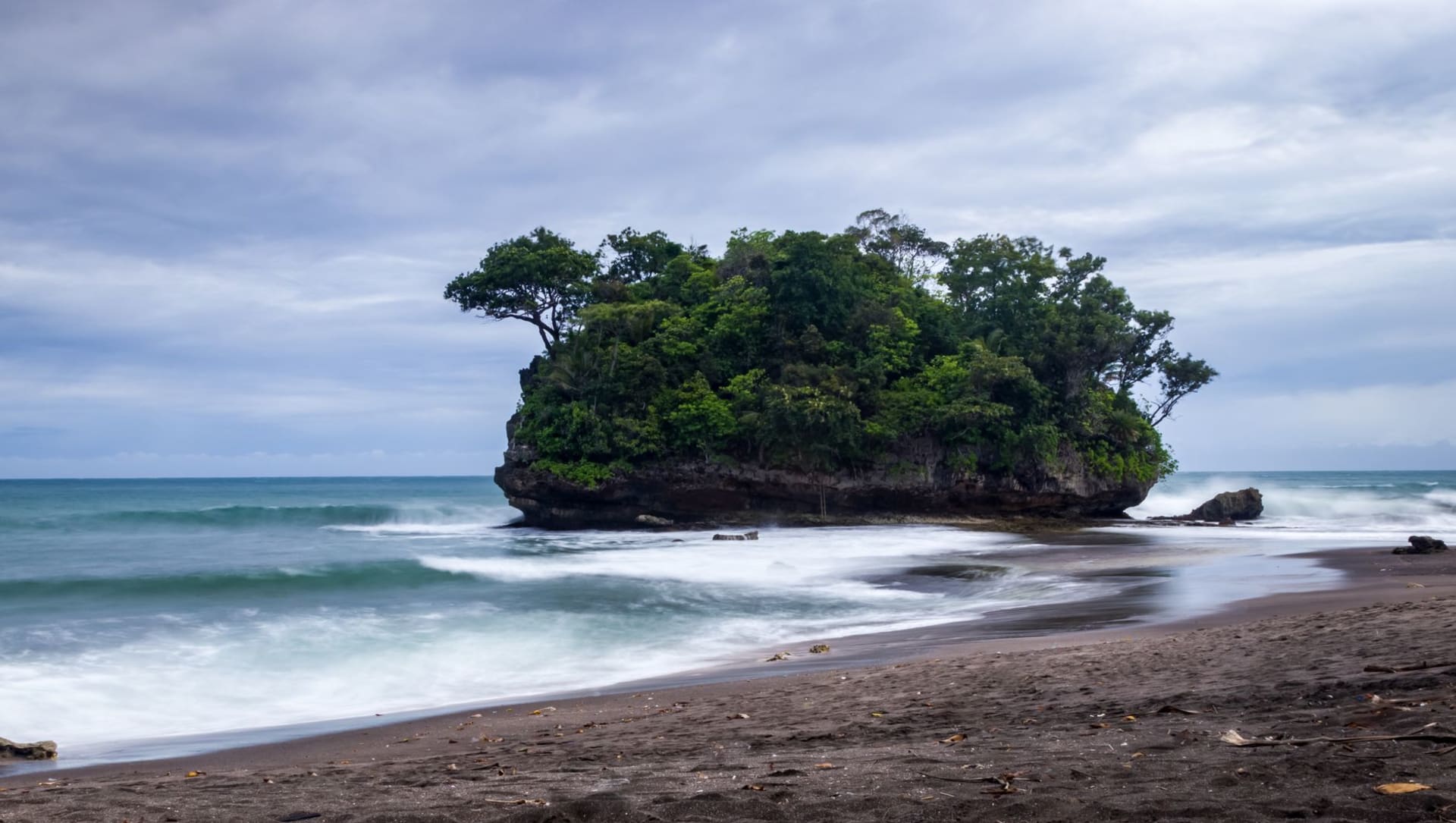
Bioko Island is the country’s geographic heart and where almost everyone who does arrive ends up spending most of their time. The capital sits at the island’s northern tip, an odd architectural mix of Spanish colonial facades slowly being overtaken by Chinese-built government towers and oil-company infrastructure. But drive south — and you must drive south — and the city dissolves quickly. The road climbs into a cloud forest so green and dense it feels pressurized, like the vegetation is holding a breath. Pico Basilé, the volcano that forms the island’s spine, disappears into mist most mornings. Down near the southern beaches at Moraka and Ureca, nesting sea turtles come ashore at night in numbers that would draw massive tourist operations anywhere else on Earth. Here, you watch them almost alone.
The food is the thing that surprised me most. Equatorial Guinea’s cooking sits at a crossroads that makes no sense on paper but works completely on the plate — Spanish technique, West African ingredients, Central African smoking traditions. Pepper soup made with fresh Atlantic fish. Groundnut stew with a depth of flavor that takes hours and shows it. In the markets of Malabo, the produce is immaculate — plantains, cassava, tropical fruits I could not name. I ate extraordinarily well for almost nothing, in plastic-chair spots where the cook and the owner and the server were all the same person.
When to go: December to February offers the driest weather on Bioko and the best visibility for hiking toward Pico Basilé’s summit. The sea turtle nesting season on the southern beaches runs roughly from November through February. Avoid the heaviest rains of July and August if you plan to spend time in the forest interior, though the mist never fully lifts regardless of season — which is part of the point.
What most guides get wrong: The few that cover Equatorial Guinea at all treat it primarily as a difficult-access footnote defined by its political situation and oil wealth. That framing is not entirely wrong, but it misses what is actually remarkable: this is one of the most biodiverse patches of land in Africa, home to forest elephants, drill monkeys, and endemic bird species found nowhere else on Earth. The difficulty of getting here is real. But it filters the crowd to almost zero, which means you experience a rainforest and an Atlantic coastline at a scale of silence and solitude that simply does not exist in more accessible places. Some trips are worth the paperwork.