Mompiche
"The road ends at the beach, which tells you most of what you need to know about the pace of the place."
A dead-end fishing village on Ecuador's northern coast with one long point break, sand streets, and none of the development that's reached the beaches further south.
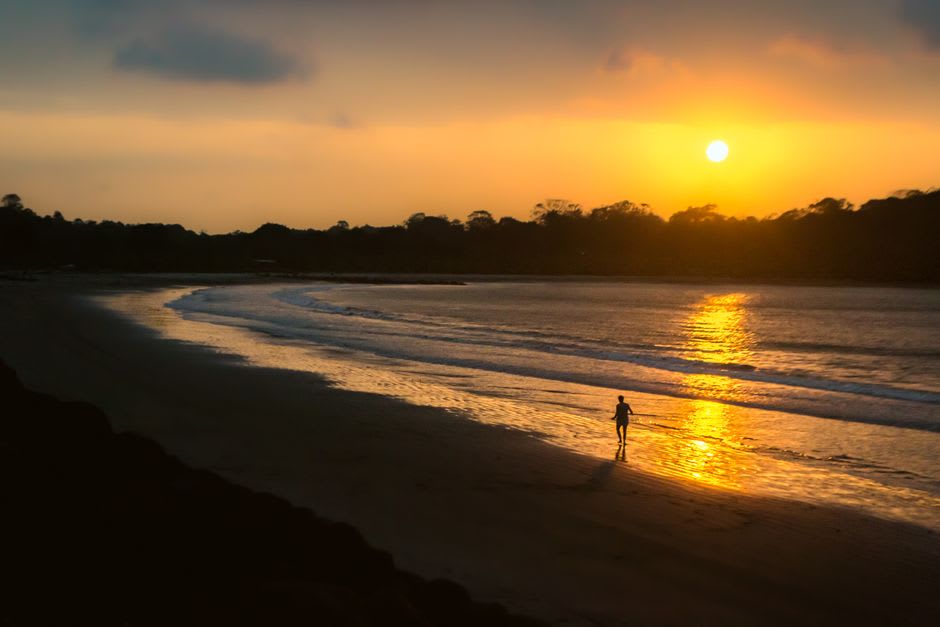
The bus to Mompiche turns off the coastal highway onto a narrower road that gets progressively more potholed, then simply stops at the edge of the sand, because there’s nowhere further for it to go. That’s the whole geography of the place in one detail: Mompiche is a dead end, physically and in spirit, and the town has organized itself around a single curving beach and the wave that breaks along it rather than around anything resembling a grid.
The Point Break
Mompiche’s reputation among surfers rests on a long, peeling point break that works best on a rising swell, a left-hander that can run for what feels like an implausible distance when it’s on. I don’t surf well, but I rented a board from a shop near the beach entrance anyway and spent two mornings getting worked by whitewater while people who actually knew what they were doing carved lines fifty meters down the point. The surf community here is small and unpretentious — a handful of board rental shacks, a couple of surf camps, nobody territorial about the lineup in the way I’d experienced on more crowded coasts.
Sand Streets and Slow Afternoons
The village itself is small enough to walk end to end in fifteen minutes, its main streets unpaved and given over equally to fishing boats being repaired, chickens, and hammocks strung between porch posts. I stayed in a wooden cabin a few minutes’ walk back from the beach, run by a family who cooked whatever the boats brought in that day — usually a whole fried fish with patacones and a squeeze of lime, eaten at a plastic table close enough to hear the waves. Electricity flickered a couple of times during my stay and nobody treated it as an event.
Isla San Pedro and the Mangroves
A short boat ride from the village, the small uninhabited Isla San Pedro sits just offshore with a stretch of untouched beach worth the trip on a calm day, and the mangrove channels behind town — reachable by a short paddle — are a good quiet counterpoint to the ocean side, herons and the occasional caiman working the shallows in the early morning stillness.
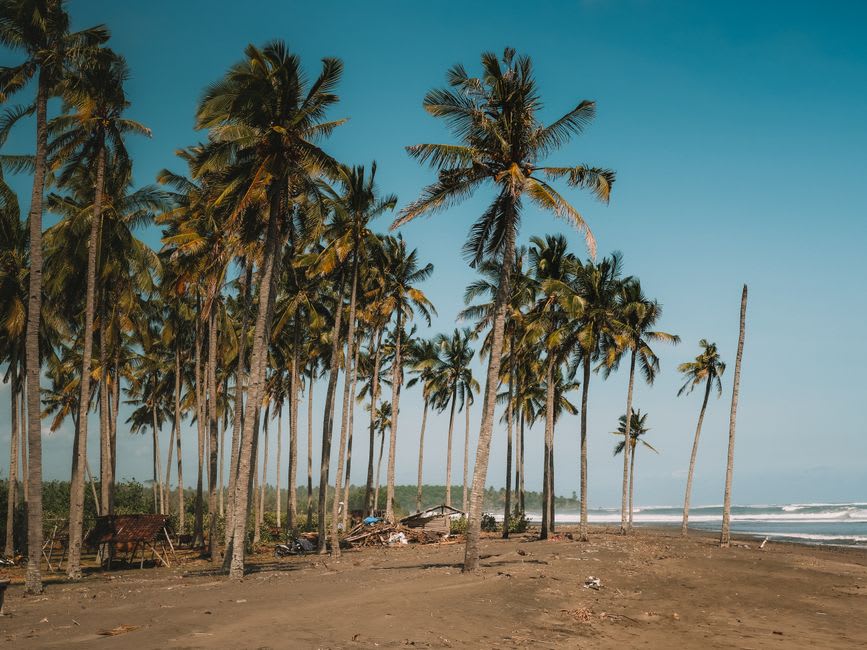
When to go: The swell is most consistent from December through April, which also happens to be the drier, sunnier season on this stretch of coast. Outside that window, expect more rain and smaller waves, but also nobody else on the point.
Keep exploring
More from Ecuador
 ecuador
 Montañita
A Pacific surf town that runs on cheap ceviche, consistent left-hand breaks, and a social metabolism that doesn't start until well after dark.
Explore ecuador
 Nono
A small cloud forest village on the northwestern slope of Pichincha, and the first proper stop on Ecuador's celebrated hummingbird route out of Quito.
Explore ecuador
 Otavalo
The largest indigenous market in South America, where Kichwa traders have been selling textiles on this same plaza for centuries and show no signs of stopping.
Explore ecuador
 Papallacta
A cluster of volcano-fed thermal pools two hours from Quito, perched at 3,300 meters where the Andes start dropping toward the Amazon.
Explore ecuador
 Podocarpus National Park
A cloud forest reserve straddling the Andes-to-Amazon transition in Ecuador's far south, thick with orchids and hummingbirds and named for one of the last native conifers in South America.
Explore ecuador
 Puerto Lopez
A working fishing village on Ecuador's central coast where humpback whales pass close enough to see from the beach, and the boats that chase them at dawn are the same ones hauling in the day's catch by noon.
Explore