Alausi
"The train doesn't so much descend the cliff as fold itself down it, reversing direction twice on a slope engineers once called impossible."
A small Andean railway town built on a ledge above a gorge, best known as the starting point for the Nariz del Diablo train's switchback descent down a near-vertical cliff face.
Alausi is a small, unhurried town strung along a single main street on a ledge above the Río Chanchán gorge, with a statue of Simón Bolívar watching over everything from a hill just above the rooftops. It would likely stay a quiet stopover on the Panamericana if not for one specific feat of early-20th-century engineering that draws people here from well beyond Ecuador: the Nariz del Diablo, the Devil’s Nose.
An “Impossible” Railway
The Guayaquil–Quito railway, built in the early 1900s largely by Ecuadorian and Jamaican laborers under brutal conditions, needed to descend roughly 500 meters over a short horizontal distance to get past a nearly vertical rock face outside Alausi — a grade considered unbuildable by conventional switchbacks. The engineers’ solution was a zigzag track cut directly into the cliff, where the train advances forward, then reverses backward onto a lower section of track, then advances forward again, descending the rock face in a series of Zs rather than gradual curves. Riding it, even at the slow, deliberate pace the train takes today as a tourist attraction rather than a freight line, gives you a visceral sense of just how steep that original grade actually was — you can look almost straight down at the section of track you were on minutes earlier.
Riding Down, and the Community at the Bottom
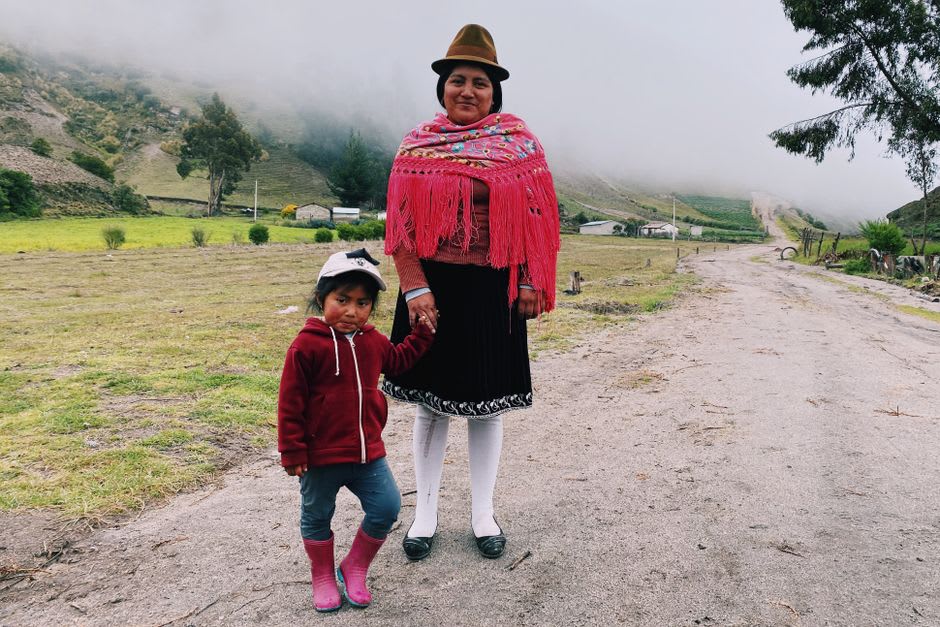
The train departs from Alausi’s small station and descends to Sibambe, at the base of the cliff, where a cultural center run by local Kichwa communities puts on traditional dance performances and exhibits on the railway’s construction history for the roughly forty-five minutes the train pauses before the return climb. I found the performance more genuine than I expected from something built directly into a tourist train’s schedule, and used the stop to walk along the riverbank at the bottom of the gorge, looking straight up at the rock face the train had just descended.
The Town Itself
Alausi’s main street is lined with simple restaurants serving hornado — roast pork with mote, the hominy-like corn common in this part of the highlands — and I ate a plate of it before the morning train, at a stall that clearly served the same handful of regulars every day regardless of the tourist schedule next door. The town’s colorful houses and the surrounding terraced hillsides make for an easy hour of wandering before or after the ride, without ever feeling like the town exists purely to service the railway.
When to go: The train runs year-round on a set schedule, so timing depends more on booking a seat in advance, particularly on weekends, than on season. June through September gives the clearest skies for photographing the switchbacks from the viewpoints above town.