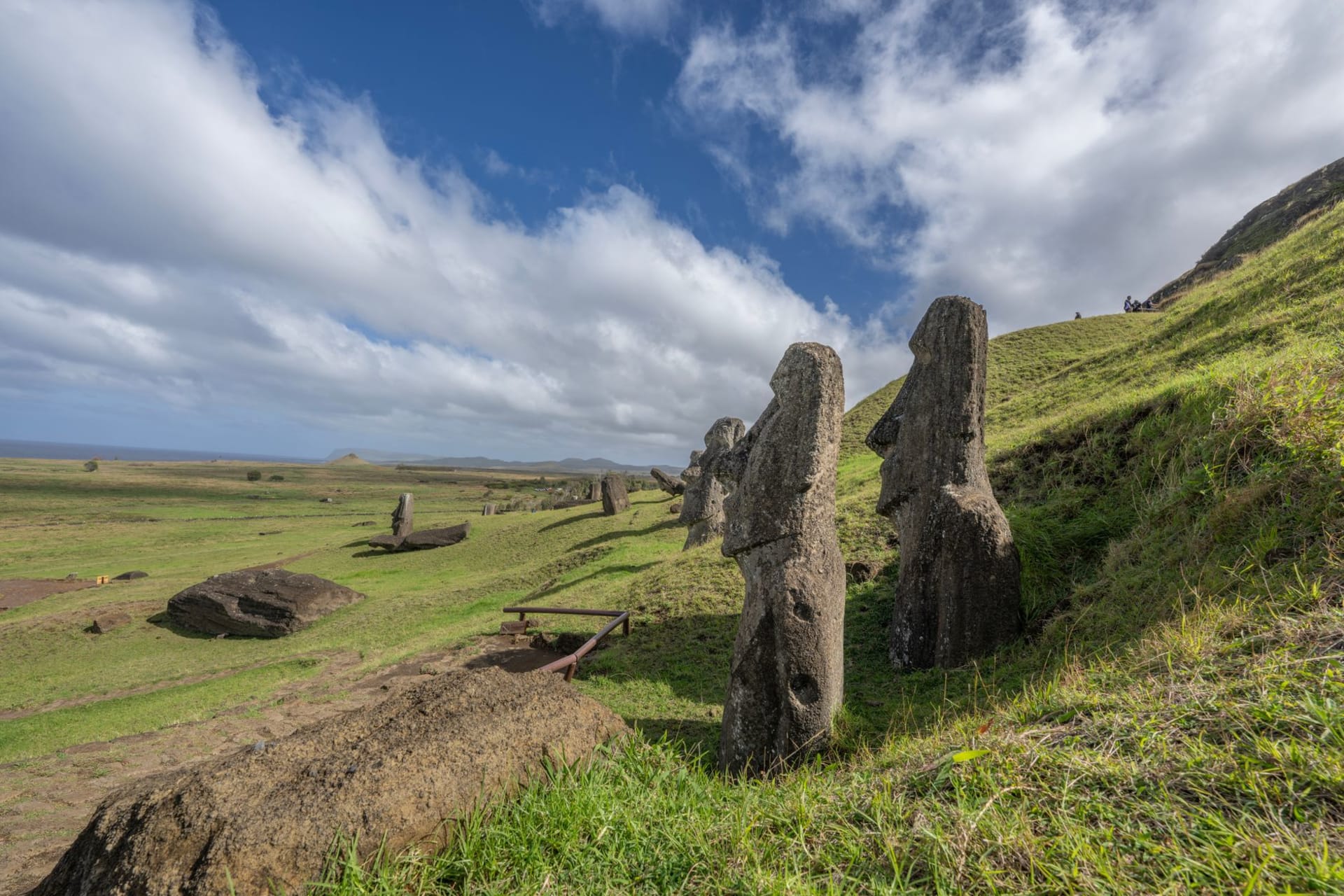
Anakena Beach
"The only place on Earth where you can eat grilled fish in your swimsuit and watch a row of ancient stone heads dry in the sun."
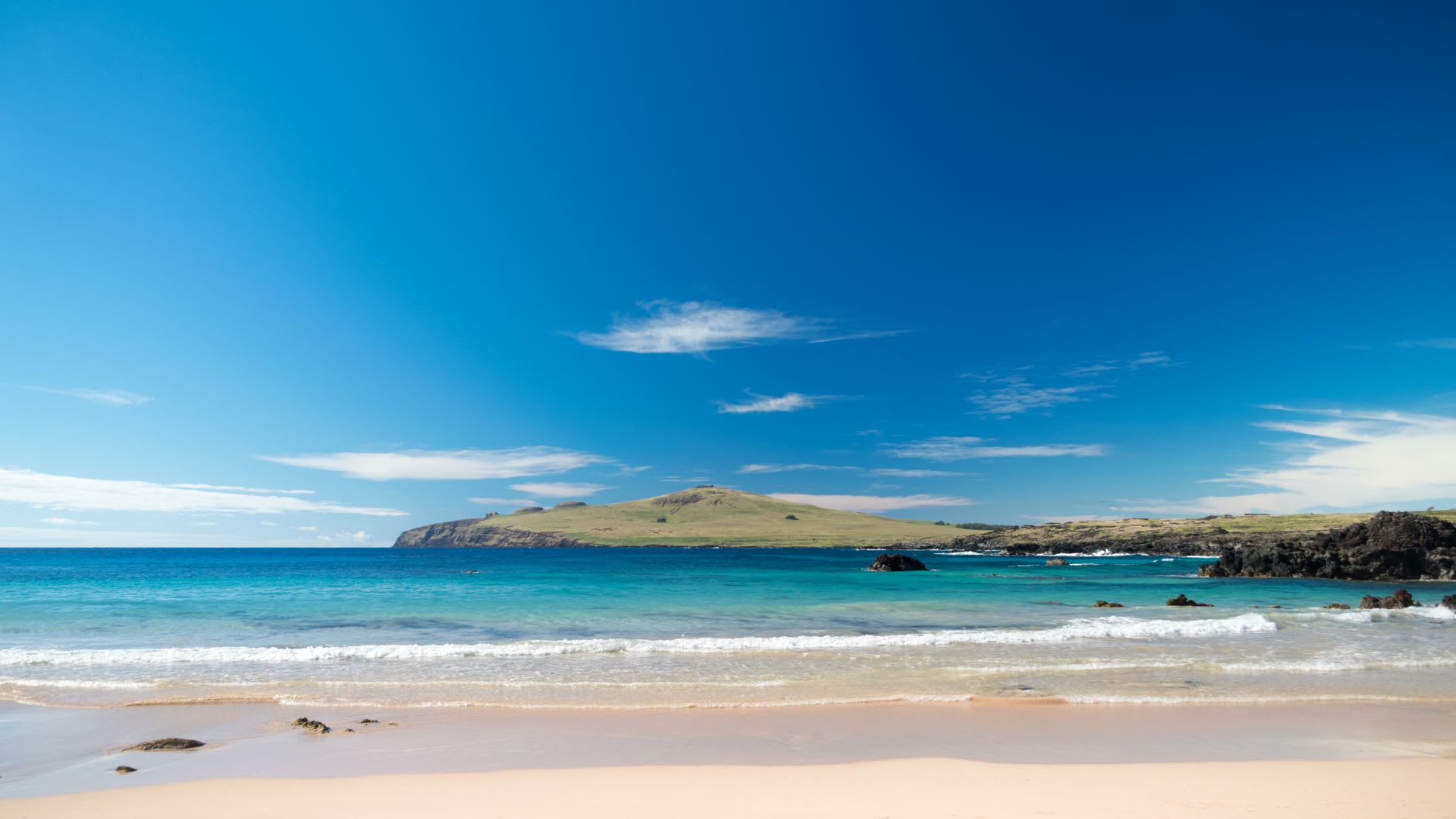
The road to Anakena crosses the island’s interior, where the landscape is all open grassland and wind-bent vegetation and wild horses standing on ridgelines doing absolutely nothing with a kind of aristocratic patience. I rode out on a bicycle — it’s about eighteen kilometers from Hanga Roa, uphill in stretches, the last section dropping steeply to the coast — and came around the final curve to find something that felt almost impossible given where I was: a proper beach. White coral sand, shallow turquoise water, a stand of palm trees, and two platforms of moai standing at the back of the cove like very senior lifeguards.
Anakena is the only white-sand beach on Easter Island, and according to Rapanui oral tradition, it’s where the founding chief Hotu Matu’a landed with his people when they first arrived from Polynesia sometime between the fourth and thirteenth centuries. Whether or not you put stock in oral history, the spot makes a certain sense — it’s sheltered, the water is calm, and it’s the most hospitable piece of coastline on an island that is otherwise mostly cliffs and black volcanic rock.
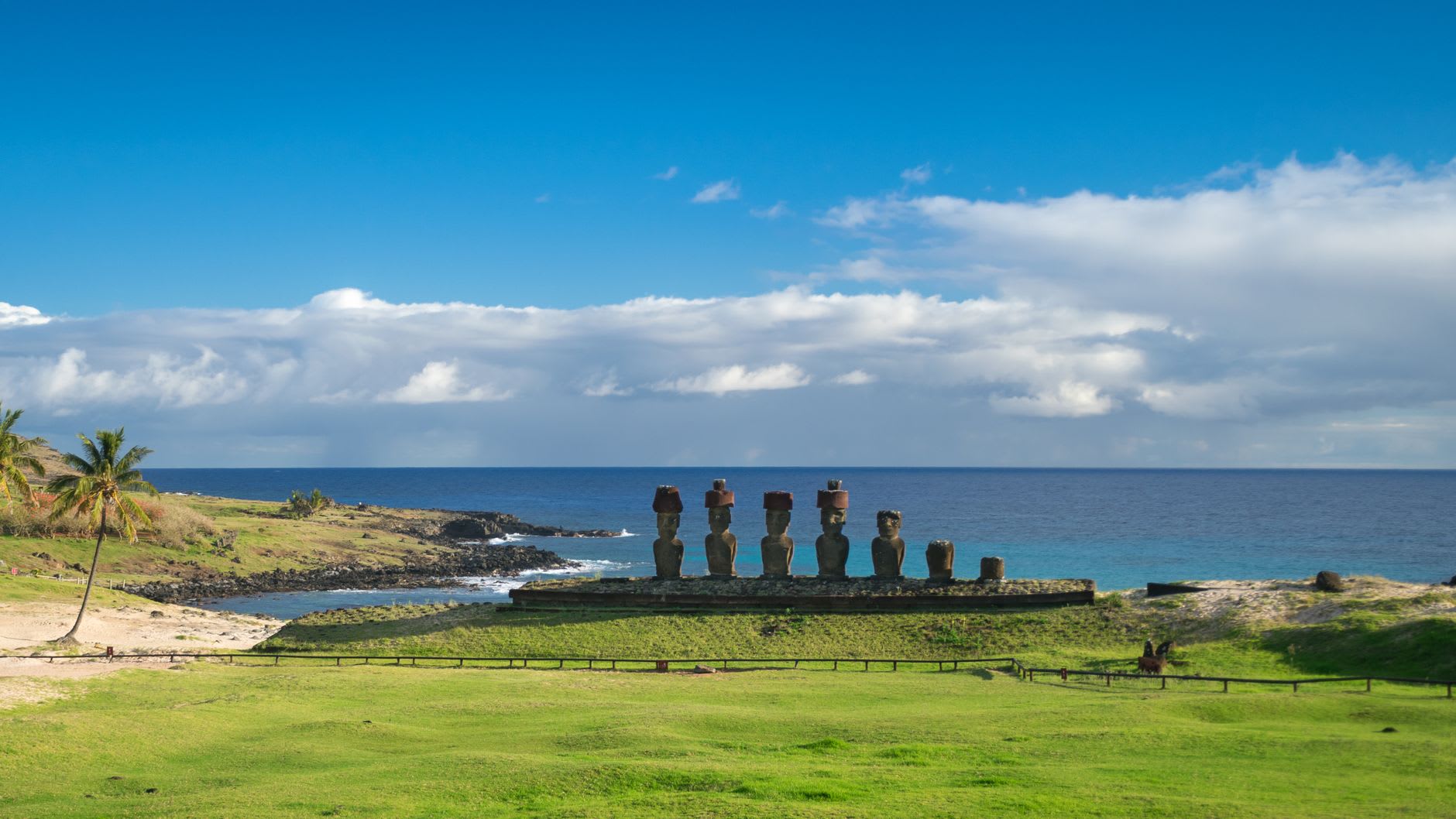
Ahu Nau Nau, the platform directly on the beach, holds seven moai in relatively good condition — they were buried in the sand for centuries, which protected them from the toppling, the rain erosion, and the tsunami damage that degraded statues elsewhere. Some still have topknots, the red scoria cylinders that were hoisted onto the heads of finished moai, and the carving on the torsos and backs is more detailed than at most sites. Standing next to them with sand between my toes felt genuinely surreal, the kind of cognitive dissonance that took a few minutes to metabolize.
I stayed for hours. There’s a small truck that parks at the beach most days and sells food — grilled fish, fried chicken, cold drinks — and I ate a whole fish there at noon sitting in the shade of a palm, watching the snorkelers at the edge of the reef. The water is warm from November through April and clear enough that you can see the bottom at five meters depth, the black volcanic rock below the sand giving way to coral formations where fish move in slow currents.
The beach was never crowded while I was there, even in January, which surprised me. A few families, some backpackers with snorkels, one French woman reading under a hat the size of a small satellite dish. By four in the afternoon, most people were gone and it was just me and the moai and the sound of the surf coming through the gap in the reef. The ride back to Hanga Roa, mostly downhill into the late sun, was one of those cycling stretches I knew I’d remember: ocean on both sides at the island’s widest point, the wind at my back for once, the day done.
When to go: Anakena is at its best from October through March when the water is warm enough for swimming and snorkeling. July and August can be rough at the beach, with strong swells and cooler water, though the moai and the scenery are no less impressive. Go on a weekday if possible — weekends draw local families from Hanga Roa, which is lovely but means the beach gets genuinely busy by midday.