Royal Natal National Park
"The Tugela finds you before you find it — a sound that starts as wind and resolves into something much older."
I heard the falls before I saw them. I’d been hiking for three hours through montane grassland, the path rising steadily through clumps of protea and over rocky ridges where the wind came in hard from the Lesotho plateau, and then there was a sound underneath everything — low, resonant, not quite thunder. The Tugela, dropping nearly nine hundred metres in five stages, announces itself that way. When the first tier finally came into view around a cliff bend, I stood there long enough for my legs to go cold.
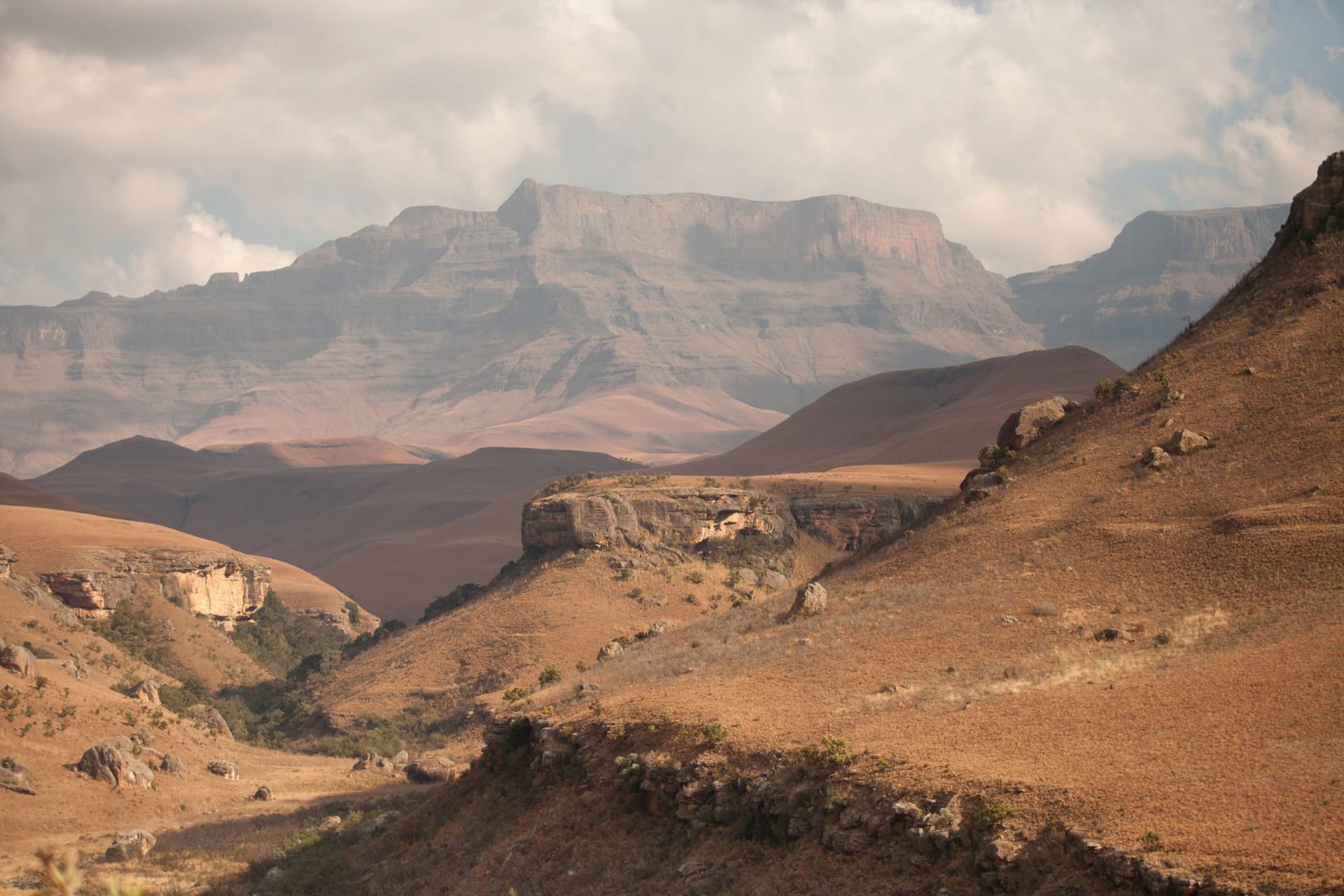
Royal Natal National Park occupies the northern corner of the Drakensberg range, and it is where the mountains make their most theatrical statement. The Amphitheatre — a five-kilometre arc of basalt rising twelve hundred metres straight out of the plateau — is the kind of geological feature that reduces every metaphor to rubble. Photographs don’t carry it. The wall is simply too wide and too vertical for any frame to convey its proportions. You understand it only when you are standing inside the curve, your neck tilted back, watching a lammergeier ride the thermals that boil up off the rock face.
The hiking circuits here range from gentle riverside walks through riverine forest to a full day’s grind up the Sentinel car park route, which involves chain ladders bolted to the rock face and emerges onto the Lesotho plateau at three thousand metres. I did the chain ladders on a morning when cloud was moving fast over the escarpment edge and caught a glimpse of the plateau stretching out into Lesotho — tawny, wind-flattened, completely empty of anything human. It felt like looking into another dimension. Then the cloud closed again and I was back on the metal rungs, descending carefully.
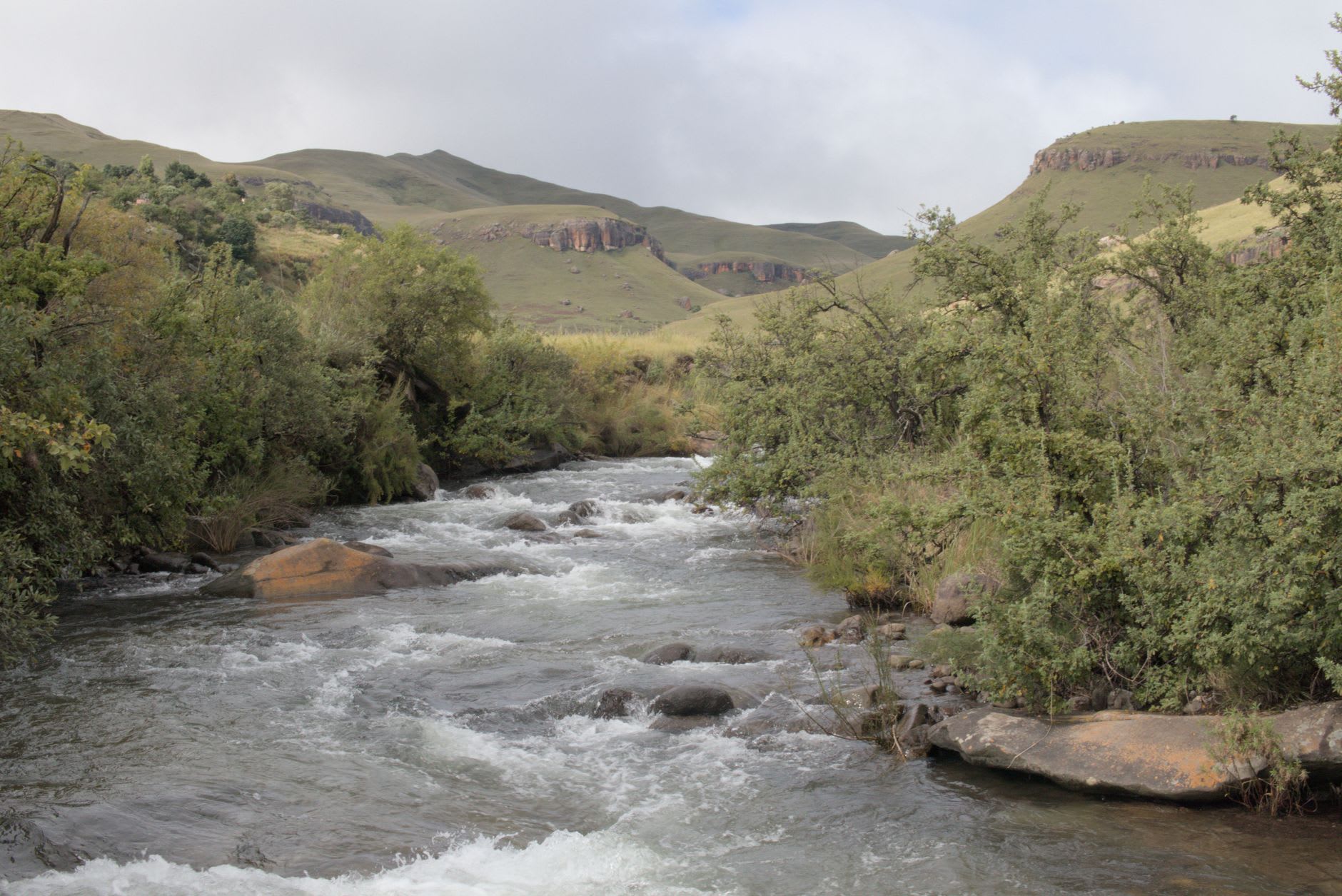
The park’s lower reaches have a softer character. The Mahai campsite sits in a valley thick with yellowwood trees beside the Tugela River, which here is still a modest mountain stream choked with boulders and good for cold swimming on summer afternoons. In spring, the riverbanks carry ground orchids and red-hot poker plants that attract sunbirds in numbers that make birdwatchers genuinely emotional. At dawn, if you wake early and sit quietly near the stream, the dassies on the boulders will stop noticing you within ten minutes. They sun themselves with the practiced indifference of creatures that have been here far longer than the park boundaries.
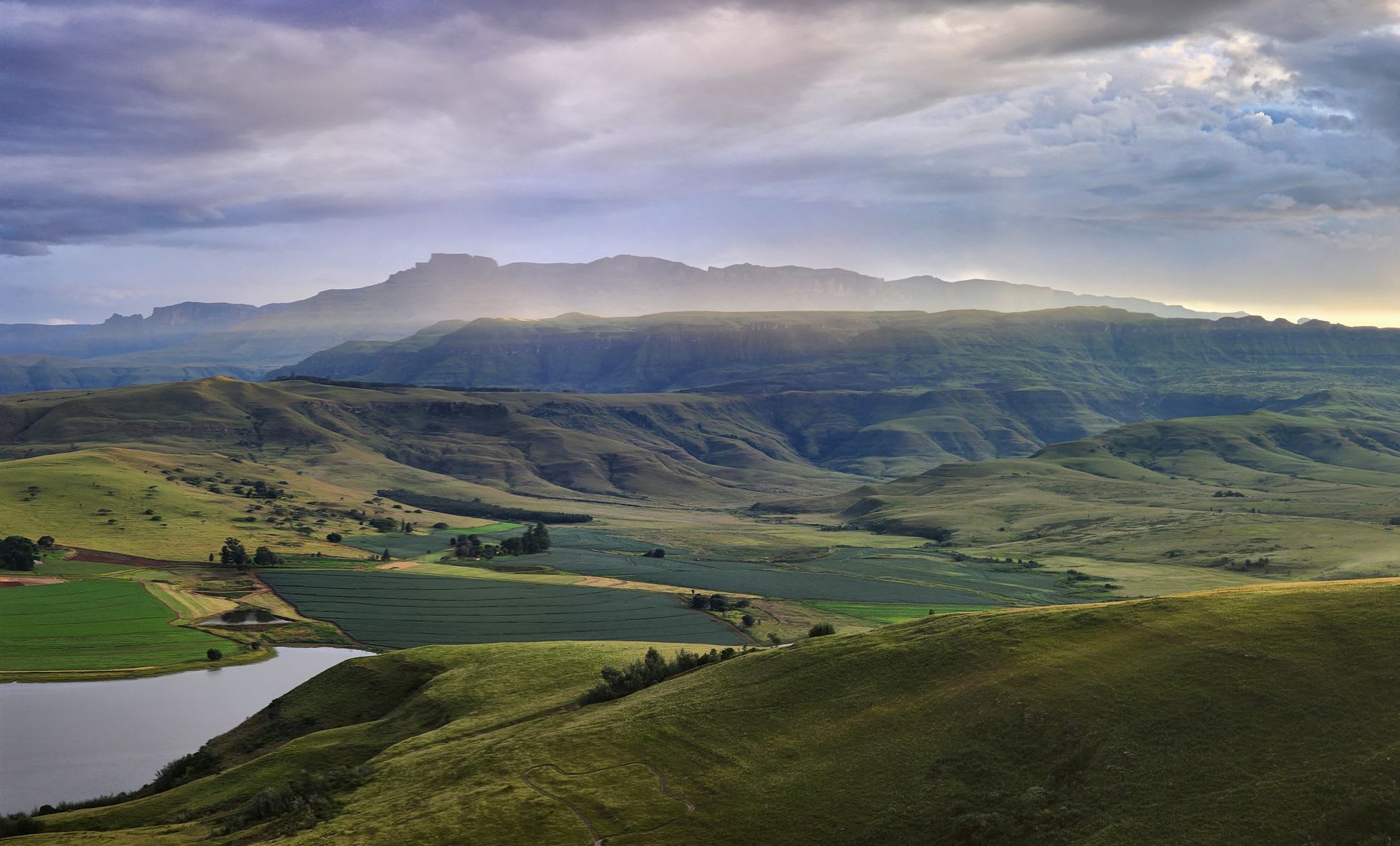
The Thendele chalets above the valley have the finest view in the park — you sit on the stoep watching the Amphitheatre turn pink, then orange, then the specific deep rust colour of cooling basalt, with a cup of tea going cold in your hands because it seems wrong to look away. The park restaurant does a decent lamb stew on winter evenings, and the staff will tell you, without being asked, which trails are currently muddy and which are passable. That kind of local knowledge is worth more than any app.
When to go: May through August for clear skies and sharp mountain light, though winter nights at altitude require serious sleeping bags. September and October bring wildflowers and warming temperatures. Avoid the chain ladder routes during summer afternoon storms — the escarpment generates its own weather with startling speed.