Africa
Drakensberg
"The mountains that made me understand what geologic time actually feels like."
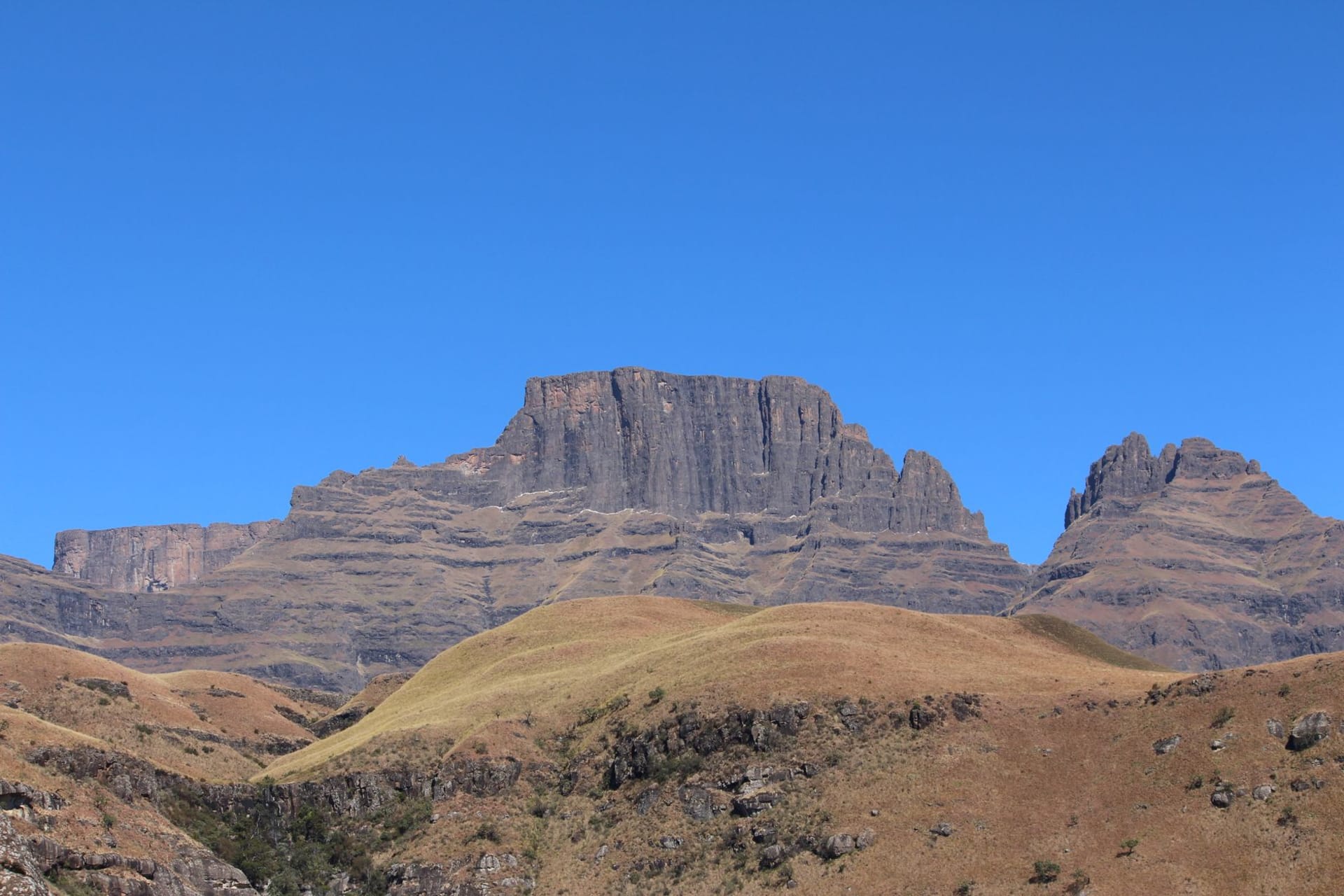
The first thing you notice in the Drakensberg is the scale — not the height, which surprises you, but the age. These basalt walls, stained ochre and rust by centuries of rain, have been here for two hundred million years. The San people painted their visions onto these rock faces for thousands of years before any traveler arrived with a camera or a guidebook. Standing in front of the art at Giant’s Castle — a running eland, a shaman mid-trance, figures faded but still insisting on their presence — I felt less like a tourist and more like an interruption. A temporary one.
The hiking in the central Drakensberg is genuinely demanding in the best way. The Amphitheatre, a five-kilometer wall of cliffs rising twelve hundred meters from the Little Berg plateau, requires a full-day approach and rewards you with the Tugela Falls dropping through five stages to the valley floor — one of the tallest waterfalls on earth, which you hear long before you see. Up on the Lesotho border plateau, the landscape turns alien: high moorland, yellow grass bent flat by wind, the occasional lammergeier riding thermals overhead. No crowds. No mobile signal. Just the particular silence of very high, very remote places.
The lower foothills have their own rhythm entirely. At Didima Camp in Cathedral Peak, I woke up before dawn and sat on the cabin stoep with rooibos tea watching the mountains go pink above the mist. The resort serves braai for dinner — grilled boerewors, pap, chakalaka — and the camp staff know the trails better than any app. Locals from the nearby Zulu communities run cultural tours that cover both the rock art and the living traditions these mountains have supported for centuries.
When to go: April to September for clear skies and manageable temperatures on the high trails. Summer (November to February) brings afternoon thunderstorms that can move in fast — not ideal for exposed ridge hikes, though the wildflowers are exceptional and the landscape turns intensely green. Winter nights at altitude drop below freezing, so pack accordingly.
What most guides get wrong: They frame the Drakensberg as a hiking destination with some rock art on the side. It is the opposite. The San art — over thirty-five thousand documented images across hundreds of sites — is one of the world’s great concentrations of prehistoric painting, and most visitors walk past it in twenty minutes on the way to a trailhead. Slow down. Hire a guide from the local community who can explain what you are actually looking at. The mountains will still be there when you get back.