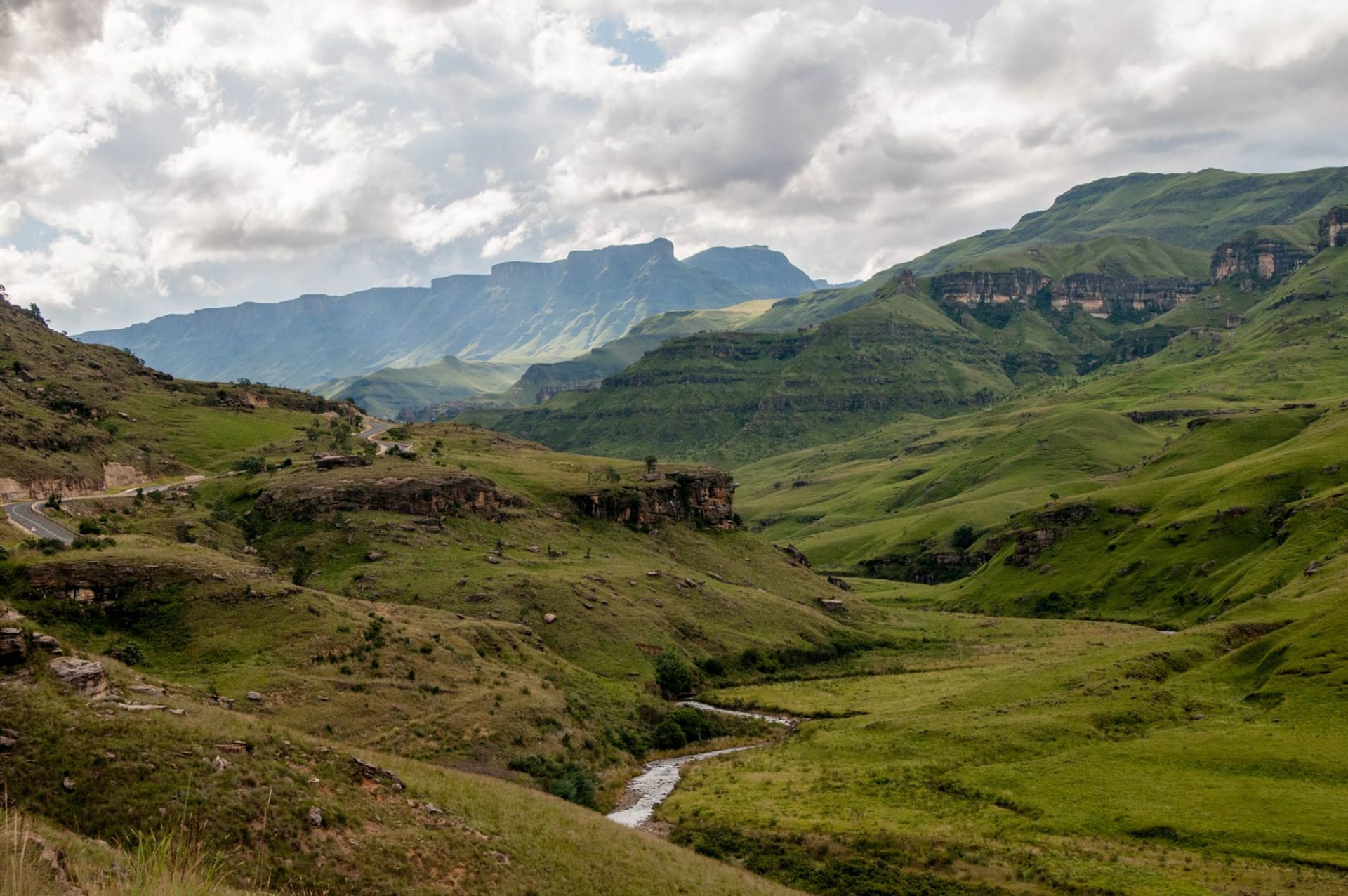
Lotheni
"We came to the Drakensberg for the famous peaks and ended up loving the quiet valley nobody mentions."
The Drakensberg has its headline acts — the Amphitheatre, Cathedral Peak, the Sani Pass switchbacks — and they deserve the attention. But by our fourth day Lia and I had had enough of car parks and tour minibuses, so we drove down a long dirt road into Lotheni, a reserve in the southern part of the range that almost nobody seems to bother with, and found the Drakensberg we had actually been hoping for: empty, green, and quiet enough to hear the river.
A valley to yourself
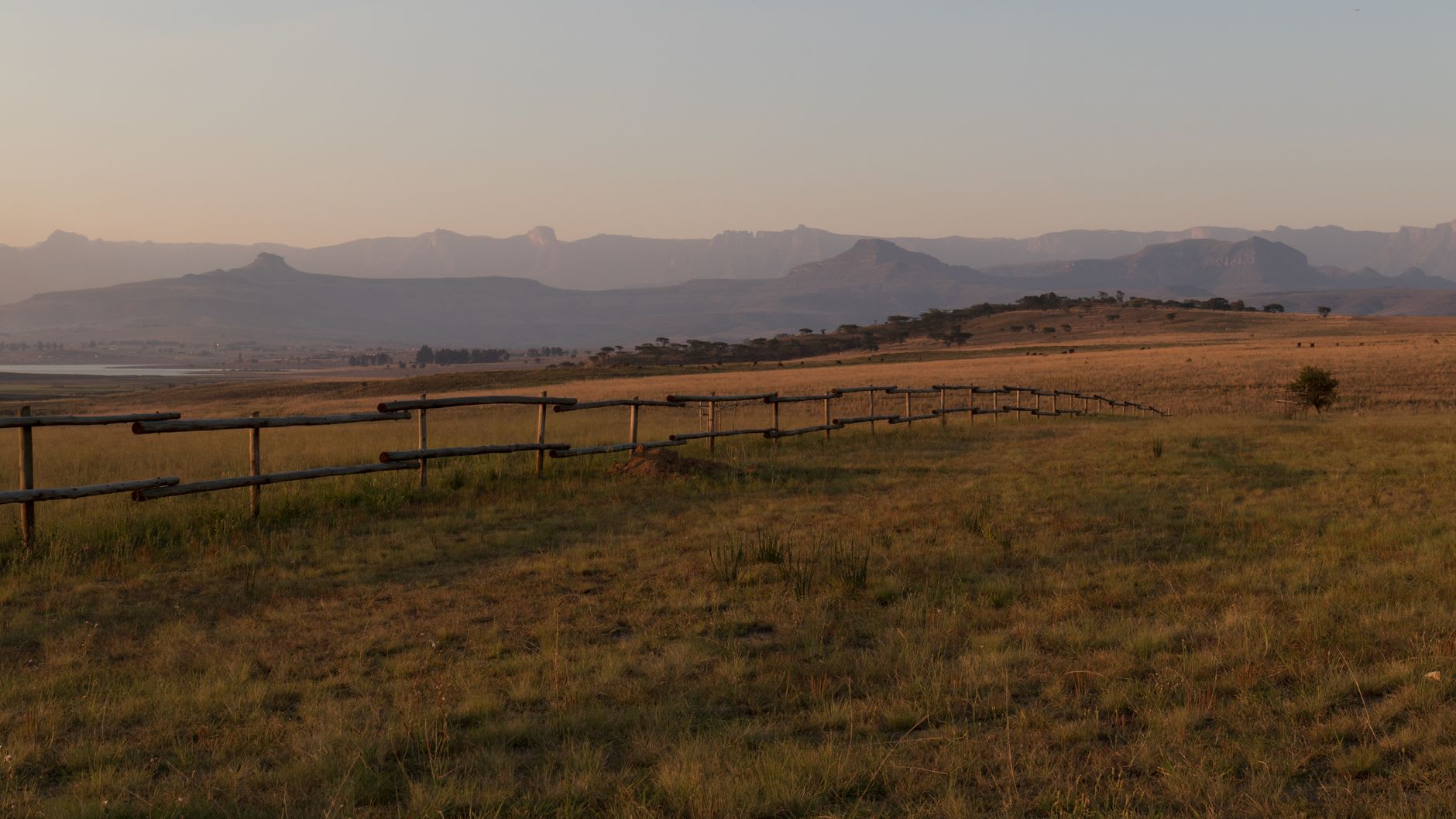
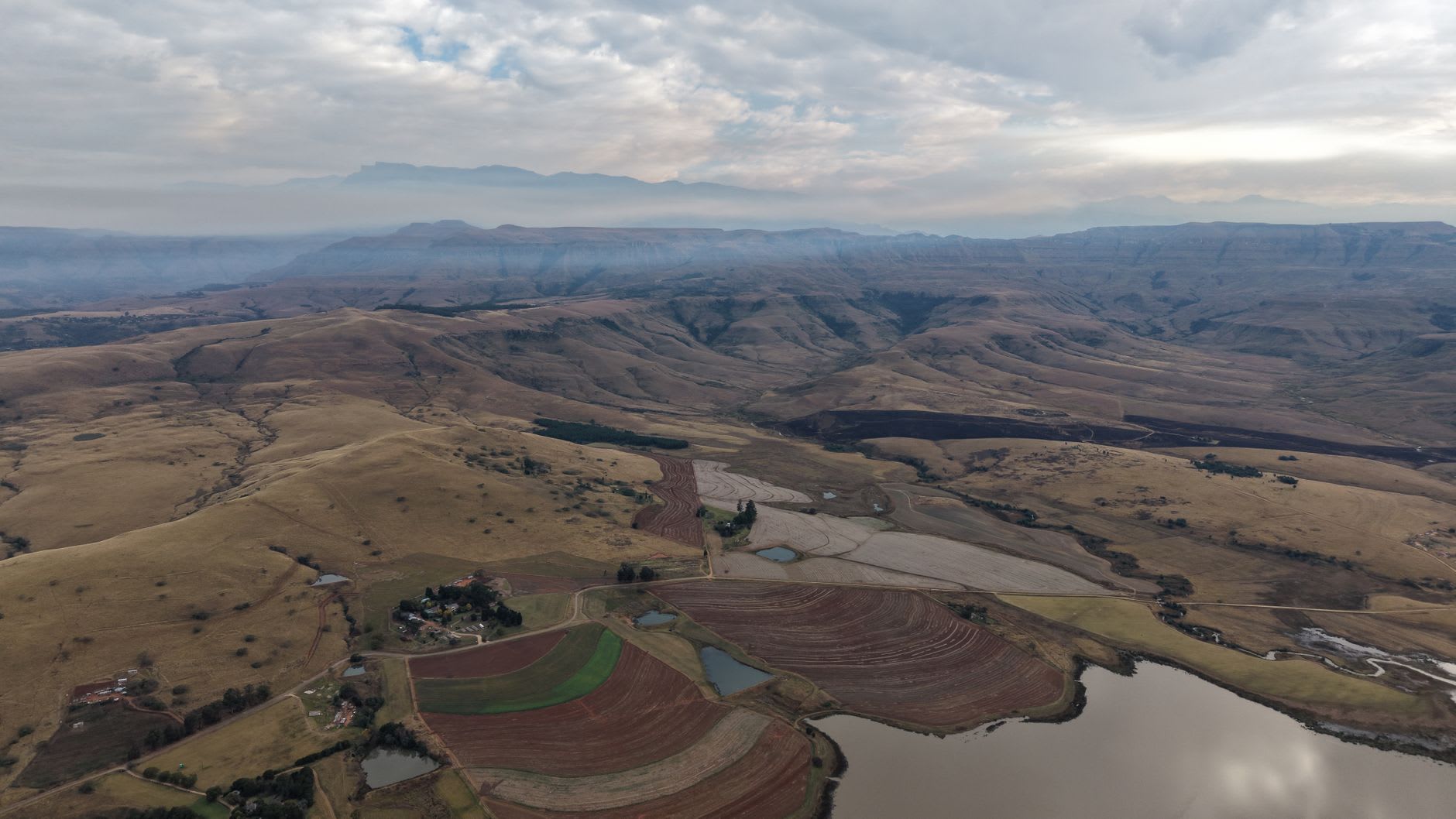
Lotheni is built around a trout stream of the same name, and the whole place has the unhurried feel of somewhere that exists for fishermen and hikers rather than coach tours. The valley floor is open grassland, golden in the dry season, grazed by eland and reedbuck, and the basalt cliffs of the high escarpment rise behind it in tiers. We took a day hike up toward the escarpment — gentle by Drakensberg standards, a steady climb through grassland and protea — and passed exactly two other walkers the entire day. After the queues at the more famous trailheads, the solitude felt almost extravagant.
The reserve has a small, slightly forlorn museum — the Settlers Museum, in an old stone farmhouse — that tells the story of the European farming families who scraped a living up here in the nineteenth century. It is the kind of place with three rooms and a caretaker who is genuinely pleased you came. I find these modest local museums oddly moving; they are not curated for visitors so much as kept by people who do not want a hard history forgotten, and Lotheni’s farmhouse, with its iron stove and faded photographs, stayed with me longer than I expected.
Older stories on the rock
Long before the settlers, this was San country, and Lotheni protects rock-art sites tucked into overhangs along the cliffs. We hired the guide from the reserve office — you cannot visit the painted shelters alone, and rightly so — and walked out to one of them in the late afternoon. The figures were faint, ochre eland and dancing human forms, thousands of years old, painted by people who knew this exact valley in a way I never will. Standing in the overhang where they had worked, with the light going long and gold across the grassland below, I felt the particular vertigo of deep time that the Drakensberg does better than almost anywhere.
We spent the night in the rest camp’s basic self-catering chalets, cooked badly on a two-ring stove, and sat outside as the temperature dropped and the sky filled with more stars than I have seen in years. No light pollution, no other guests within earshot, just the river and the cold and the dark bulk of the escarpment. Lotheni will never be anyone’s first Drakensberg stop, and I hope it stays that way. It was, for us, the best one.
When to go: April to September for dry, crisp days and good trout fishing, though nights are bitterly cold and frost is common. Summer brings green grassland and wildflowers but also afternoon storms. Book the rock-art guide and any chalets through the reserve office in advance, as facilities here are deliberately modest.