
Bushman's Nek
"Every border crossing is a small drama. Bushman's Nek is the version where the drama is entirely vertical."
The southern Drakensberg's quietest frontier — a mountain pass to Lesotho that almost no one uses and no one who has been forgets.

Bushman’s Nek is a mountain pass, a border crossing, and a hiking trail all using the same narrow gap in the southern Drakensberg escarpment. It is also, by any reasonable accounting, the most obscure entry point into Lesotho and the quietest corner of a range that is not, by southern African standards, particularly crowded. I came here by recommendation — a ranger at Kamberg mentioned it with the careful understatement of someone describing something personal — and drove down through the Umzimkulu valley on roads that became progressively more gravel and more spectacular until the escarpment closed in on both sides and there was nothing ahead but the pass.
The Drakensberg in its southern reaches — the area around Underberg, Himeville, and the parks that run south toward the Eastern Cape border — has a character distinct from the central Berg. The peaks are lower, the valleys wider, the landscape less dramatic in individual moments but more pervasive in its effect. Driving through here you feel the mountains on the periphery of everything rather than directly overhead. Bushman’s Nek changes that abruptly: the escarpment here rises abruptly from a basin of highland grassland and the pass cuts through at twenty-nine hundred metres in a notch that puts you, within a four-hour walk from the hotel, on the edge of the Lesotho plateau.
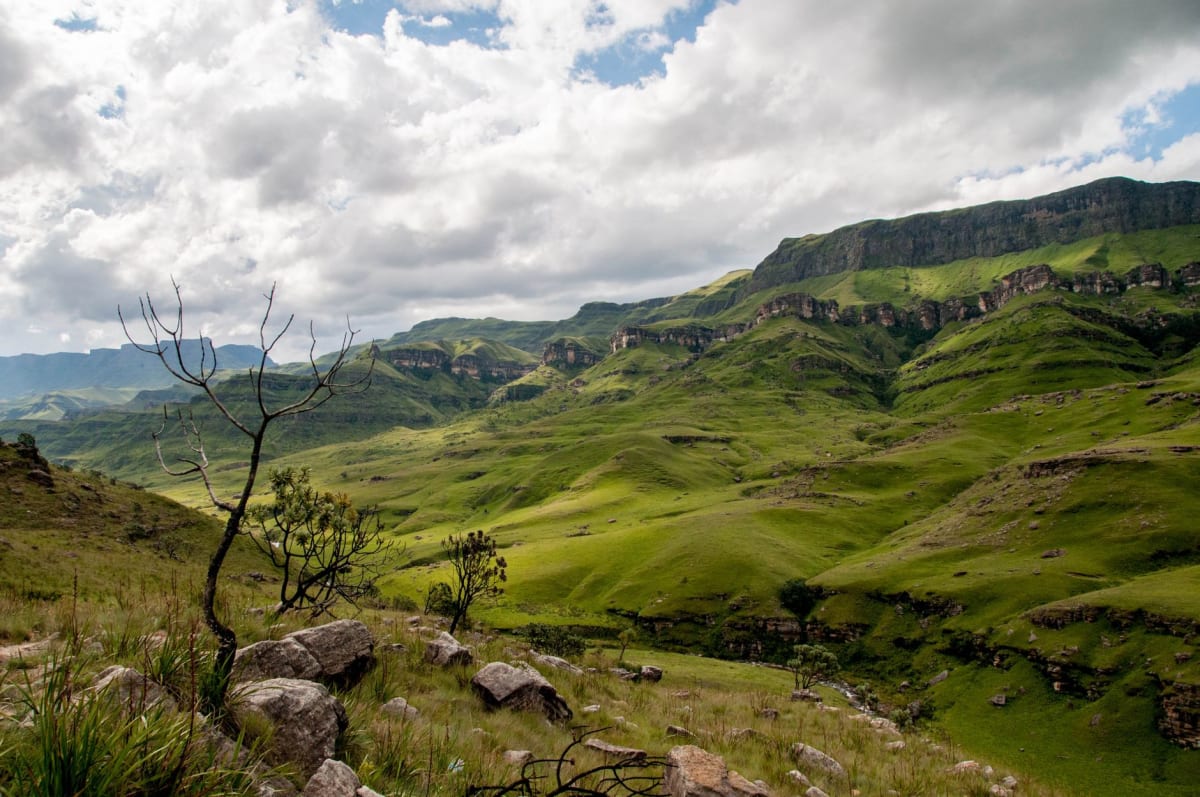
The Bushman’s Nek Hotel is a particular kind of South African institution — a family-run mountain hotel that has been operating since the 1950s and has absorbed that continuity into its furniture, its service, and its kitchen. The dining room does a set menu each evening that runs to five courses and is taken seriously by everyone present. The lamb is local, the vegetables come from the hotel garden on the lower slope, and the malva pudding at the end is the kind of dessert that recalibrates your relationship with the concept. Hiking maps are kept behind the reception desk and the owner’s son runs guided walks on most mornings.
The walk up to the pass is the central experience. The trail climbs through montane grassland where the altitude flowers — small and densely pigmented protea, marsh orchids along the seeps, yellow everlasting that holds colour even when dry — line the path in a way that makes progress slow because stopping constantly seems mandatory. The final approach to the nek narrows into a rocky gully and then opens suddenly onto the escarpment edge, and you are on the Lesotho plateau with the entire southern Berg visible behind you and the tawny interior of Lesotho stretching west into a haze.
The border post at the nek is a modest affair — a South African official in a small building, a Lesotho official in a smaller one, and a customs register that gets perhaps twenty entries a week. Crossing it on foot felt both formally straightforward and fundamentally odd, as though international borders are concepts that make less sense the further you get from an airport.

The multi-day wilderness trails through the Sehlabathebe National Park, accessible from this crossing, represent some of the most remote hiking in southern Africa — Sehlabathebe on the Lesotho side is a high plateau park with almost no facilities and hiking routes that cross from Berg side to Berg side through terrain where you might not see another person for three days. For that category of expedition, Bushman’s Nek is the gateway.
When to go: April through September for stable mountain weather on the pass trail. The valley road into Bushman’s Nek becomes treacherous in heavy summer rains. Spring (September-October) offers the best wildflower display on the lower slopes. The hotel is booked solid over South African long weekends and school holidays — arrive midweek in the off-season for the full quality of the silence.
Keep exploring
More from Drakensberg
 drakensberg
Cathedral Peak
A spire of rock that earns its name — this is the Drakensberg at its most ecclesiastical and most intimate.
Explore drakensberg
Champagne Valley
The Drakensberg's most accessible face — Cathkin Peak and Monk's Cowl looming over a valley that somehow stayed unhurried.
Explore drakensberg
Didima Gorge
A gorge holding thousands of San rock paintings, where thunder still echoes off the sandstone the way it did for the artists who painted here.
Explore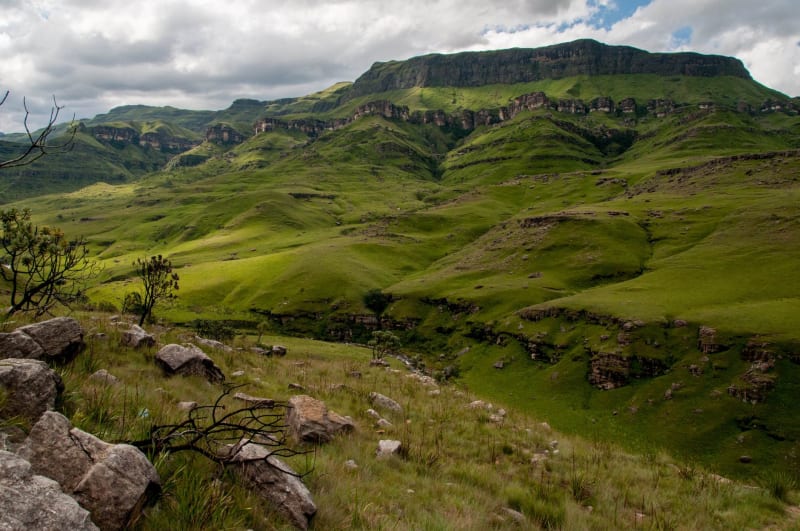 drakensberg
Giant's Castle
Thirty-five centuries of San rock art and a lammergeier hide that feels like the most exclusive birdwatching seat on earth.
Explore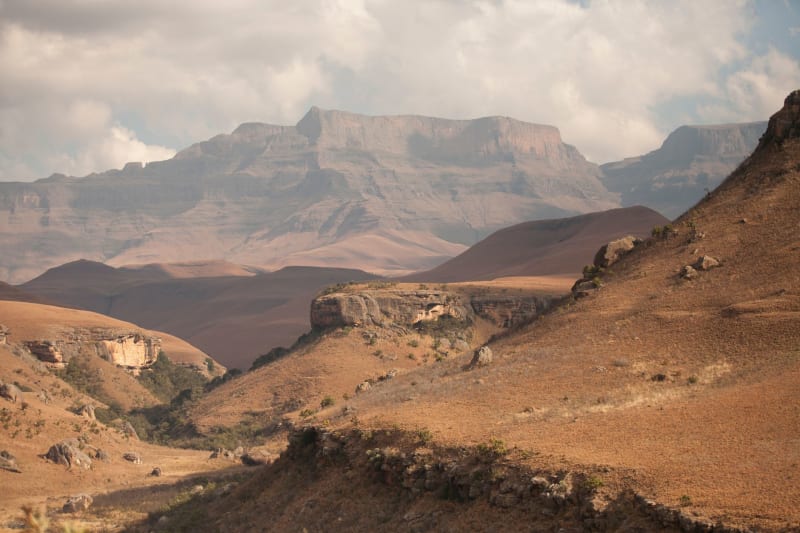 drakensberg
Golden Gate Highlands
Where the Drakensberg's northern foothills burn gold and amber — sandstone eroded into shapes that belong in a fever dream.
Explore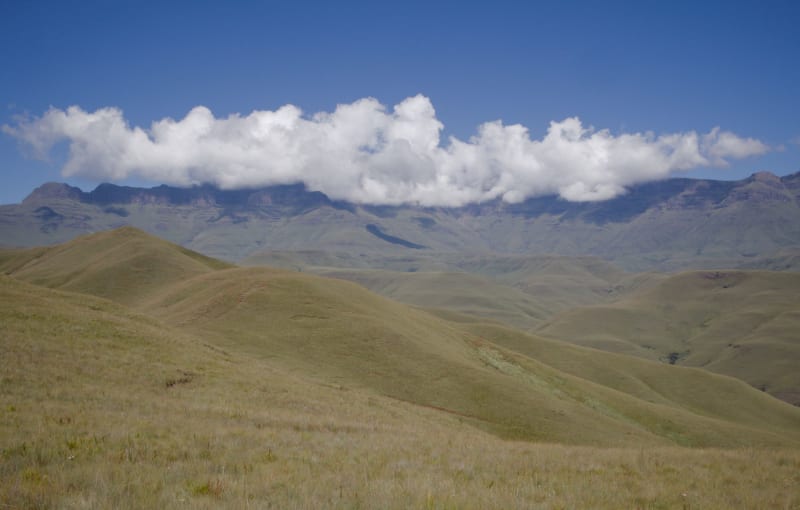 drakensberg
Injisuthi
The most remote valley in the central Berg — a hidden pocket where the mountains rise on three sides and the world falls away on the fourth.
Explore