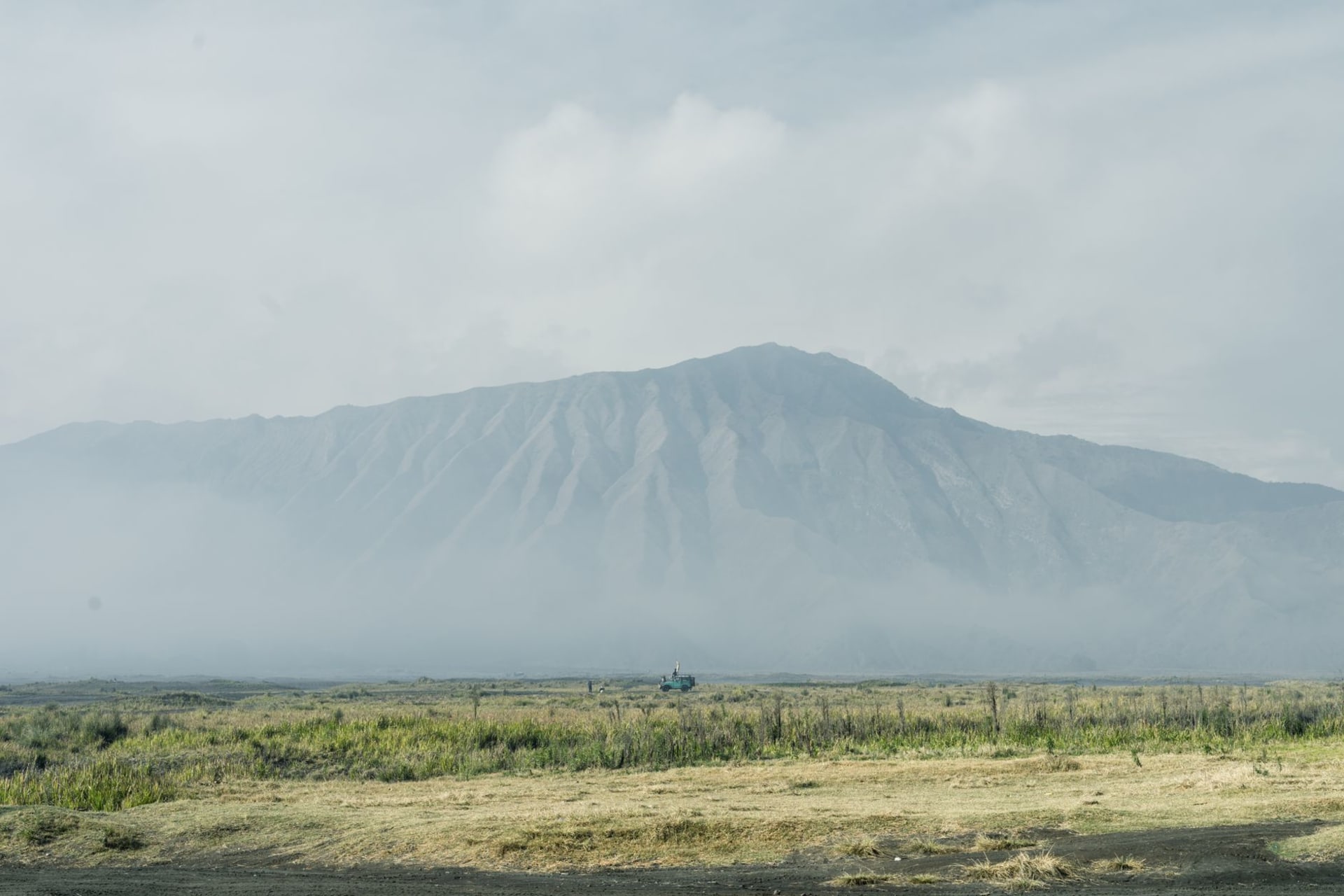
Mount Nyiragongo
"We climbed all day to sleep on the edge of an open volcano, and at night it glowed orange like the planet had a crack in it."
I want to be honest at the outset: climbing Nyiragongo is not a casual decision, and the eastern Congo is not a casual destination. We went with a licensed Virunga National Park operator, with permits, a ranger escort, and a hard read of the security situation beforehand, and I would urge anyone to do the same and to check the latest advisories carefully. That caveat made, this was the single most extraordinary night of any trip Lia and I have taken anywhere, and I think about it more than almost anything else I have seen.
The climb
Nyiragongo rises above Goma, on the Rwandan border, and inside its summit crater sits the largest lava lake on Earth — a permanent, churning pool of molten rock. You reach it on foot, and the climb is genuinely hard: around five to six hours up roughly 1,500 metres of vertical, starting through old lava fields black and sharp underfoot, then into bamboo and montane forest, then up a steep, loose volcanic cone where the air thins and the wind picks up. Our group was eight, with rangers front and back, and by the final scramble I had stopped talking entirely and was just putting one boot ahead of the other. Lia, irritatingly, was fine.

The summit huts are basic — wooden A-frames bolted to the rim, cold, thin-walled, the kind of shelter that is about survival rather than comfort. None of that mattered. You drop your pack, you walk the few metres to the crater edge, and you look down into the lava lake. In daylight it is impressive: a vast caldera, walls streaked and steaming, the molten surface dull red and visibly moving far below. But you have not really seen Nyiragongo until dark.
The lake at night
When night falls, the whole crater turns into something out of a creation myth. The lava lake glows a furious orange, throwing light up onto the steam and the underside of the clouds, and you can hear it — a low, constant churning, the surface cracking and reknitting in slow plates, occasional gouts thrown up at the edges. We sat at the rim wrapped in everything we owned, drinking tea a ranger had boiled, and barely spoke for an hour. There is no photograph that does it justice; I tried, and the camera flattened a living thing into a smear of orange. Lia just put hers away and watched.

I slept badly, partly from the cold and the altitude and partly because I kept getting up to look again, as if the lake might not be there in the morning. It always was. Coming down the next day, legs wrecked, through the same forest and lava fields, I understood that I had seen something most people only see in documentaries, and that the difficulty and the seriousness of getting there were inseparable from the reward. Some places make you earn them. This one demands it.
When to go: The dry seasons — roughly June to September and December to February — offer the safest footing and clearest views into the crater. Go only through a licensed Virunga operator with permits and ranger escort, and check security advisories close to your travel dates. Pack for genuine cold and hard hiking; the summit is nothing like Goma below.