Africa
DR Congo
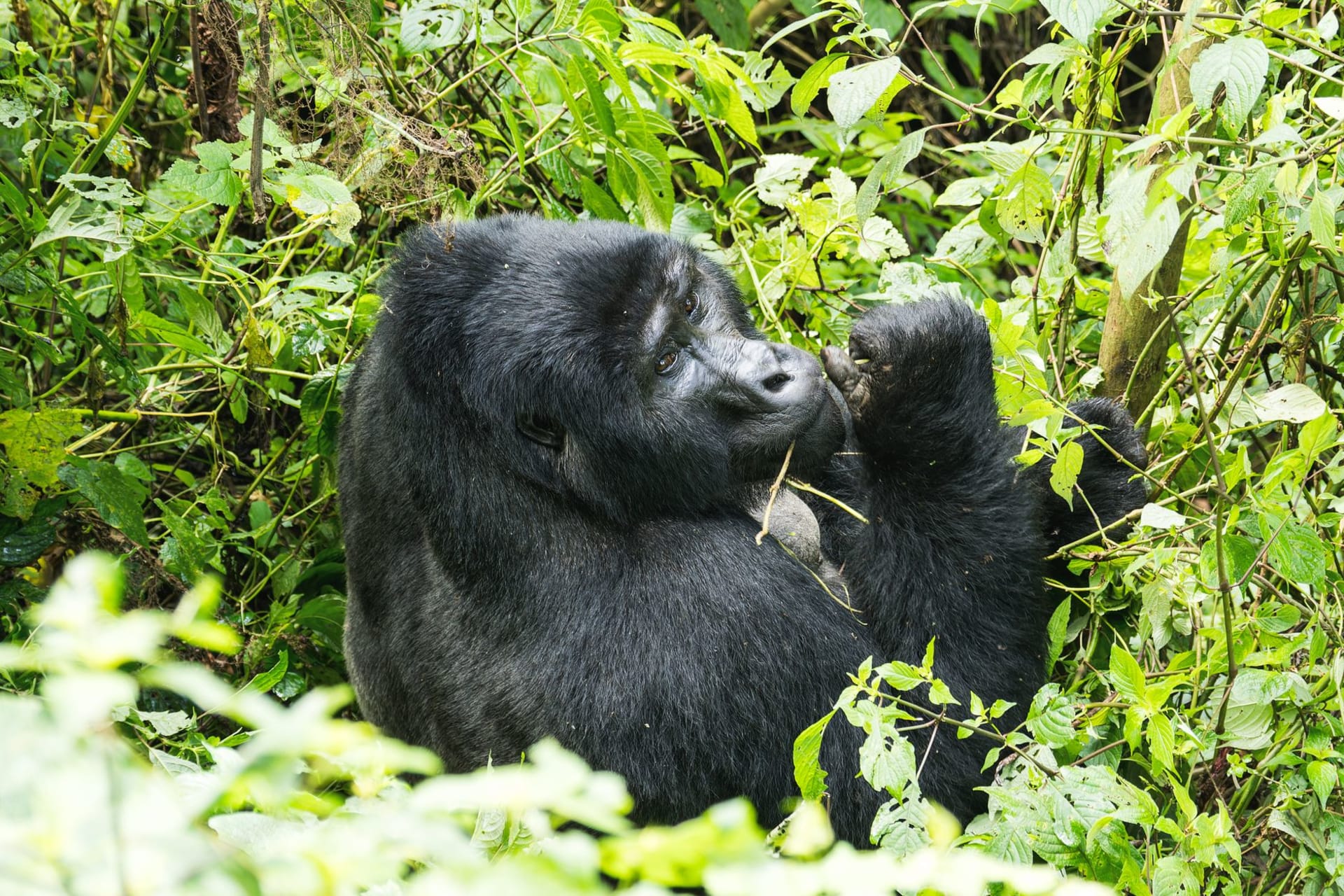
"Nothing in travel prepares you for a silverback three metres away."
I landed in Kinshasa at dusk, and the city hit me before the door of the plane was even open — that heavy, humid air carrying woodsmoke, diesel, and something floral I still can’t name. The immigration hall was absolute chaos, the kind that looks like it’s about to collapse into disaster but somehow never does. A man in a suit was arguing with an officer over a stamp, three phones were ringing simultaneously, and someone’s cassava flour had split open at the carousel. I felt, instantly, very alive.
The DRC is not a destination for the ambivalent. This is the second-largest country in Africa, with rainforest the size of Western Europe, and most of it is inaccessible by road. The infrastructure would be politely described as minimal. Flights between cities run on schedules that function more as suggestions. And yet — the gorillas in Virunga National Park in the east, the forests of Kahuzi-Biéga, the staggering width of the Congo River at Kinshasa, the frenetic energy of a city of fifteen million people that the rest of the world has largely chosen to ignore — all of it adds up to something I haven’t felt anywhere else. A place that is genuinely itself, with no apology and no performance.
I spent time in Goma, the eastern city that sits at the foot of an active volcano with a lake of lava. You can see the glow from town at night. The city itself is a strange mix: NGO Land Cruisers, women carrying impossible loads on their heads, volcanic rock underfoot everywhere because the lava flows from 2002 buried whole neighbourhoods. The food market near the port on Lake Kivu is where I ate the best grilled tilapia of my life, charred and served with fried plantain and a sauce made from peanuts and small dried fish. I went back three mornings in a row. The gorilla trek — four hours through forest, altitude climbing, legs burning — ends the moment that doesn’t end. A family of mountain gorillas, twenty metres away, completely unbothered. One of them yawned. My guide touched my arm and pointed: the silverback, watching me watch him. I didn’t take a single photo.
When to go: June through September is the driest season in the east (Virunga, Goma, Bukavu) and the best time for gorilla treks — trails are passable and vegetation is marginally less impenetrable. December to February offers a shorter dry window. Avoid the equatorial interior during peak rains (March–May, October–November) unless you have serious logistics in place.
What most guides get wrong: Every article about the DRC leads with danger, instability, complexity — and yes, all of that is real in parts of the country, and you need to research your specific region carefully. But the eastern highlands and Kinshasa are visited far more easily than the reputation suggests. The bigger misrepresentation is framing this place purely as a risk to be managed. What I found was overwhelming generosity, music everywhere (Kinshasa is one of the great music cities of the world), extraordinary biodiversity, and a people who carry an enormous historical weight with a dignity that humbled me. The DRC is misunderstood not because it’s unknowable, but because most people never look past the headline.