
Kahuzi-Biéga National Park
"The gorilla emerged from the bamboo three metres away and sat down like a man tired from a very long commute."
Forty kilometres west of Bukavu, the road climbs into a different world. The eucalyptus and tea plantations of the lower hills give way to highland rainforest — ancient trees hung with lichen and moss, bamboo breaking through at the edges of clearings, the air cooling by the minute as altitude climbs toward 2,000 metres. I was heading to Kahuzi-Biéga National Park, and I was not prepared for what it looked like.
The park takes its name from two extinct volcanic peaks — Kahuzi at 3,308 metres and Biéga at 2,790 metres — that rise above a forest UNESCO has designated a World Heritage Site for the same reason people make this drive: eastern lowland gorillas. Grauer’s gorillas, to use their scientific name, are the largest gorillas on earth. A mature male can weigh 220 kilograms. Where mountain gorillas are compact and dense, lowland gorillas are vast and deliberate — somehow prehistoric in their scale. A tracker I spoke to later described them as “the original thing,” and standing in their forest, I understood exactly what he meant.
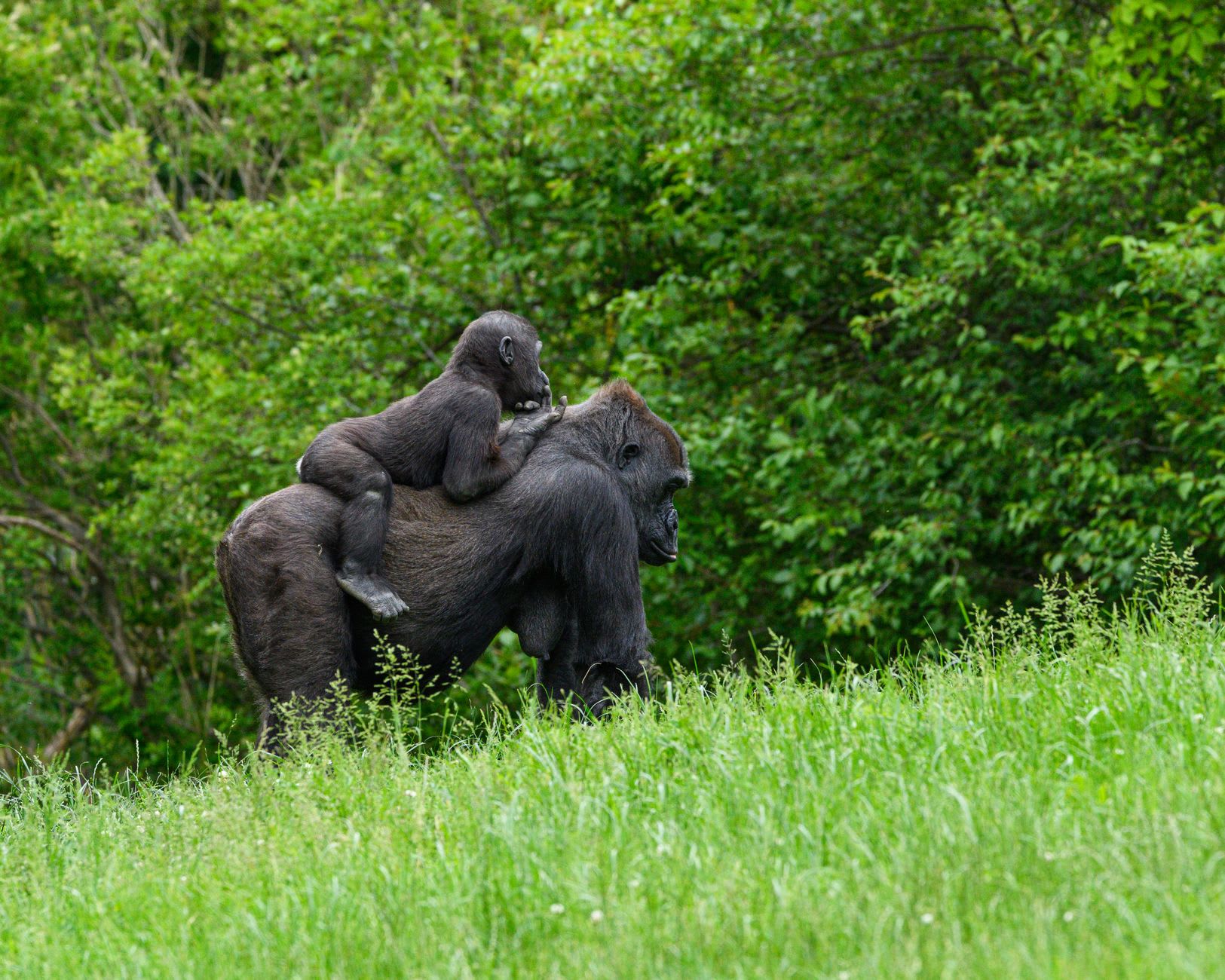
The tracking began early. My guide Augustine led me and two other visitors into forest that was substantially denser than anything I’d walked before — not impenetrable, but close, the undergrowth forcing you sideways and the bamboo sections requiring a kind of controlled stumble. We’d been walking perhaps ninety minutes when the trackers ahead stopped and held up a fist. I heard it before I saw it: a low rumbling sound, somewhere between a growl and a deep exhalation, that I felt more in my chest than my ears. Then the vegetation to the left moved.
What came out of the forest was enormous. The silverback settled in a small clearing perhaps eight metres from where we stood and began feeding on bamboo shoots with a concentration that was total. His hands — if that’s the word, and it is the word — moved with a precision at odds with his size. He stripped each shoot from its casing with what I can only describe as patience. I was told afterwards that he was aware of us the entire time, that gorillas always know where humans are in their vicinity. He simply chose not to be interested. That distinction felt important somehow.
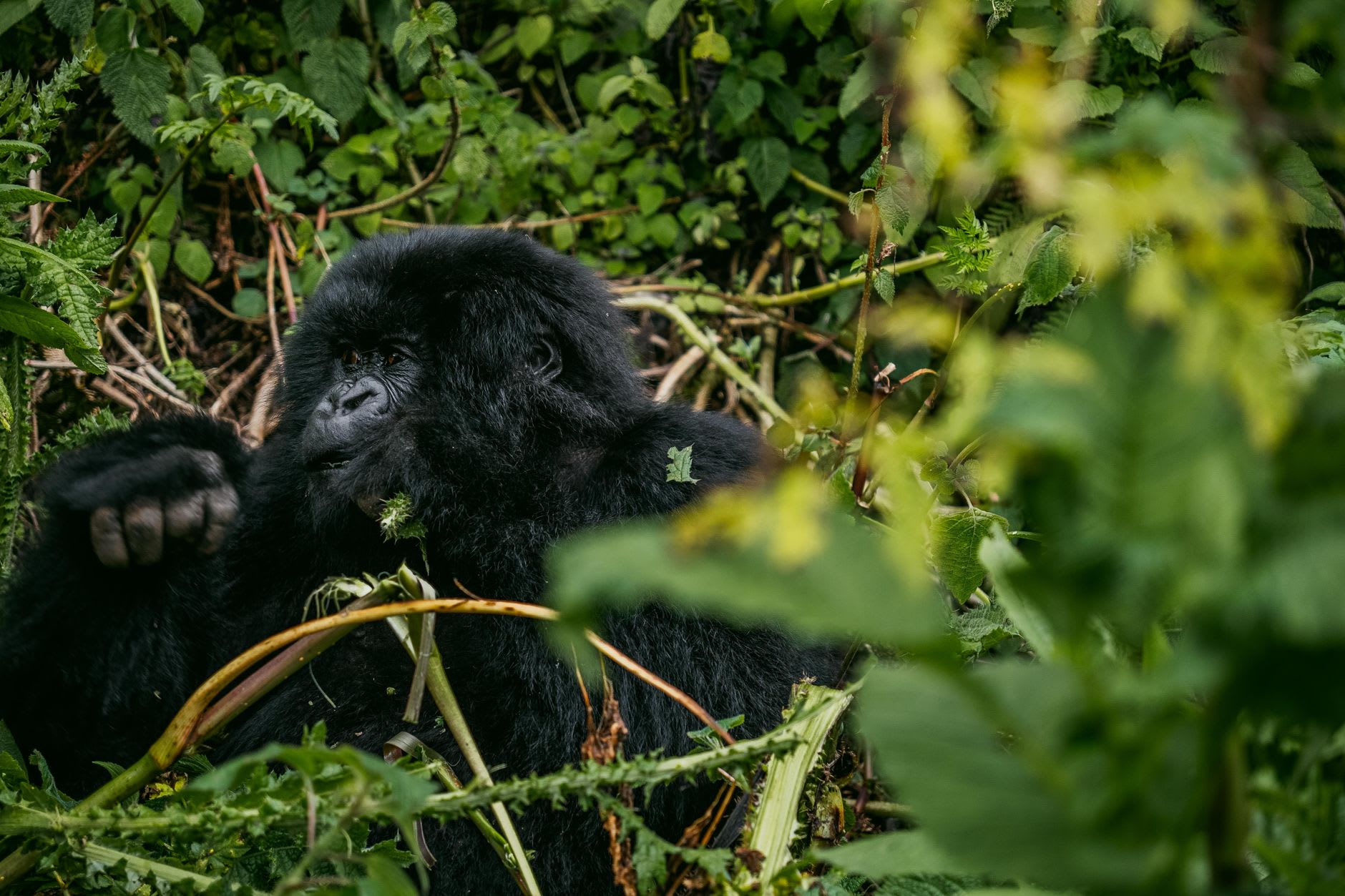
The forest itself demanded attention alongside the gorillas. Kahuzi-Biéga’s highland zone contains one of the last intact Afromontane forests in Central Africa — a community of plants found nowhere else at this altitude, and a diversity of birdlife that made my amateur attempts at identification immediately embarrassing. Red-chested sunbirds, African green broadbills, Grauer’s rush warblers moving through the bamboo. The primatologist’s trail markers gave way, eventually, to the thicker forest where the trackers worked by sound, by broken vegetation, by knowledge accumulated over decades of days like this one.
The conservation situation here is complicated and I’d be dishonest if I didn’t say so. The population of Grauer’s gorillas has declined by nearly 80 percent since the 1990s due to illegal mining, bushmeat hunting, and conflict displacement. The rangers who work here — who have also lost colleagues — are protecting something that remains genuinely endangered. The gorilla permit fee goes directly toward that protection, and for once, the price feels proportionate to what it’s buying.
When to go: June through August and December through January are the driest months and most comfortable for trekking. The park is accessible year-round but the highland forest becomes significantly more difficult during the long rains (March–May) — trails turn to mud and the bamboo sections require serious navigation. Permits must be arranged through the ICCN or a registered operator in Bukavu, ideally a day or two in advance.