Bukavu
"Bukavu smells like lake water and charcoal smoke — it's the kind of combination that stays with you long after you've left."
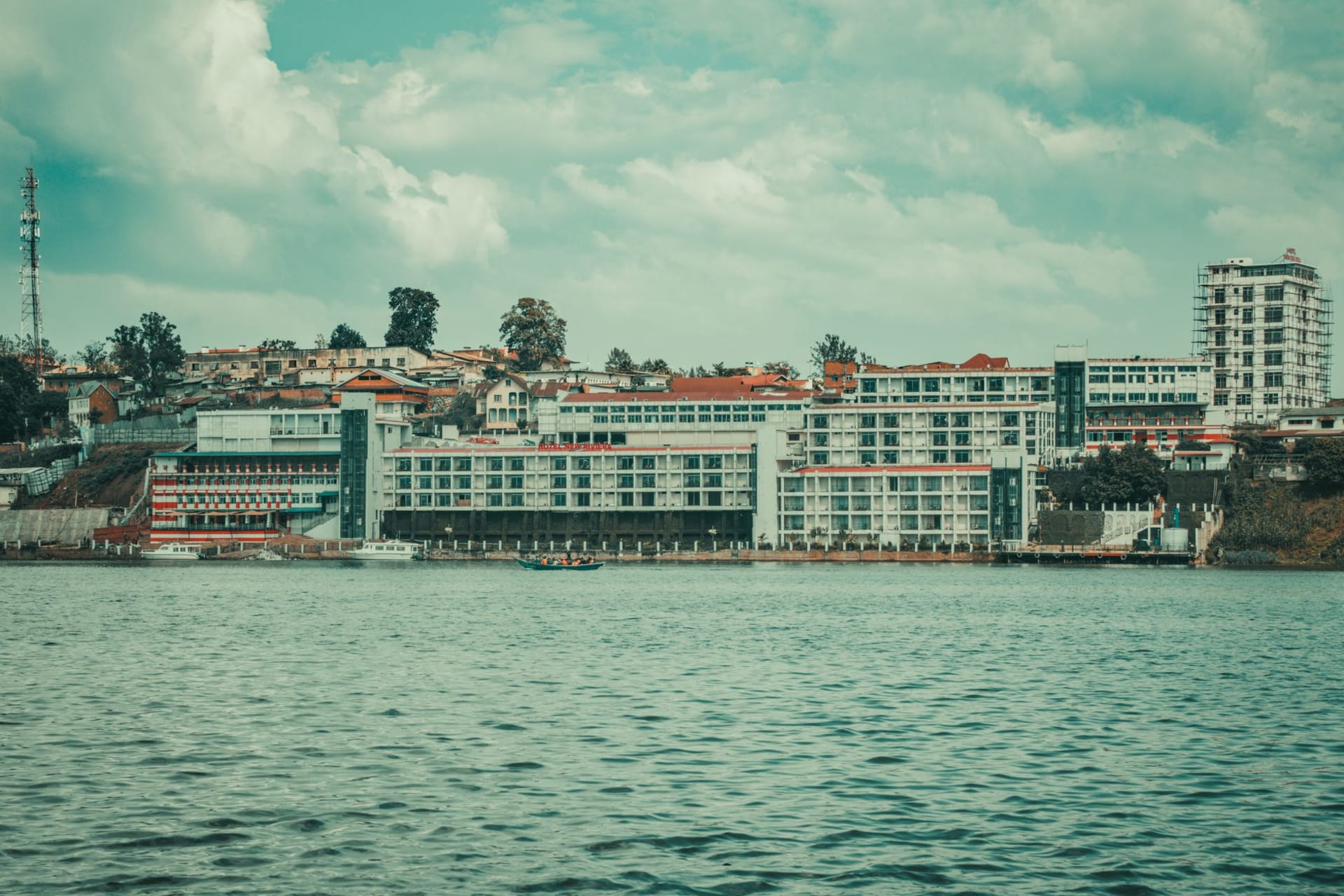
Bukavu sits on five peninsulas that jut into the southern end of Lake Kivu like fingers trailing in the water, and it has the feel of a city that has never quite decided between its past and its present. The Belgian villas are still there — cream-coloured and rust-roofed, set behind overgrown gardens, some occupied, some crumbling softly into the hillsides. The colonial era ended in 1960 but the architecture stayed, and the result is a city where bougainvillea grows over wrought iron gates and the lake glitters between buildings built by people who assumed this would remain theirs forever.
I came by road from Goma, five hours along a route that wound through hills and NGO checkpoints and small towns where the bus stopped long enough for people to sell things through the windows — mandarin oranges, phone chargers, hard-boiled eggs in newspaper cones. The approach into Bukavu descends through hills forested to the water’s edge, and the lake appears below you in sections, always astonishing, always a slightly different shade of blue depending on the cloud cover.

The central market is where I spent most of my mornings. Bukavu is one of the better places in the eastern Congo for crafts — weavers bring baskets from the inland villages, carvers sell wooden masks and figures, and the fabrics run the full chromatic range of the continent. I was looking specifically for the baskets made by women’s cooperatives in the highland villages above town — tight-woven, geometric, coloured with natural dyes — and I found them at a stall run by a woman named Chantal who wanted me to understand, very specifically, which village each basket came from and why that mattered. I bought three and she wrapped them in newspaper with a care that made them feel like heirlooms.
Coffee comes from the hills above Bukavu in a way that matters. The highland farms of South Kivu produce some of the best coffee in Central Africa — volcanic soil, altitude, and cool nights creating the conditions for a bean with genuine complexity. There is a small café not far from the Alliance Française where they brew it using a pour-over method, and I sat one afternoon with a double shot that tasted of dark cherry and something earthy I couldn’t name but kept returning to. I had two cups and then sat watching the lake through the window for longer than I intended.

The city carries weight that is harder to see. Bukavu is where Dr. Denis Mukwege runs the Panzi Hospital, treating survivors of sexual violence from across the eastern Congo — work for which he received the Nobel Peace Prize in 2018. The hospital is not on the tourist circuit, nor should it be, but the knowledge of what happens there, of the scale of what it addresses, colours the city differently once you know. Bukavu is both beautiful and the site of something that resists beauty, and it is honest about both without asking anything from the visitor.
When to go: June through August is the driest and most comfortable period, with clear views across the lake to the Rwandan hills. March through May brings heavy rains that can make the roads above the city difficult. The coffee harvest runs from October to December and the highland hills are particularly green and alive during this period — worth considering if the timing works.