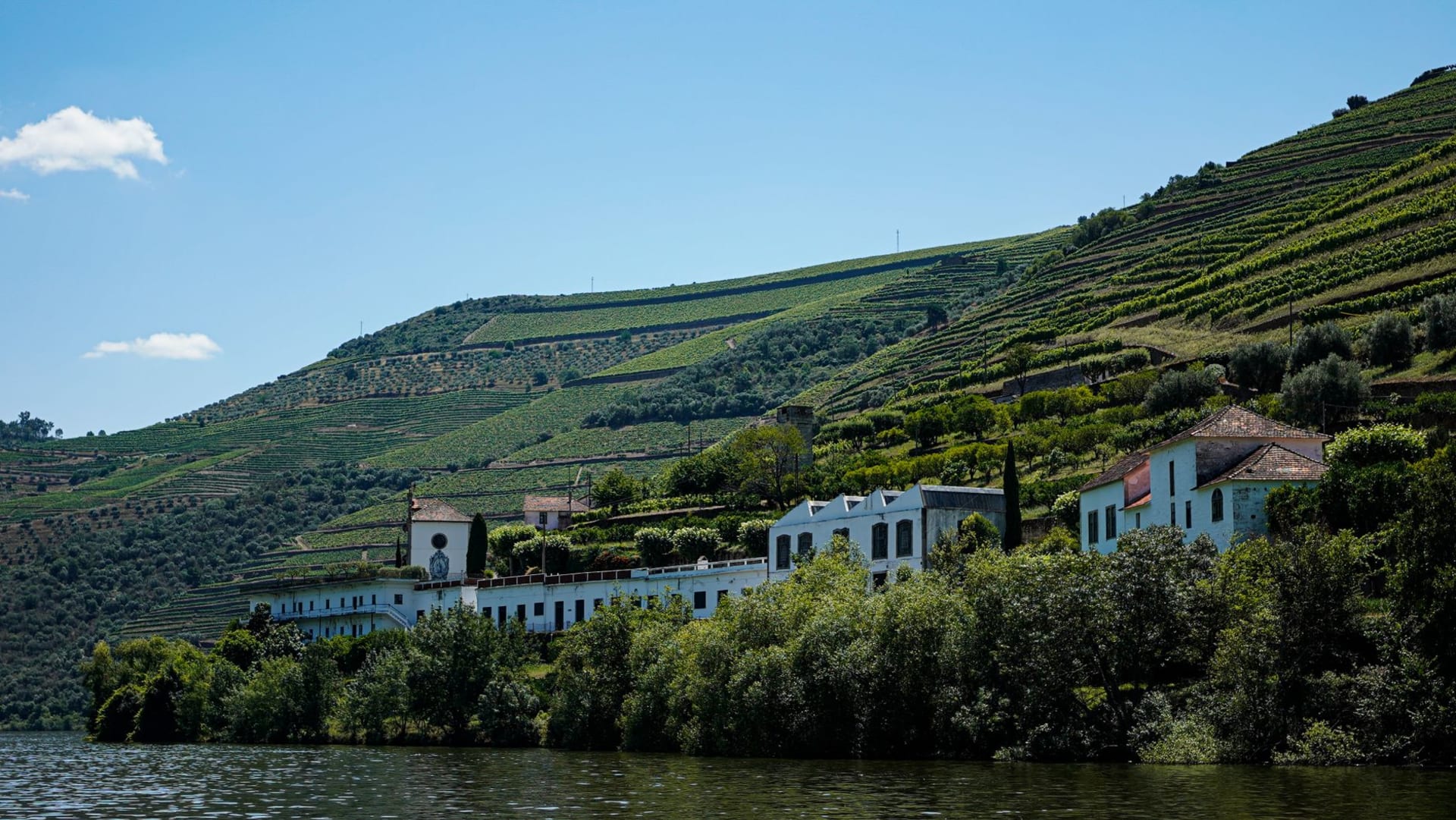
Tua is the kind of place that appears suddenly on a map and makes you wonder why nobody talks about it. The village sits at the point where the Tua river — which cuts a gorge of almost cinematic drama through the schist hills to the north — meets the Douro, and it exists, or existed, because of a railway. The Linha do Tua was a narrow-gauge line built in the 1880s to connect the Douro with the interior schist towns of Trás-os-Montes, running along the precipitous Tua gorge for sixty kilometres. It was one of the most spectacular railway journeys in Portugal. It was also, by the early twenty-first century, ruinously expensive to maintain, and in 2008 it was closed. The line now decomposes quietly in the gorge, and the village at its terminus has contracted around the absence.

I arrived in Tua on a weekday in October and found a village of perhaps fifty permanent residents, a bar, a petrol station, and the old railway station — a handsome nineteenth-century building in the Portuguese railway vernacular, with painted tile panels on the façade and a platform that once received passengers arriving from Mirandela and Bragança. The station is still technically open in the sense that nobody has locked it, and I walked in through the waiting room, where the departure boards are frozen and a clock on the wall shows a time that no longer corresponds to anything. The building smells of old wood and damp schist and something faintly metallic, which might be memory, or might just be the Douro weather coming in through the broken windows.
The Tua gorge itself repays exploration on foot or by bicycle, along a trail that follows the old railway line for the first few kilometres before the track becomes impassable. The gorge walls rise three hundred metres above the river in places, and the schist takes the afternoon light in ways that are difficult to describe and impossible to photograph accurately — a kind of warm darkness, as if the stone is absorbing the sunset rather than reflecting it. In the still section of river just below the confluence, I saw a kingfisher twice: first as a streak of improbable blue across the water, then stationary on a branch over the Tua, considering the current.

The bar near the station serves the kind of food that suggests the owner cooks what is in the refrigerator, negotiated on a daily basis: a pork sandwich, a bowl of caldo verde thick with chouriço, a glass of house wine that arrives without ceremony in a glazed clay cup. I stayed longer than I planned. There was nothing happening, which was precisely the point. The Douro, visible through the bar window, moved past with the patience of something very old, carrying the winter rains of the interior toward the Atlantic.
When to go: Tua suits the contemplative traveller in any season. Autumn gives the best light in the gorge, when the scattered deciduous trees among the schist turn yellow. Spring brings higher water levels to the rivers and occasional dramatic skies. The bar keeps irregular hours — if it is closed, knock; someone will usually appear.