Europe
Douro Valley
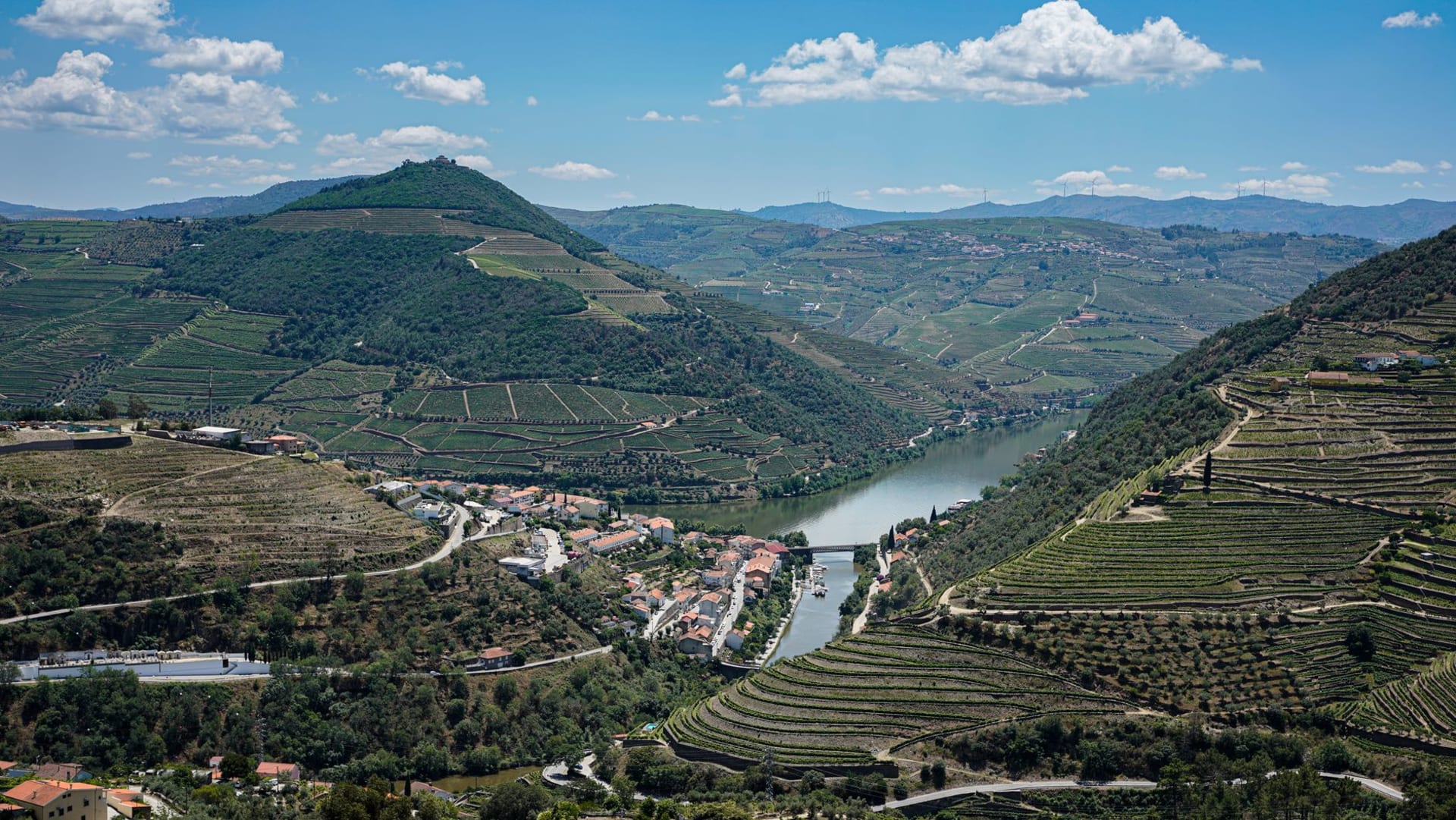
"The river curves, the terraces climb, and everything smells faintly of fermentation."
I arrived by train from Porto, which is already the right way to do it. The Douro line hugs the riverbank for the final stretch — you’re essentially tracing the water upstream, watching the valley deepen and the terraces stack higher on either side, schist walls holding everything together the way they have since Roman times. By the time I stepped out at Pinhão, I understood why painters keep coming back here. The geometry alone is worth the trip: those staircase vineyards stepping up from the river, each terrace hand-built without mortar, forming a landscape that is simultaneously agricultural and monumental.
Pinhão is the valley’s functional heart, a village of maybe eight hundred people with an azulejo-tiled train station that depicts the grape harvest in blue and white panels — functional infrastructure that doubles as folk art, which is very Portuguese. From here I rented a car and spent three days driving the N222, the river road that winds through Peso da Régua, Pinhão, and east toward the Spanish border. The quintas open their gates in harvest season, September into October, when the mechanical harvesters are useless on the steep slopes and everyone picks by hand. A winemaker at Quinta do Crasto poured me a 2019 Touriga Nacional from a tank that was still finishing fermentation. It tasted like crushed stone and dark plums and something I couldn’t name, which I later decided was altitude.
The food tracks the wine. Bacalhau à Gomes de Sá at a river-facing taberna in Régua. Grilled chouriço brought to the table still flaming on a clay dish. A slow-roasted kid goat at a Sunday lunch in a village whose name I didn’t catch, eaten with people who spoke no French and no English and communicated primarily through refilling my glass. The Douro produces table wines now that rival anything from the Alentejo — Douro reds built from the same indigenous grapes as port, but dry, structured, capable of decades. They cost twelve euros at the winery gate and would sell for sixty in Paris.
When to go: September and October for the harvest — the valley is in full motion, the light is golden, and the temperatures are bearable. May and June are beautiful and quieter, with the vines leafed out green against the schist. Avoid August: the valley is a heat trap, temperatures crack 40°C, and the beauty becomes genuinely hostile.
What most guides get wrong: They frame the Douro as a day trip from Porto or a river cruise destination, which reduces it to scenery. The valley rewards staying — two nights minimum, ideally four. Book a quinta with rooms, eat dinner there, wake up before the river mist clears. The cruise boats pass through without stopping. The people who understand the Douro are the ones who get stuck in it.