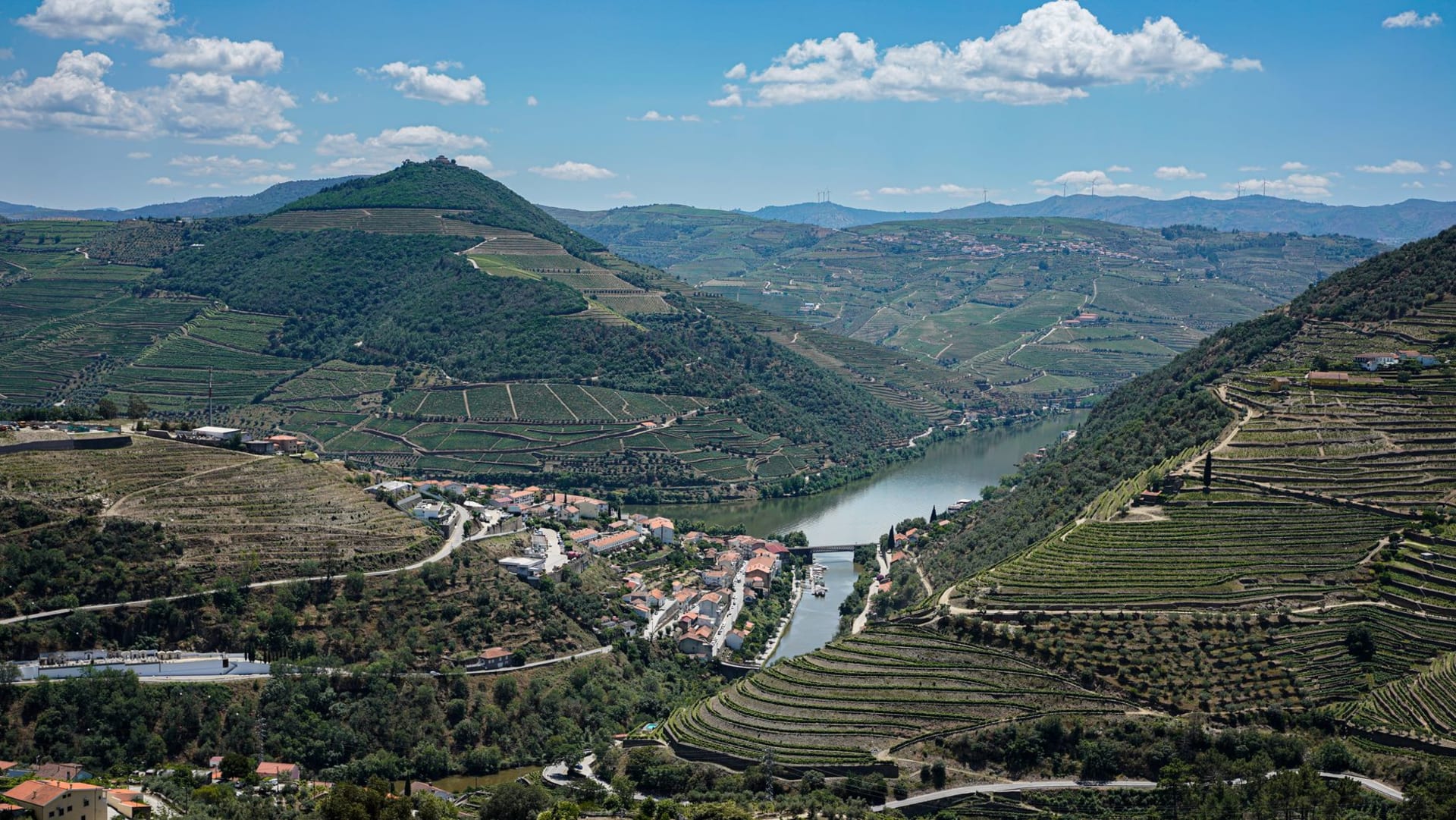
Peso da Régua
"Every other town in the valley is a postcard. Régua is a place where things happen."
Régua surprises people who come expecting another quaint village with a wine shop and a viewpoint. This is a proper town — a working river port with supermarkets and diesel fumes and trucks loaded with wine barrels navigating streets not designed for them. It is not beautiful in the easy, terraced-vineyard way of Pinhão, and that is precisely why I keep coming back. Régua is where the valley does business, where the cooperative cellars store the harvest before it moves downstream, where fishermen and farmers and winemakers all share the same esplanada along the waterfront. I arrived on a Tuesday morning in October and the market on the square was selling smoked sausages, misshapen apples, bunches of late-harvest grapes still warm from the vine, and secondhand tools. Nobody was there for the scenery.

The Museu do Douro sits at the waterfront in what was once the headquarters of the Casa do Douro, the regulatory body that has governed port wine production since the 1930s. The building is handsome in a stately way, and the museum inside is one of the genuinely good regional museums in Portugal — not just rows of dusty bottles and faded labels, but a serious engagement with the valley’s history: the Marquis of Pombal demarcating the wine region in 1756, the peasant uprisings of the early twentieth century, the flood years when the river swallowed the villages along its banks. There is a section on the rabelo boats that carries enough technical detail to make you understand exactly how precarious it was to shoot the rapids downstream with a cargo of wine barrels, steered by a single long oar. I spent two hours there and could have spent three.
The train station at Régua also has azulejos — a different set from Pinhão’s, depicting not the harvest but the landscape of the valley itself: the schist hills, the river bends, the quintas seen from the water. And along the riverfront, the wine lodge signage of Sandeman and Ramos Pinto and others faces the water as it has since the nineteenth century, when this was the commercial heart of the port wine trade.

Eating in Régua is a lesson in abundance. There is a restaurant near the market — the kind of place with plastic tablecloths and a menu handwritten on a board — where the cozido à portuguesa arrives in a clay pot large enough to feed a small family, layers of smoked meats and root vegetables and chouriço cooked until the broth has turned dark and complex. I ate alone and finished about half, and the owner sent me off with the rest wrapped in foil. The Douro reds here cost what they should: eight euros for a wine that would carry forty on a Lisbon restaurant list.
When to go: Régua works year-round better than most Douro stops, since it is a functioning town rather than a seasonal destination. That said, harvest season — September through October — brings a particular energy to the market and the cooperative cellars. The wine festival in early October draws producers from across the valley and is refreshingly local in character, not aimed at tourists.