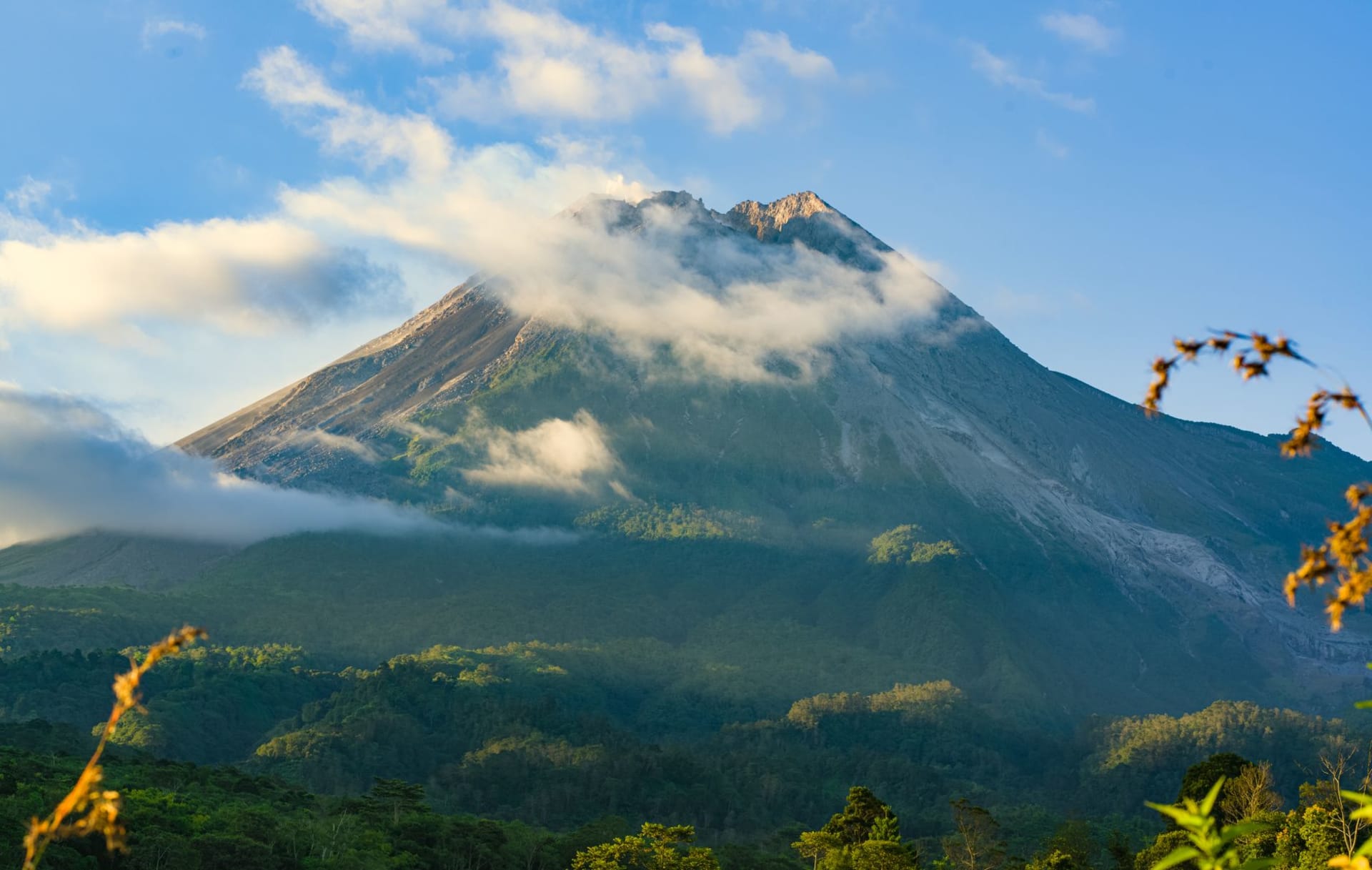
Morne Trois Pitons National Park
"The forest does not open for you here. You move through it on its terms, and it sets generous ones."
The park does not have a single entrance in the way that parks I have visited in North America or Europe tend to have entrances — a gate, a sign, a fee booth. It has edges, which it shares with the rest of the island, and you cross them by driving through Laudat or along the Roseau Valley road and noticing that the trees have become very tall and very close and the light through the windshield has gone a particular shade of filtered green that means the canopy has closed overhead. I crossed into the park for the first time without quite knowing I had done so, and only understood where I was when the road became a track and the track stopped and there was simply forest in every direction.

Morne Trois Pitons covers roughly 68 square kilometres of the island’s interior — about a third of Dominica’s total area — and contains within it a landscape of bewildering geological concentration. The Boiling Lake. The Valley of Desolation. Freshwater Lake, sitting in an old volcanic crater at nine hundred metres, cold and silver and perfectly still at dawn, ringed by elfin forest that grows stunted and horizontal in the trade winds. Boeri Lake above it, smaller and higher, unreachable without a scramble through cloud forest where the lichen grows so thick on the branches it muffles sound. I hiked from Freshwater Lake to Boeri Lake one morning and arrived at the upper lake in mist so dense I could not see the opposite shore, which should have been disappointing and instead felt like the point.
The biodiversity in the park is the kind that makes biologist friends say things I can only partially follow. The Sisserou parrot — Dominica’s national bird, purple-and-green and existing nowhere else on earth — lives primarily in the high forest here. The Jaco parrot, its smaller relative. Hummingbirds in colours that seem compositional errors for birds. The forest has several hundred plant species, a number I find difficult to translate into anything concrete, but standing inside it you register the fact empirically: every surface grows something. The tree ferns drip with bromeliads. The fallen trees host ferns and mosses and other ferns growing from those ferns. The decomposition rate in this humidity is fast enough that the forest floor smells actively alive, a rich, dark smell of continuous processing.

The mountain itself — the peak of Morne Trois Pitons, at 1387 metres the island’s second highest — is a full-day hike from the park’s trails and requires a guide and good weather. I did not attempt it. I spent my park days on the middle trails instead, at the level of the lakes, where the effort-to-reward ratio suited my current fitness and the light through the tree ferns was doing something with the morning mist that I kept stopping to try to photograph and failing. Some things do not photograph. They just happen to you and you carry them home.
When to go: The park’s high elevation trails are best in the dry season (January to April) when cloud cover is lighter and the Boiling Lake trail is safest. Freshwater Lake and the easier trails are accessible year-round but can be misty and atmospheric even in dry season — which is part of the appeal rather than a problem. Start any high-elevation hike before seven in the morning.