Banani
"Some people built their homes halfway up a vertical cliff, and nobody can tell me exactly how."
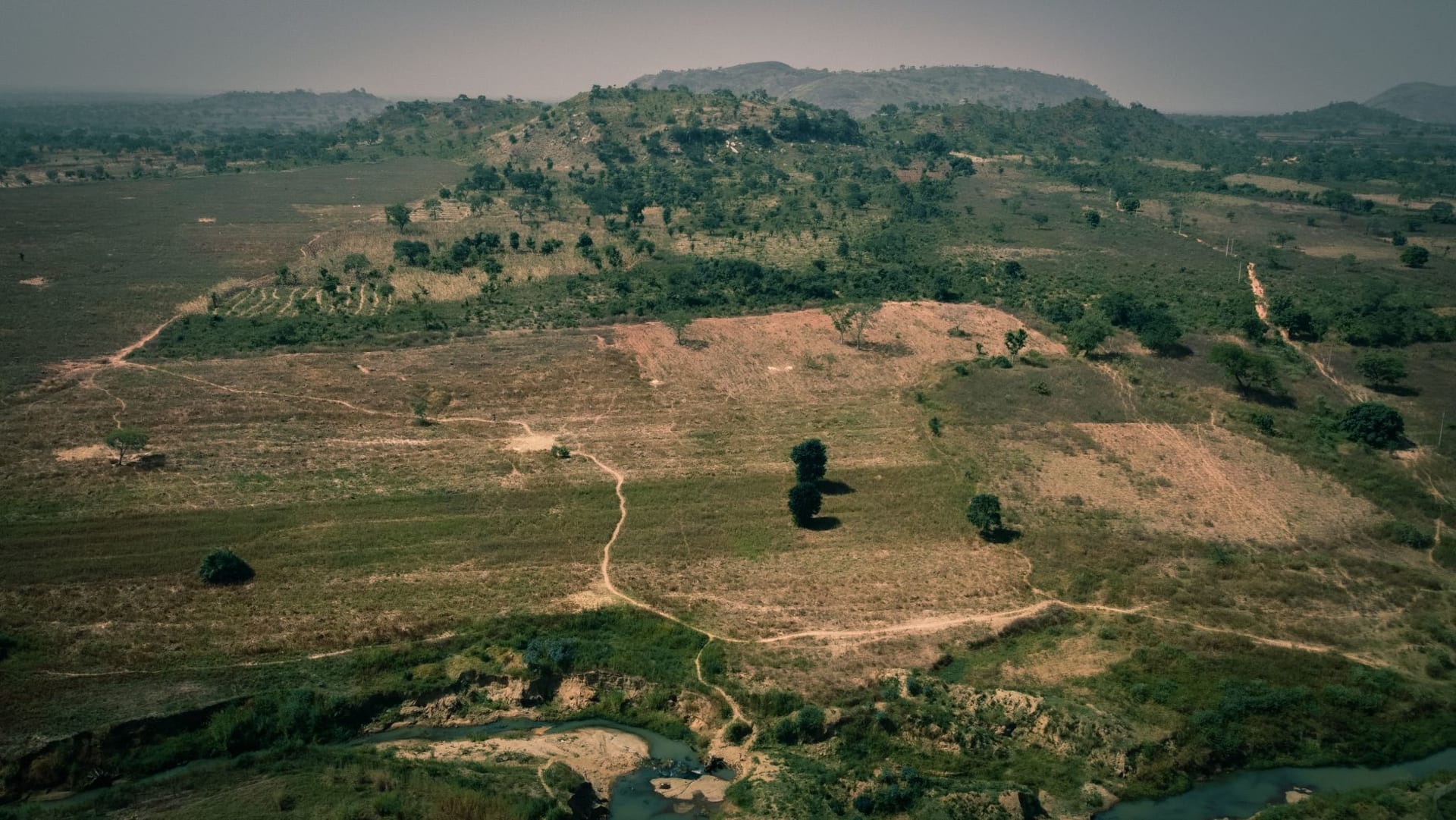
We walked into Banani in the last hour of light, when the Bandiagara escarpment turns the colour of a struck match and the heat finally begins to let go of the day. I had been walking the foot of the cliff for a couple of days by then, village to village, and Banani is the one that stopped me. It sits directly against the base of the great sandstone wall, just below the village of Sangha up on the plateau, and looking up from its dusty central clearing you see not one settlement but the layered history of three peoples stacked vertically on the rock.
Reading the cliff
The Dogon will tell you, if you sit with them long enough, that they were not the first here. High up on the cliff face — far above the current village, in places that look genuinely unreachable — are the small mud structures of the Tellem, the people who lived here before the Dogon arrived some six centuries ago. The Tellem built their granaries and burial chambers into clefts and ledges dozens of metres up, and nobody I spoke to could give me a convincing account of how. The popular explanation involves vines that no longer grow, or ropes, or simply that the people were different then. I prefer leaving it unexplained.
Below the Tellem dwellings sit the Dogon granaries — the famous little mud towers with their pointed thatch caps, men’s granaries and women’s granaries built to slightly different designs, each one a private bank of millet and secrets. And below those, at the bottom, is the living village: flat-roofed houses, a toguna (the low men’s meeting shelter where the roof is deliberately too low to stand up and start a fight), and the steady business of an ordinary afternoon.
An evening among the houses
My guide, a young man from a village further along the cliff, was a Dogon himself, and he moved through Banani with the easy courtesy of someone visiting cousins. He greeted elders with the long ritual exchange of questions — How is your family? How are your fields? How is the morning? — that can take a full minute before any actual conversation begins, and which I came to love for its sheer refusal to be rushed. We were given a calabash of water and, a little later, millet beer, sour and cloudy and warm, which I drank because refusing it would have been rude and which I came to enjoy more than I expected.
I slept that night on a flat roof under more stars than I have words for, the cliff a black mass blotting out half the sky, the village quiet except for a baby somewhere and the occasional bark of a dog. It is one of the most extraordinary places I have ever spent a night, and I am aware, writing this, of how much has changed in this region since — and how lucky I was to walk it freely when I did.
A note I cannot leave out: the security situation across much of central Mali has made this region largely off-limits to travellers for some years now. I write about Banani as I found it, with enormous respect, and with the hope that the people who showed me such generosity are safe and that one day the cliff can be walked again.