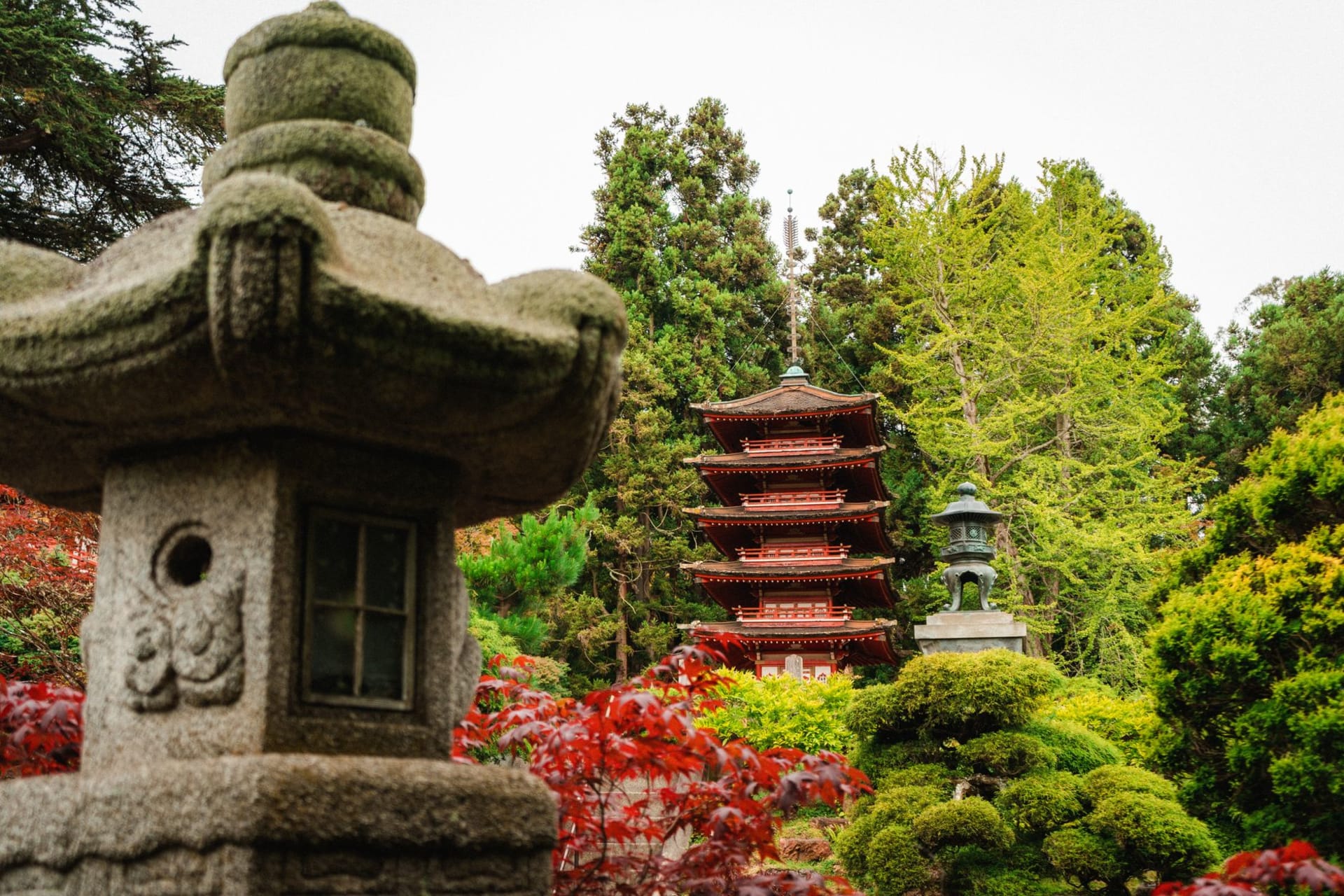
Japanese Peace Pagoda
"I followed the sound of a single drum up a misty hill at dawn and found a monk who had been beating it, alone, for thirty years."
Darjeeling is a town of famous viewpoints — Tiger Hill at sunrise, the Batasia Loop, Observatory Hill — and they are all worth doing. But the place that has stayed with me longest is quieter and stranger than any of them: a brilliant white Japanese stupa standing on the Jalapahar ridge at the southern end of town, reached by a steep climb through tea-stained mist, with the great wall of Kanchenjunga floating behind it on a clear morning. The Darjeeling Peace Pagoda is one of dozens built around the world by the Nipponzan-Myohoji, a Japanese Buddhist order founded by a monk named Nichidatsu Fujii whose entire mission, after the bombings of 1945, was the promotion of world peace through these monuments.
The climb and the drum
We walked up from the town centre — it is steep, maybe forty minutes of switchbacks past quiet guesthouses and dripping pines — and the thing that pulled us the last stretch was sound. Somewhere above us in the mist, a drum was beating, slow and steady, a single deep pulse and a low chanted syllable repeating: na-mu-myo-ho-ren-ge-kyo. We came out of the trees into the pagoda’s compound and there was the source: a single Japanese monk in white robes, seated cross-legged at the base of the stupa, beating a hand drum and chanting, exactly as monks of this order have done here every dawn and dusk for decades. He did not look up. He was not performing for visitors. He was simply doing the thing the pagoda exists for.
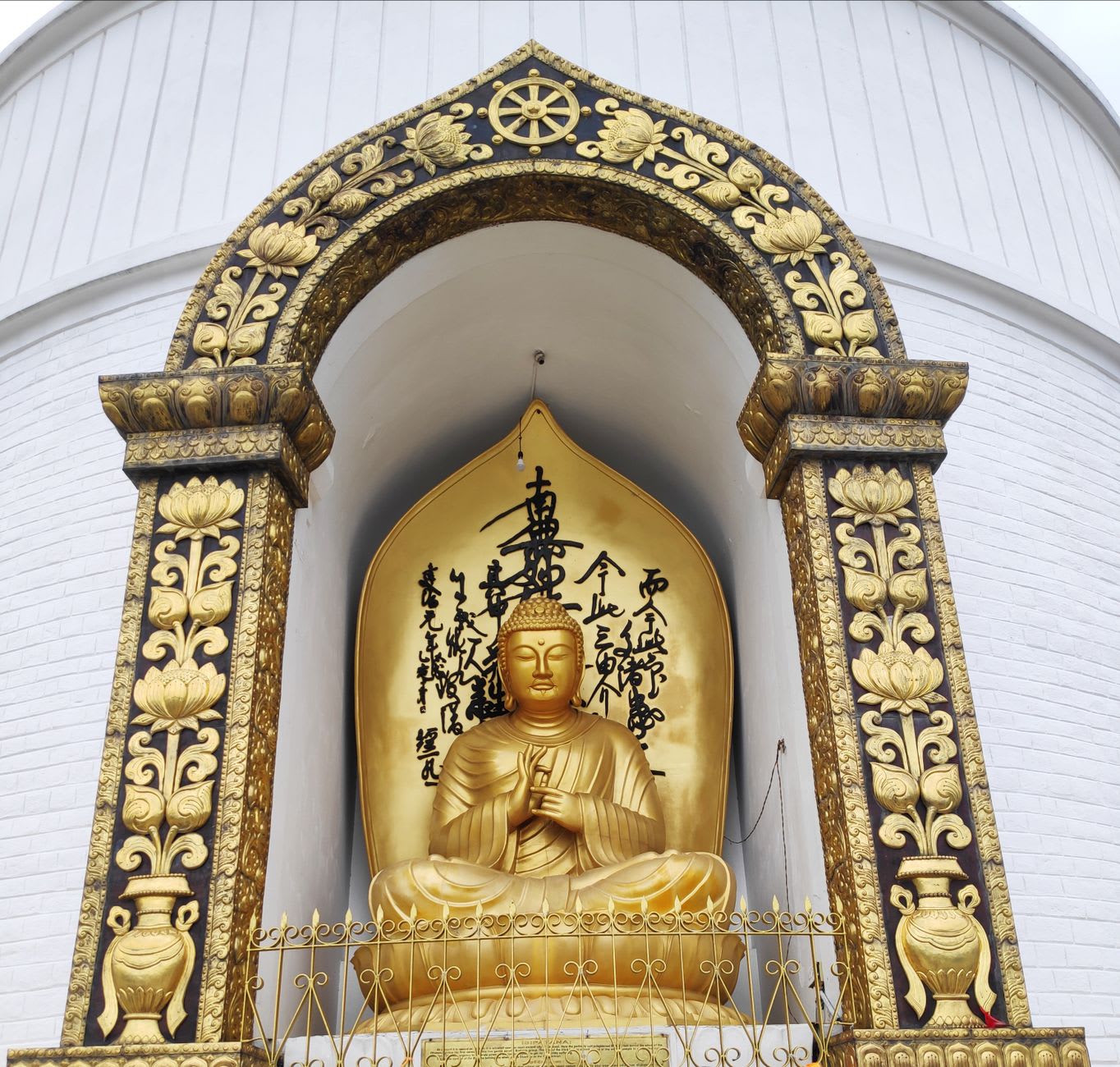
The stupa itself is a clean white dome, ringed with golden statues depicting the four key episodes of the Buddha’s life — birth, enlightenment, first sermon, and passing — each panel gleaming against the white in a way that feels almost startling in the soft grey Darjeeling light. You can climb the steps and walk a circuit around the upper level, and from up there, on the right kind of morning, the clouds part to the north and the snows of Kanchenjunga appear, vast and silent, the third-highest mountain on Earth presiding over a stupa built for peace. On the wrong morning you see nothing but mist, which is its own kind of meditation.
Stillness in a busy town
What I loved about it is precisely that it is not a major attraction. Tiger Hill at dawn is a scrum of cars and tripods and vendors selling hot tea to three hundred shivering tourists; the Peace Pagoda, twenty minutes away, was almost empty. The Nipponzan-Myohoji built it in 1992, and the order’s vow of nonviolence and their daily practice give the whole hilltop an atmosphere of genuine, unforced calm that the more famous spots, for all their beauty, simply don’t have. Lia sat on the steps for a long time and I didn’t disturb her. Sometimes the drum is enough.

There is a small Nipponzan-Myohoji temple beside the stupa where visitors are welcome to sit in on the prayer sessions; the drumming happens twice daily, and timing your visit to the morning session is what turns a nice viewpoint into something you remember for years. Cover your shoulders, leave your shoes at the entrance to the upper platform, and keep your voice down. The monk will not mind your presence at all — but the silence between the drumbeats is the point.
When to go
Come for the dawn prayer session, ideally between October and December or in spring, when the skies are clearest and Kanchenjunga is most likely to show itself. The monsoon months from June to September wrap the hill in thick cloud — atmospheric, but no mountain views. It is an easy if steep walk from central Darjeeling, or a short taxi ride; combine it with the nearby ropeway or the Jalapahar viewpoints. Free to enter; donations support the temple.