Asia
Darjeeling
"The mountain was there before the tea, and the tea changes everything."
The toy train gets you halfway. It climbs through rhododendron forest in hairpin loops, the engine breathing hard, the hillsides thickening with terraced green until you are no longer sure whether you are looking at a plantation or a painting. By the time Darjeeling appears — a jumble of colonial facades and Buddhist prayer flags clinging to a ridge at 2,100 metres — the air has already changed. Cold and thin and carrying the faint, unmistakable smell of fresh leaf. I arrived in October with no plan except to find the best cup of tea of my life, and I found it by the second morning, standing in a plantation above Happy Valley, watching a picker move through the rows with a speed that made the whole thing look choreographed.
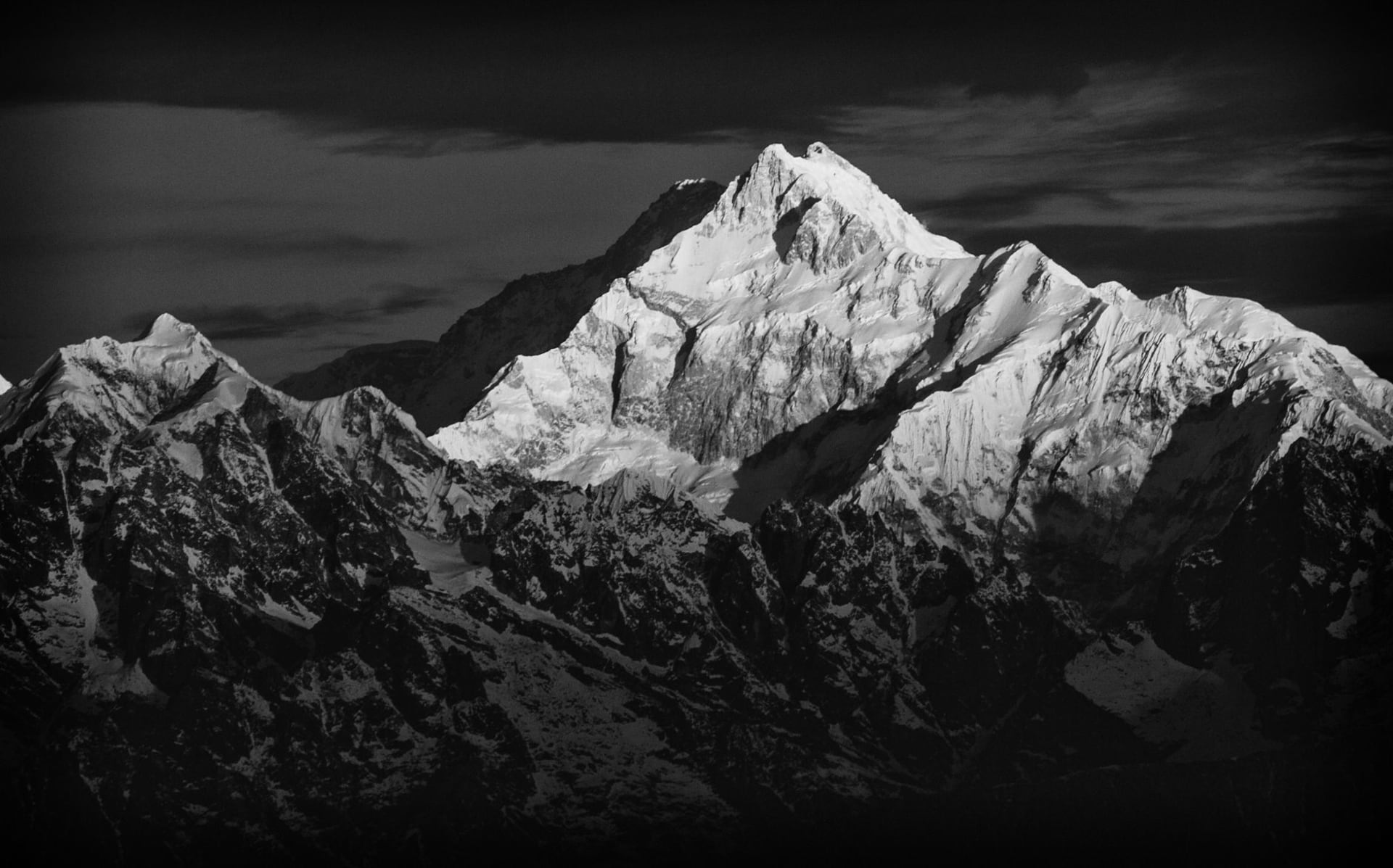
Darjeeling is one of those places where the main export and the main experience are the same thing. You cannot separate the town from the tea — the plantations wrap it on all sides, the names on every menu are first and second flush, Muscatel character, autumn harvest. At Nathmulls, the family shop on Laden La Road that has been running since 1931, I spent an hour tasting single-estate samples with one of the sons, who talked about terroir with the precision of a Burgundy winemaker. The highest-elevation estates — Sungma, Jungpana, Thurbo — produce something genuinely irreplaceable, a floral lightness that no Ceylon or Assam leaf has ever come close to. On a clear dawn, if you climb to Tiger Hill by five in the morning, Kanchenjunga appears above the clouds in the first light like a wall of rose-gold ice, and you understand immediately why people have been building monasteries up here for centuries.
The rest of Darjeeling moves at altitude speed — unhurried, slightly cold, sustained by momos from a plastic stool and butter tea that takes getting used to. Mahakal Temple, the Japanese Peace Pagoda, the Himalayan Mountaineering Institute with its collection of Tenzing Norgay photographs — none of it is dramatic, all of it is specific. What holds you here is not a list of sights but the quality of morning air and the feeling that you have arrived somewhere that operates by its own rules, with the third-highest mountain on earth watching from the north.
When to go: April and May for the first flush harvest — the most sought-after teas and the clearest skies before the monsoon. October and November for the second window: mist-free mornings, Kanchenjunga fully visible, and the autumn harvest underway. Avoid June through September — the monsoon turns the mountain roads into something closer to rivers.
What most guides get wrong: They treat Darjeeling as a day trip from Kolkata or a quick stop before Nepal. The point is not to arrive and photograph the mountain — the point is to slow down enough that the place actually registers. Stay four or five nights, book a plantation tour at a single estate rather than a tasting flight of six, walk the Mall Road at dawn before the vendors open. Darjeeling rewards the person who stays long enough to get cold.