Svaneke
"The smokehouse owner handed me a fish, refused my money, and pointed toward the sea. I understood."
I arrived in Svaneke by bicycle, which is the only sensible way to arrive anywhere on Bornholm. The last stretch of the coastal path from Nexø runs through a corridor of pine and heather, and then the sea opens up on your left and the town appears below — a cluster of red-tiled roofs and white half-timbered walls descending to a small harbor that smells, unmistakably, of burning oak and salt. I had been cycling for three hours and was covered in a light sheen of North Sea grit, and when I walked into that cloud of smoke rising from the røgerier along the waterfront, something in me simply released. Whatever pace I’d been keeping — some leftover urgency from the mainland — dissolved entirely.
Svaneke is the smallest town in Denmark to have ever held the title of “most beautiful town in Denmark,” which it won in 1975 and has been quietly coasting on ever since. The self-congratulation is forgivable because it’s accurate. The streets are cobbled and narrow, the houses painted in colours that manage to be both cheerful and restrained — a muted terracotta here, a sage green there — and the central square has a clock tower that looks mildly surprised to still be standing. But the real point of Svaneke is not the architecture. It is the smokehouses, and specifically what comes out of them.

There are three røgerier still operating in the town, and each has its own personality. The one I kept returning to was run by a man in his sixties who had inherited the business from his father and seemed to operate on a schedule dictated entirely by the fish and the weather. Röget sild — smoked herring — was the main event, pulled from the kiln in batches, skin lacquered to a deep amber, flesh just barely warm. You eat it standing up, on rye bread if you’re lucky enough to grab a slice, with your fingers getting progressively fishier and no one caring in the slightest. I also ate röget makrel, the mackerel version, which has a richer, oilier quality that I found even more satisfying. The smoke is cold-pressed into the flesh slowly, over hours. The result tastes like patience.
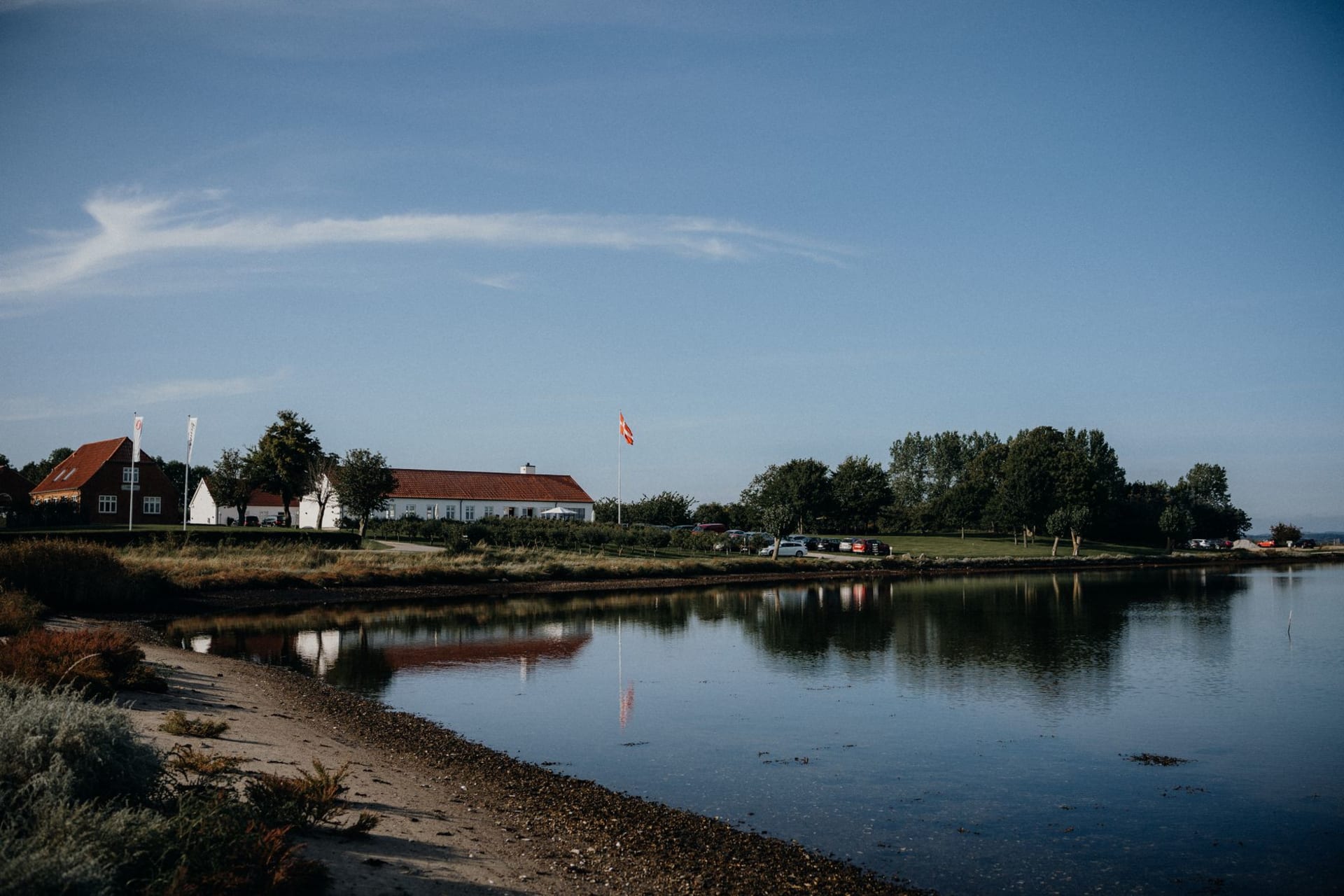
The harbor itself is worth an hour of simply sitting. Small wooden boats come and go on no apparent schedule. Cormorants dry their wings on the breakwater rocks. The water in Svaneke’s harbor has a particular clarity — this is the eastern, Baltic side of Bornholm, sheltered from the open-sea roughness of the north coast — and on calm afternoons it turns a green so deep it reads almost black. The local brewery, Svaneke Bryghus, operates out of a building near the harbor and makes a dark ale that pairs with the smoked fish with a logic that seems almost too convenient to be coincidental. I drank two glasses and ate another herring and watched the light go sideways and golden at around nine in the evening, the way it does in these latitudes in summer.

The craft economy of Svaneke is worth noting too. The town has, over the past few decades, accumulated a remarkable density of glassblowers, ceramicists, and silversmiths — partly because Bornholm has historically attracted artists, and partly because Svaneke’s remoteness from the mainland encourages a certain deliberate way of making things. The studios are mostly open to visitors, and watching a glassblower work at the furnace on a summer afternoon, the molten glass glowing orange while the harbor shimmers below the studio window, is the kind of experience that makes you feel you’ve accidentally wandered into a more intentional version of life.
When to go: Late June through August for the best smokehouse hours and the long amber evenings, but September is when the crowds thin and the light gets extraordinary — horizontal and almost violent in its clarity. Avoid midsummer weekends if you can, when Danes from Copenhagen descend in force and the harbor fills up fast.