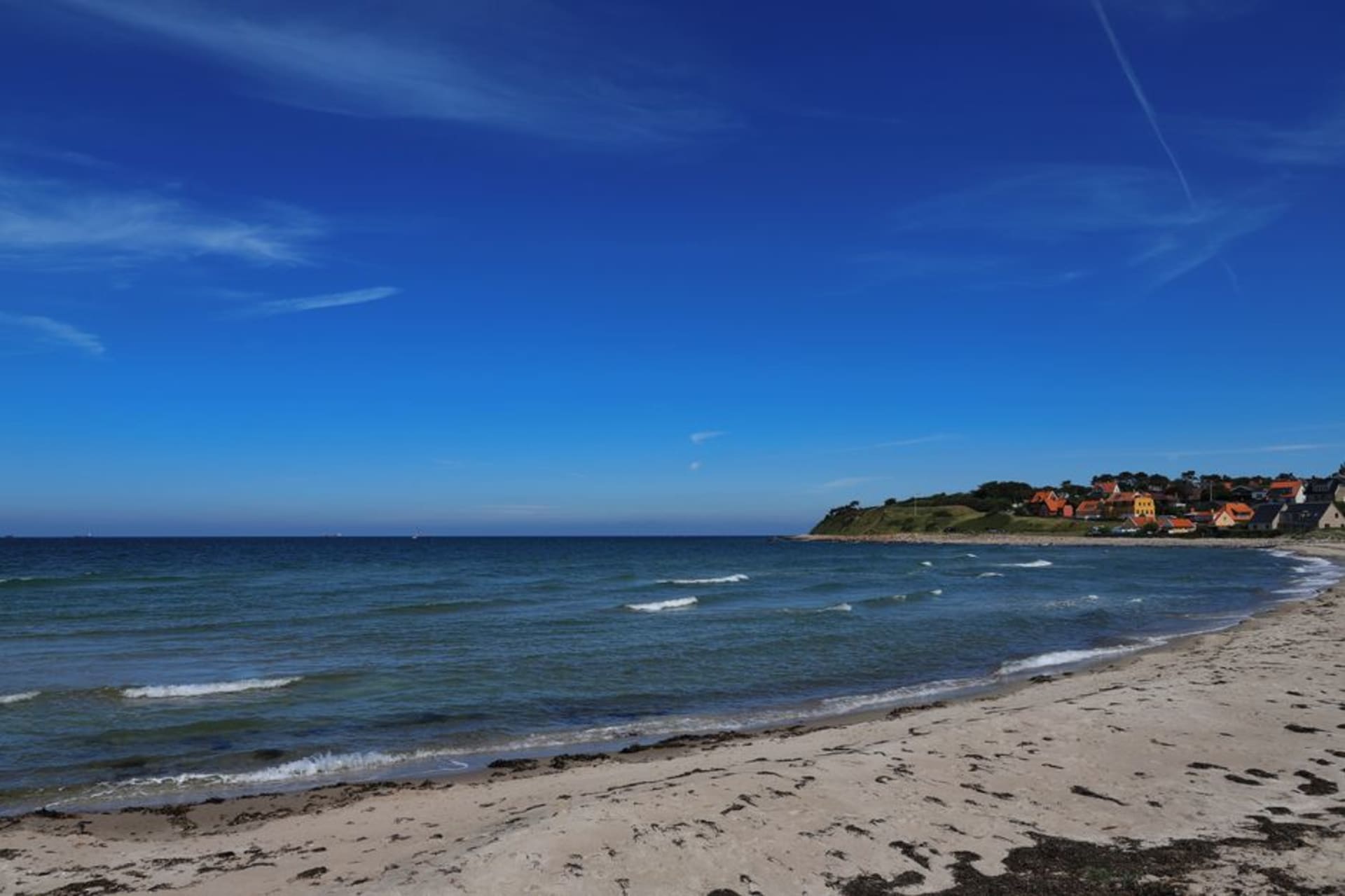
Bornholm
"Denmark, but someone forgot to flatten it and forgot to turn off the sun."
A granite island adrift between Sweden and Poland, where round fortress-churches, herring smoke, and endless summer light rewrote what I thought Denmark looked like.
Lia found Bornholm on a map almost by accident, this little granite dot sitting way out in the Baltic, closer to Sweden and Poland than to Copenhagen. That alone made me want to go. We’d spent a week doing the flat, tidy, wind-scoured Denmark I expected, and then we took the ferry out and the ground itself changed under our feet. Bornholm is bedrock where the rest of the country is glacial till, and you feel it instantly in the coastline: instead of soft dunes, there are pink-grey cliffs and boulders the size of cars, split and stacked by centuries of quarrying. Locals call it the Sunshine Island, and after three days of genuinely unbroken blue skies, I stopped assuming that was just tourism-board flattery.
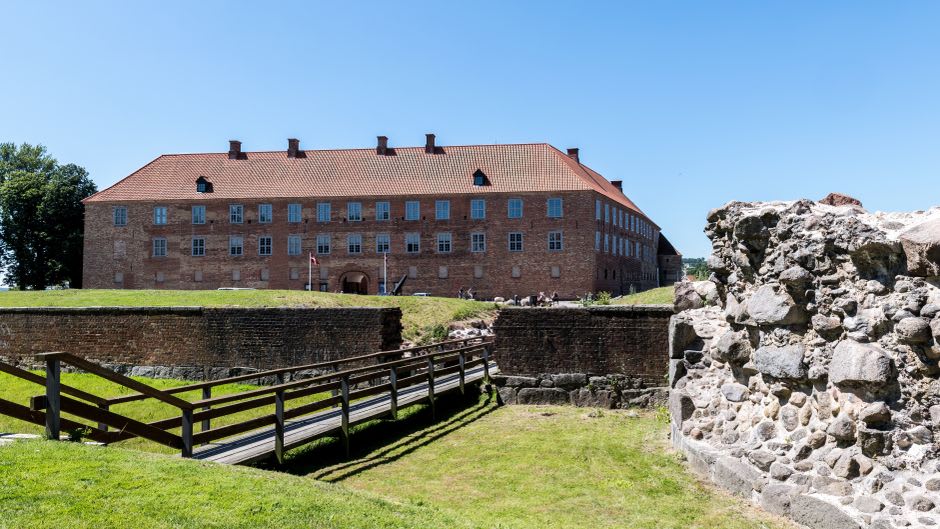
What got me most, though, were the round churches. We rented bikes in Gudhjem and pedaled inland to Østerlars, and I wasn’t prepared for how it would feel standing under those thick white walls. It’s a church, sure, but it’s built like a keep, nearly nine hundred years old, with walls heavy enough that you understand immediately this was also a place to hide when longships showed up on the horizon. There are only four rundkirker left on the island, and Østerlars is the biggest and strangest, this cone-roofed drum of a building that looks like nothing else I’ve seen in Scandinavia. I stood in the nave for a long time just running my hand along the stone, thinking about how many generations of islanders had done the same thing waiting out a raid.
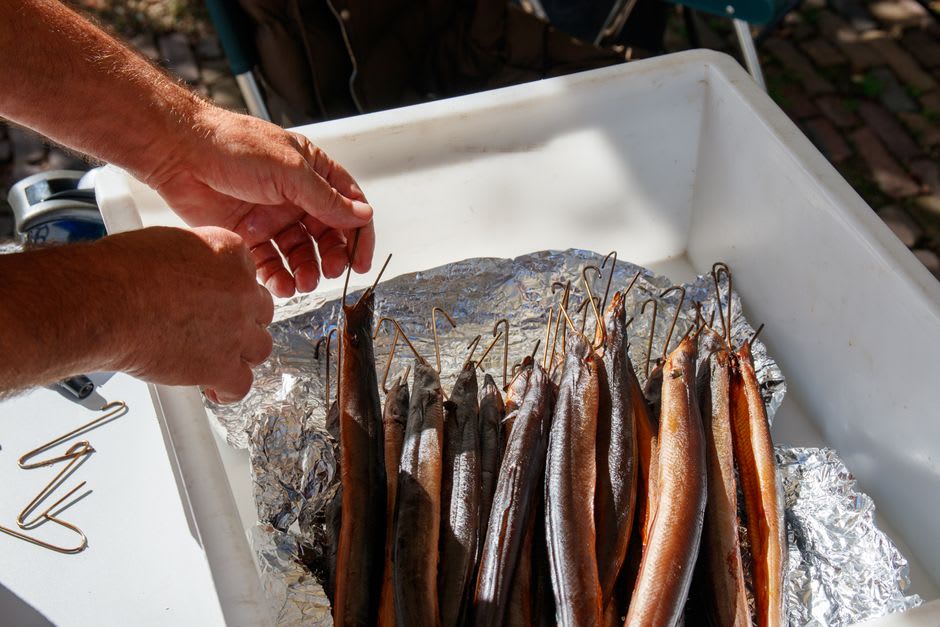
The other thing Bornholm gave us was herring, more herring than I’ve eaten in my life, all of it in Svaneke and Gudhjem’s little røgeri smokehouses where the chimneys never really stop working. We ate our first plate sitting on a harbor bench in Gudhjem, warm smoked herring on rye with a raw egg yolk on top, a beer each, watching fishing boats come in past the old wooden warning cross on the hill. Lia, who claims to dislike fish, went back for seconds. Svaneke was quieter and prettier still, half-timbered houses in ochre and red circling a tiny harbor, and we ended up buying more smoked fish than we could reasonably carry back to the mainland.
By the time we left, Bornholm had rearranged my whole idea of what a Danish island could be, granite instead of chalk, fortress churches instead of manor houses, and a light that genuinely does linger longer than it should this far north. I keep telling people it’s the one part of Denmark that surprised me.
When to go: Aim for June through August, when the island earns its Sunshine nickname with long golden evenings and the food and music festivals spill out into every harbor square.