Nicosia
"Every city has a fault line. Nicosia's is painted on the road, and you just walk across it."
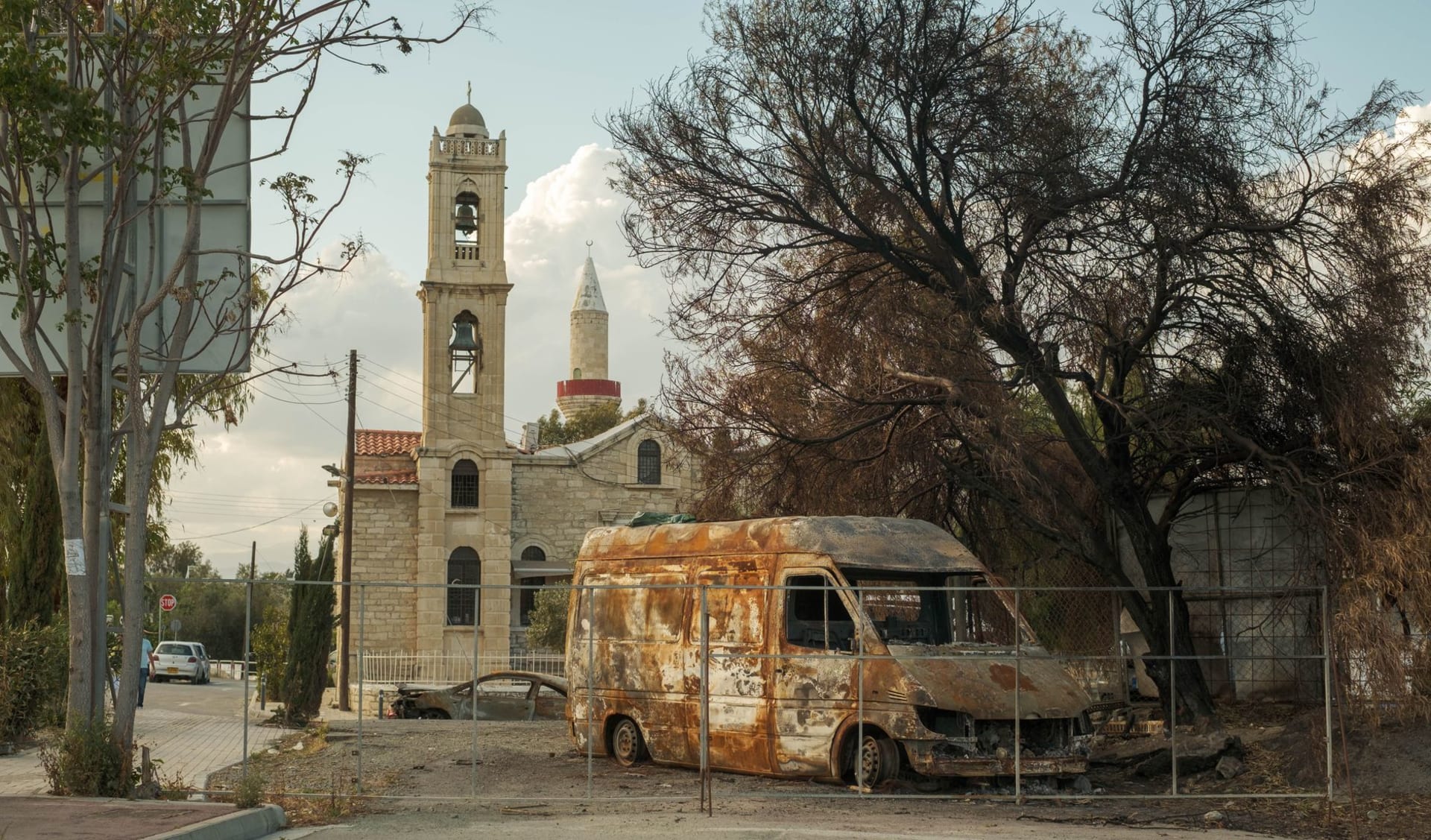
I came to Nicosia expecting something grim — checkpoint anxiety, hostile officials, some lingering Cold War chill. What I found instead was a Tuesday morning with the light still low and a dozen Cypriot pensioners drinking coffee on plastic chairs ten meters from a UN watchtower, completely unbothered by the absurdity of their location. That is Nicosia. The tension is real, but life has grown so neatly around it that the division sometimes reads less as wound than as furniture — not forgotten, just incorporated.
The Ledra Street crossing is the most trafficked pedestrian checkpoint. You hand your passport to a bored official, wait about ninety seconds, and step into the Turkish Republic of Northern Cyprus — a state recognized by exactly one country. The buffer zone between the two sides is a strip of crumbling buildings, some with furniture still visible through broken windows, frozen in 1974. Cats live there. Weeds have reclaimed the pavements. It is the most haunted fifty meters I have ever walked.

In the south, the old city inside the Venetian walls is dense with Byzantine churches, Cypriot meze restaurants, and the Cyprus Museum — the best single collection of ancient Cypriot art on the island, with terracotta figurines and Bronze Age artifacts that predate every civilization most visitors can name. The market on Ledra Street in the morning sells produce and halloumi and loukoumades fried to order. I ate mine with honey and crushed walnuts standing at a counter, and the oil burned my fingers, which is the correct way to eat them.
On the northern side, the landscape of the old city transforms quickly. The Büyük Han caravanserai — a sixteenth-century Ottoman inn built around a fountain courtyard — now hosts craft shops and a small café where the tea comes in tulip glasses with two sugar cubes on the side. The Selimiye Mosque, which was once the Gothic Cathedral of Saint Sophia, is one of the stranger architectural experiences in the Mediterranean: the pointed arches and rib vaulting of a fourteenth-century French Gothic building, still fully intact, with the minaret grafted on and the altars replaced by a prayer niche pointing toward Mecca. No explanatory panel fully prepares you for it.

I walked both sides in a single afternoon, which is geometrically the same city — same Venetian walls, same limestone streets, same heat pressing down from the same white sky. What changes is the language on the shop signs, the alphabet on the menus, the flag flying from the balconies. The Nicosians on both sides seemed to find my tourist fascination with the crossing mildly amusing. To them, it is simply the way their city has been arranged. For how long, nobody seems certain.
When to go: Spring (March through May) and autumn (September through November) are ideal for walking the old city, when the heat is manageable and the light is long and golden. July and August inland can reach 40°C, which makes the narrow streets brutal by midday. The crossing is open year-round during daylight hours.