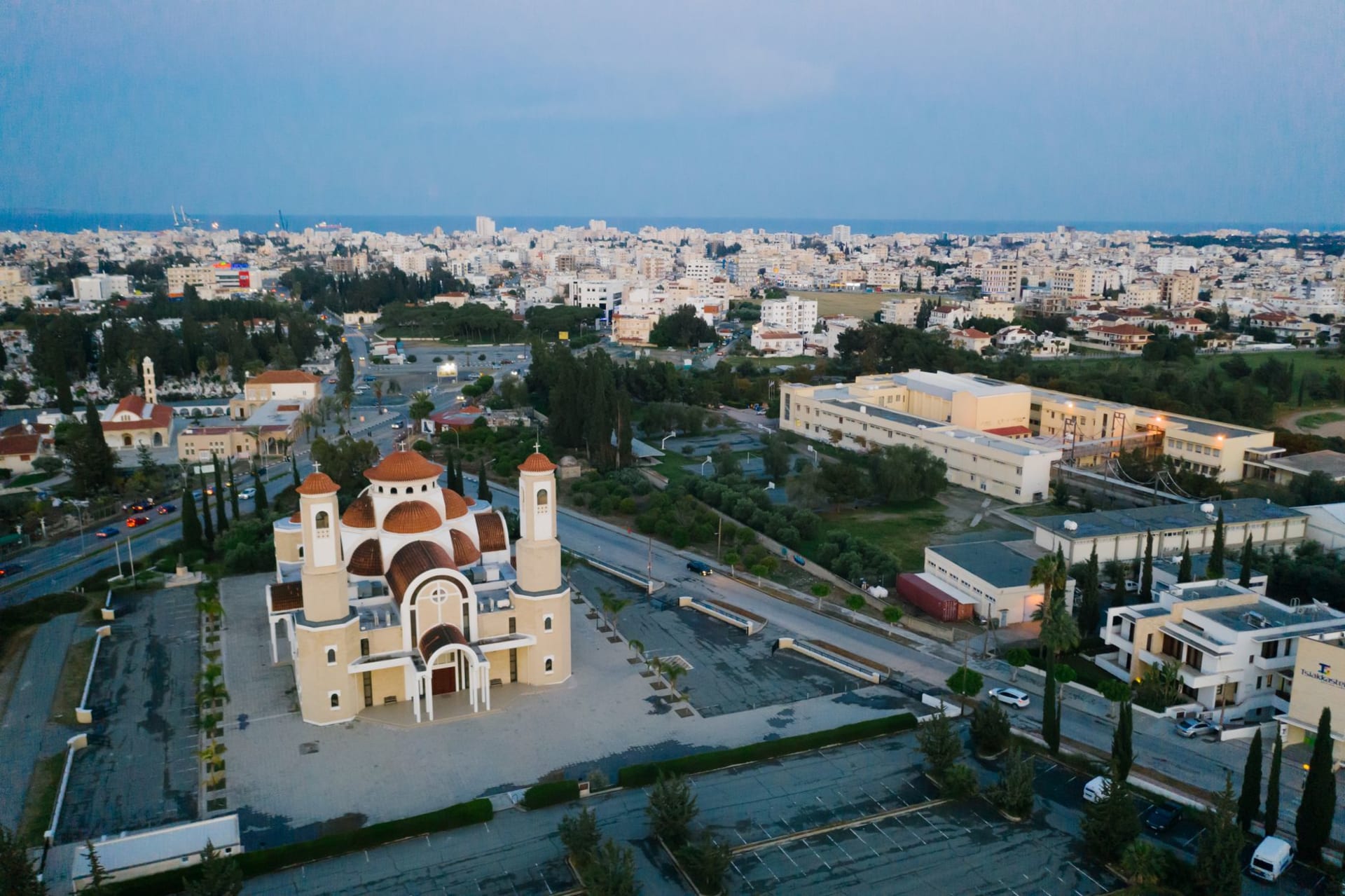
Larnaca
"Larnaca is the city that greets you first and asks for nothing in return. That kind of welcome is rarer than it seems."
Most people experience Larnaca only from the inside of an airport. They land, collect their bags, get into a taxi, and leave immediately for Limassol or Paphos, treating this city as a logistical staging post rather than a destination. I did the same on my first visit. On my second, I missed a connection and had to stay two nights, and I discovered a city that had been hiding in plain sight: unhurried, unpretentious, completely itself.
The Finikoudes promenade runs along the bay in the city center, lined with palm trees and the kinds of cafés that still have paper menus and put little dishes of olives on the table without being asked. I ate breakfast there on both mornings — fresh orange juice, halloumi grilled until the outside is crisp and the inside pulls apart in soft, salty layers, a small bread roll, and a cup of Cyprus coffee that is essentially Turkish coffee delivered with a slightly different name. The coffee comes with a glass of cold water and a piece of loukoumi. This is the correct breakfast and I will not accept alternatives.

The Hala Sultan Tekke stands at the edge of the salt lake about three kilometers southwest of the city, surrounded by palm and cypress trees, its dome visible across the flat water from a considerable distance. It is a mosque built in the eighteenth century over the tomb of Umm Haram bint Milhan, a companion of the Prophet Muhammad who died here in 649 CE — making it one of the holiest Muslim sites outside Arabia. The interior is cool and quiet and smells of old cedar. Women wash at the ablution fountain. Outside, the salt lake in winter and early spring is a stopover for flamingos, sometimes thousands of them, pink and improbably bright against the white salt crust. I went in January. The flamingos were there. I was not remotely prepared for how many.
The archaeological museum near the old fort has a Bronze Age collection anchored by finds from the ancient city of Kition, a Phoenician settlement that occupied parts of what is now downtown Larnaca from the thirteenth century BCE. The artifacts are modest — pottery, bronze tools, a few ivory pieces — but the museum is small enough that you can read every label without fatigue, and the cumulative weight of three thousand years compressed into one room is its own kind of experience.

At night, the streets behind the fort fill with the smell of charcoal from the meze restaurants that set up tables on the cobblestones. The meze here comes in a specific order: first the dips — hummus, taramosalata, tzatziki with good dried herbs on top — then grilled halloumi, then loukanika (Cypriot sausages spiced with coriander seed and red wine), then keftedes, then whatever fish or meat the kitchen recommends. You do not order à la carte. You accept what comes and you eat it in sequence and you drink the house wine, which is usually a rougher red from the Troodos that does exactly the job it needs to do. The evening takes as long as it takes. This, too, is the correct approach.
When to go: October through April for the salt lake and flamingos. The January flamingo season can be spectacular. Spring (March to May) for beach weather without the summer crowds. Larnaca is the island’s most year-round city — cooler in summer than inland, and busy with local life even in the off-season.