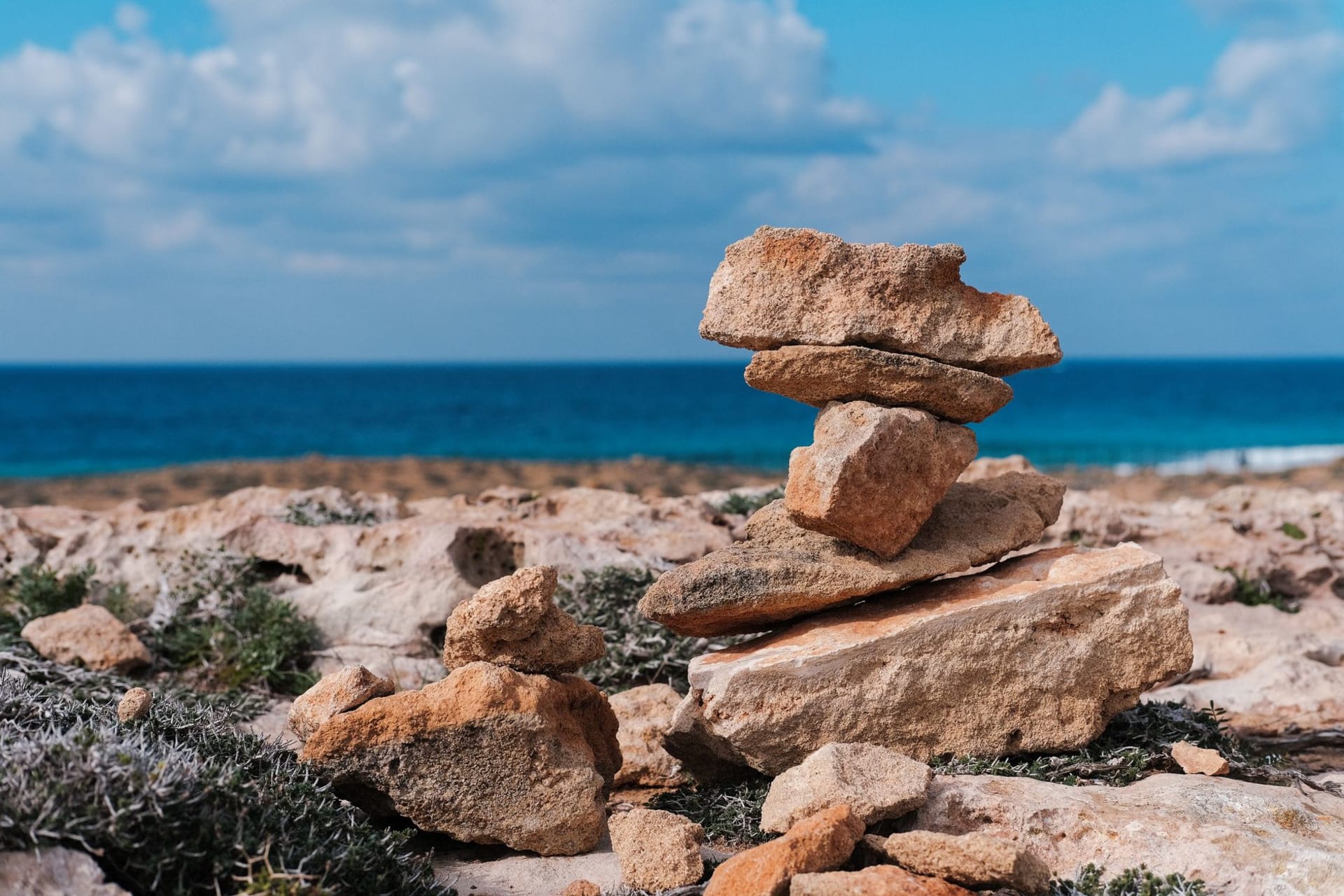
Karpaz Peninsula
"The Karpaz has wild donkeys on the beach and an early Christian basilica at the very tip. I could not have made either of those up."
Nobody warned me about the donkeys. I had driven nearly to the tip of the Karpaz Peninsula — the “panhandle” of Cyprus, a narrow finger of land pointing northeast toward Syria that gets progressively more empty and more beautiful the further you go — when a herd of perhaps thirty wild donkeys appeared on the road ahead. They were not in a hurry. They did not move for a car. I waited, which was the only option, and watched them file past with the absolute confidence of animals who have been inheriting this road for long enough that the concept of traffic has not penetrated their consciousness.
The Karpaz is the wildest and least visited part of Cyprus, in the Turkish north, a spit of limestone and scrub and pine that extends fifty kilometers into the sea. The villages are small and agricultural, the roads narrow, and the beaches at the far eastern end — Nangomi Bay, sometimes called Golden Beach — are long arcs of pale sand that in low season are entirely empty, with a quality of light on the water that photographers describe in terms the rest of us find embarrassing to repeat but which are accurate. I was there in May. There were three other people on three kilometers of beach.
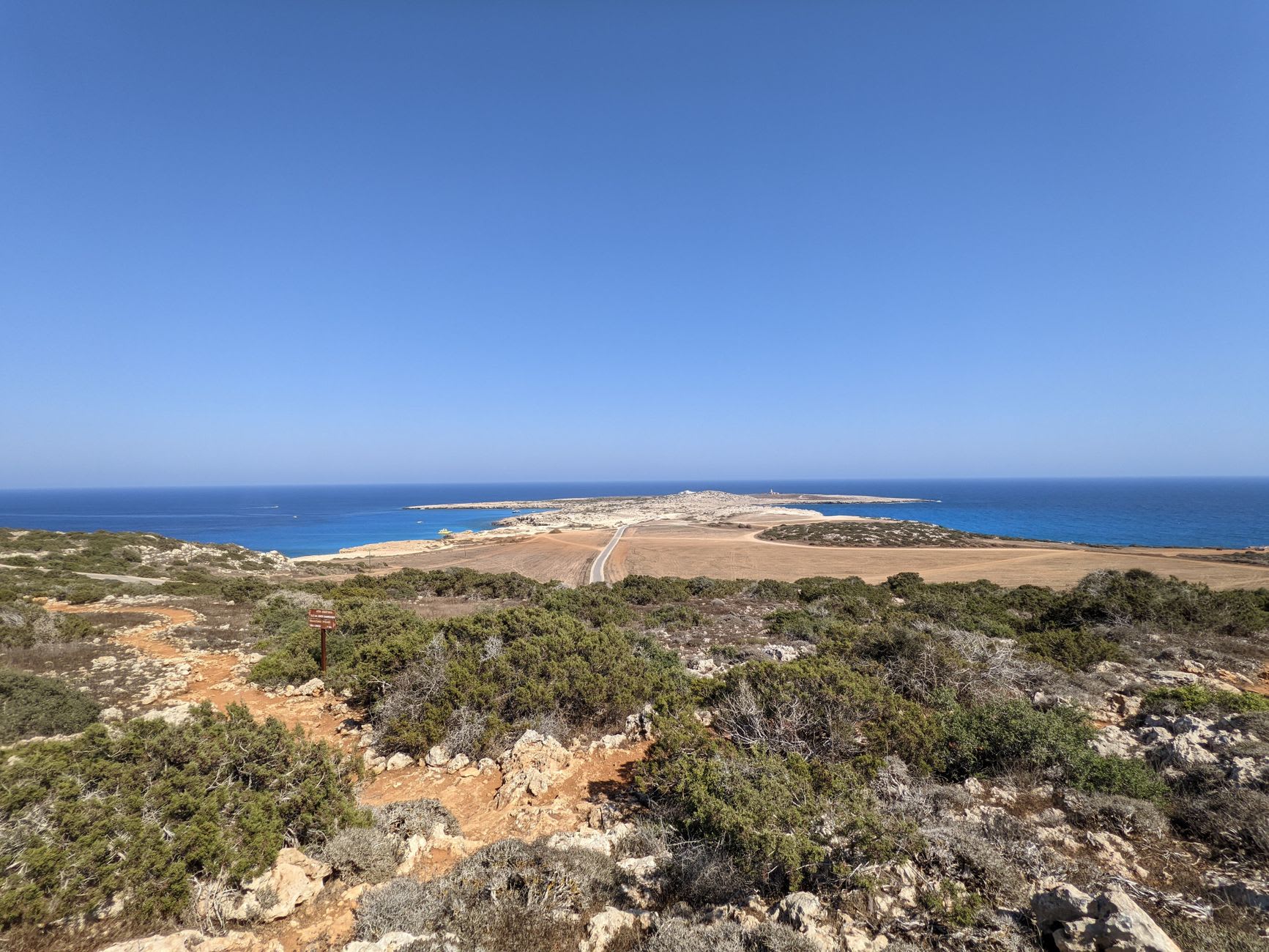
At the very tip of the peninsula, on a small promontory above the sea, stands the Apostolos Andreas Monastery — the Saint Andrew’s of Cyprus, one of the most important pilgrimage sites for Greek Cypriots, accessible now since the crossing points opened but still remote enough that the journey itself is part of the act. The monastery was built in the sixteenth century on the site of a much earlier Byzantine chapel, and local tradition holds that Saint Andrew himself stopped here on a voyage and restored the sight of a sea captain who prayed at this spot. The building was badly deteriorated after decades of disuse and is now being restored in a joint UNDP project. On the day I arrived, a group of Greek Cypriot women who had driven up from Nicosia were lighting candles in the restored church and speaking quietly to each other. They had been coming here since before 1974, one of them told me, and then had not been able to come for thirty years, and now they came every year. She said this without particular emotion, which made it more moving.
A few kilometers before the tip, the ruins of the ancient city of Carpasia and the fifth-century basilica of Agios Philon stand on a headland above a beach strewn with carved marble fragments — column drums, cornice sections, carved capitals — that have been here for sixteen centuries and appear to have been quietly rearranged by the sea into something that looks almost deliberate. I sat on one of the marble drums and ate the lunch I had packed, watching the waves cover and uncover the others. The monastery was just visible on the next headland. A heron was standing at the water’s edge, doing the thing herons do where they become so still they cease to be animals and become landmarks.

The village of Dipkarpaz, near the end of the peninsula, has a small Greek Cypriot community who remained after 1974 — one of the few such enclaves in the north — and their presence has kept the church of Agios Synesios open for services and maintained a connection to pre-division Cyprus that is difficult to explain but immediately felt. There is a small restaurant here where the Greek Cypriot owner serves meze that draws from both communities — halloumi and börek on the same table without comment — and this, in the context of everything else on this island, feels like the most significant thing I observed.
When to go: April through June for the empty beaches, wildflowers, and manageable heat. September and October after the summer crowds have left (they are modest here even at peak). The Karpaz is in northern Cyprus — bring your passport to cross at Nicosia or Famagusta. The road to the tip is manageable in a standard car but takes longer than the distance suggests due to its narrowness.