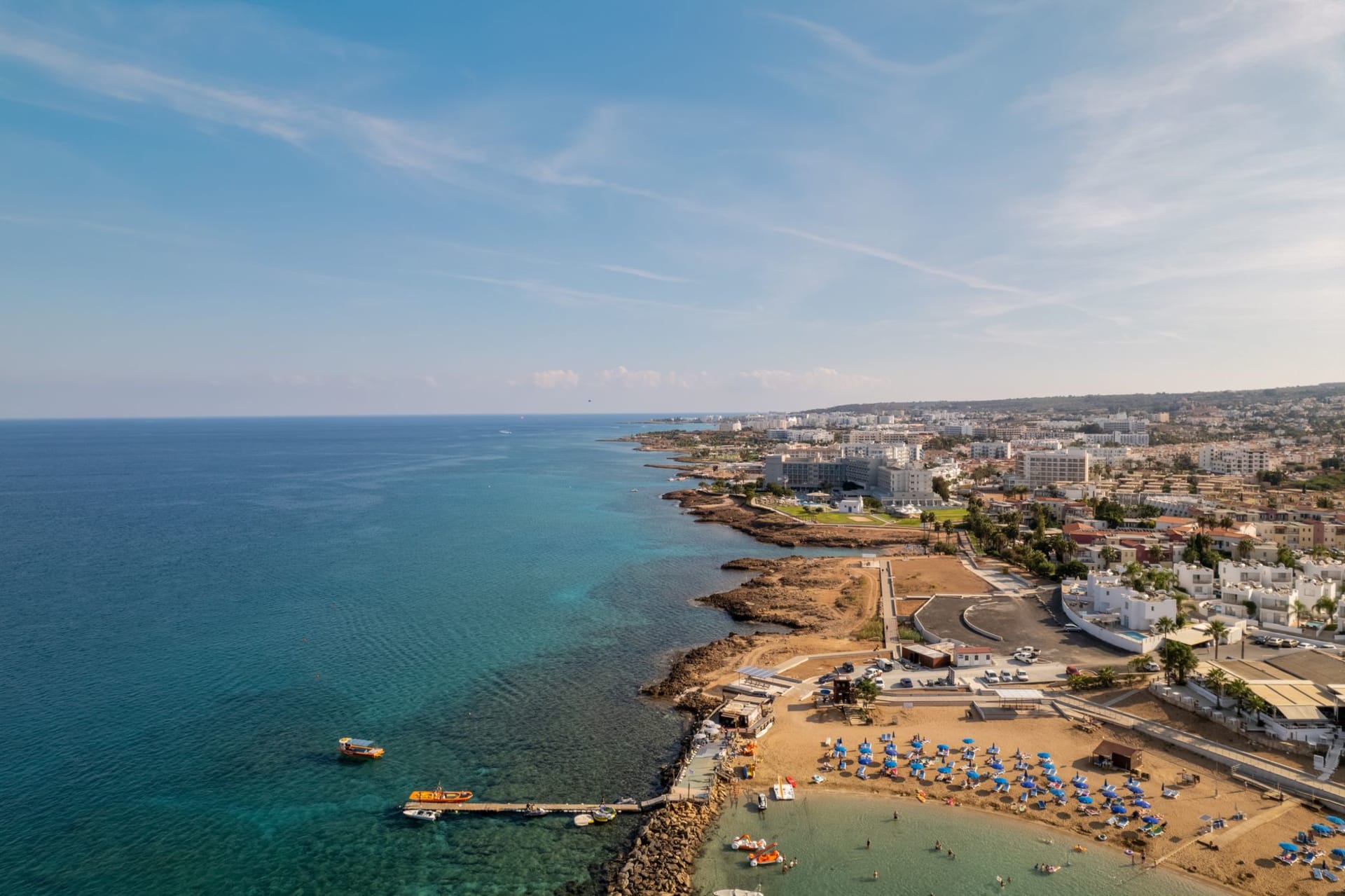
Famagusta
"Famagusta is what happens when history doesn't end tidily. It just stays, like furniture nobody moved."
I drove to Famagusta from Kyrenia on a morning when the cloud cover was low and the light was flat and colorless, and I think this was the correct weather for arriving. Famagusta — Gazimağusa in Turkish, Ammochostos in Greek — is a city that benefits from arriving in a mood slightly subdued, because it will provide its own intensity without any assistance from the sky.
The old city is still entirely enclosed within its Venetian walls, walls so massive and well-preserved that you can walk a full circuit on top of them and understand, at a scale impossible from below, how the city was designed to be defended and how it fell anyway to the Ottoman siege of 1570–71, after ten months that have been described as one of the most brutal sustained assaults in Mediterranean history. The walls are made of limestone the color of old honey, and in the early morning light they absorb the low sun in a way that makes the entire circuit glow.
At the center of the old city, the Lala Mustafa Pasha Mosque — built as the Gothic Cathedral of Saint Nicholas in the fourteenth century — is the finest surviving example of French Gothic architecture in the Levant. The facade is almost exactly reproduced from Reims Cathedral, which is an assertion so improbable that I had to look at both from photographs side by side to believe it. The interior has been stripped of its Christian iconography and whitewashed — the frescoes are gone, the tombs removed, the altars replaced — but the architecture itself, the soaring nave, the clustered columns, the ribbed vaulting, is intact and extraordinary. Prayers still happen here five times a day. The building still works, just differently.
What Famagusta is perhaps most famous for is Varosha — the abandoned beach resort district that was sealed off in 1974 after the Turkish military advance and has been empty ever since. Varosha was the most fashionable resort destination in the eastern Mediterranean in the 1970s: Elizabeth Taylor and Richard Burton stayed here, Brigitte Bardot, dozens of celebrities and European royalty. The hotels, the restaurants, the apartments, the beach — all abandoned in a matter of days as residents fled, locked behind military fences, untouched for fifty years. You cannot enter. You can walk the perimeter. Through the chain-link fencing and the military barriers, the upper floors of the hotels are visible, windows empty, balconies with the metal railings now orange with rust. The beach, one of the most beautiful in Cyprus, is visible from the water but inaccessible from land.

I stood at the fence for a long time. A guard tower was visible to my left. Nothing was moving behind the barrier except the vegetation — oleander and wild fig — that had been reclaiming the buildings for half a century. Some areas of Varosha have been tentatively reopened since 2020 amid significant political controversy. The cafés and shops that have opened there have a surreal quality — new umbrellas and fresh paint set against a backdrop of derelict towers — that I found more disquieting than the fence. The ghost town feels more honest than the reconstruction.
When to go: October through May to avoid peak summer heat, which in Famagusta, without the mountain altitude of Troodos and without strong sea breezes, is serious. The Venetian walls and the cathedral-mosque are accessible year-round. Remember that entering northern Cyprus requires your passport; the crossing points from the south are open daily. Varosha’s partial reopening is ongoing and its status may continue to change.