Shete Boka National Park
"The sea here is doing something violent and magnificent and the cliffs are completely unmoved."
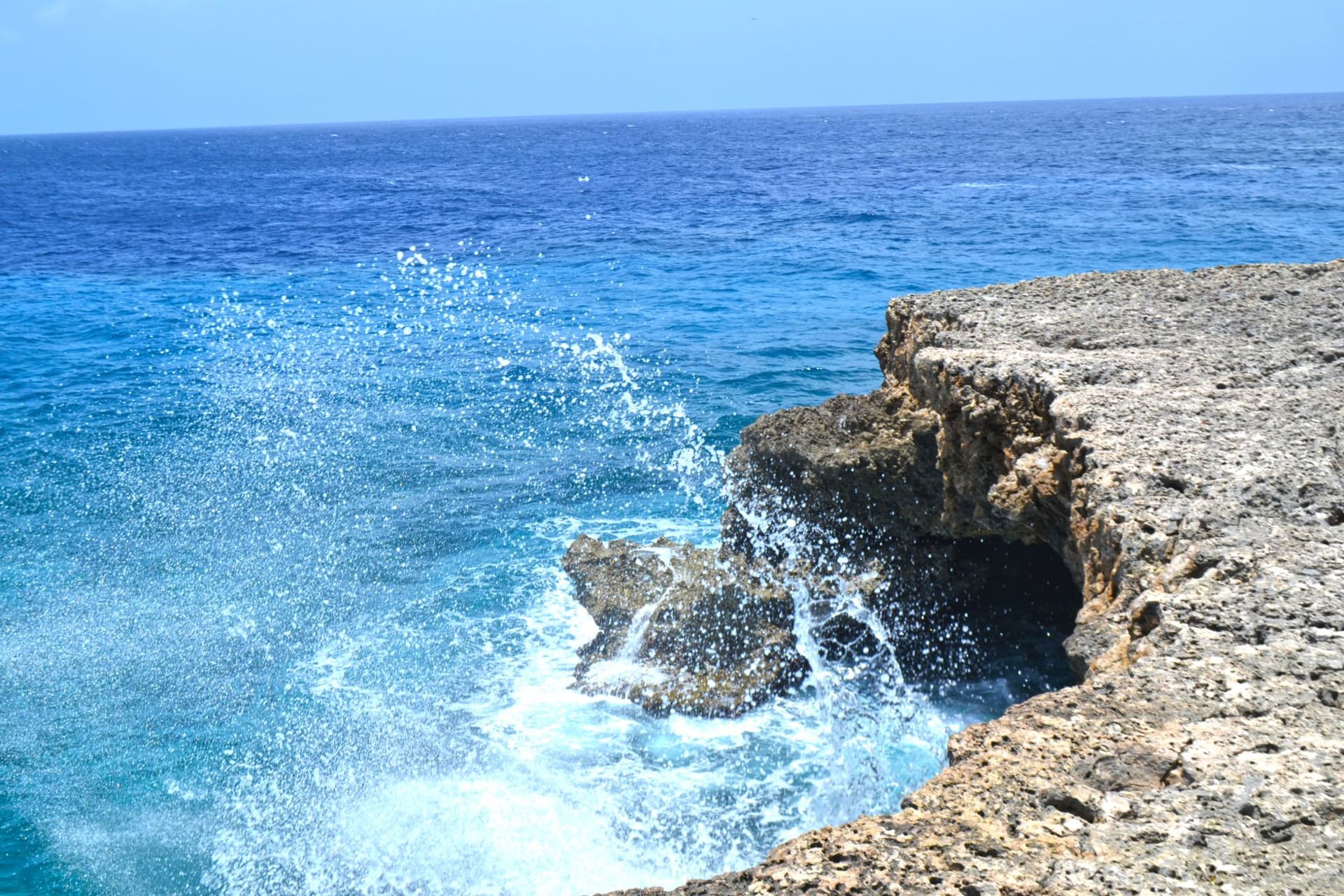
Boka Tabla is a sea cave where the Atlantic — or the Caribbean, the nomenclature gets complicated this far northwest — comes through a tunnel in the limestone cliff and explodes upward in a column of white spray that you feel in your chest before you hear it. I stood at the steel railing above the cave entrance with three other visitors and we all went quiet at the same moment, which is what happens when the ocean reminds you what it actually is. The water came in with a low rumble that built to something between a roar and a percussive thud, and then the spray rose ten, fifteen feet, and then the wave retreated with a sucking sound, and then it started again. We stayed longer than any of us planned.
Shete Boka means “seven inlets” in Papiamentu, and the national park on Curaçao’s northern coast stretches across a coastline where the limestone has been worked over by centuries of open-water swells into a series of sea caves, blowholes, and narrow inlets — bokas — where the water churns white against red and grey rock. It is a completely different Curaçao from the one on the postcards: no white sand, no turquoise coves, no beach chairs. This coast is rough and loud and actively hostile to swimming, and that is precisely what makes it extraordinary.

The park is also a nesting ground for sea turtles — loggerheads, hawksbills, and green turtles come ashore here from May through September to lay eggs in the coves that are inaccessible enough that the beaches have stayed undisturbed. The park rangers run night walks during the nesting season, and I joined one on a Thursday evening with a group of maybe eight people, all of us following the ranger’s red-filtered headlamp down a path to the beach in absolute silence. The turtle we found was a loggerhead, enormous, already covering her eggs with methodical sweeps of her rear flippers when we arrived. We crouched at a respectful distance for what might have been thirty minutes. When she finally turned back toward the water, the ranger said nothing. We all said nothing. The turtle moved into the surf and was gone.
The trail that connects the various bokas across the top of the cliffs takes about two to three hours at a leisurely pace, and I walked it in the middle of a weekday morning when the trade winds were coming off the sea and the scrubby vegetation smelled of something dry and particular that I associate with this coast — salt and bleached rock and something faintly herbal. The path is rough in places and the cliff edges are real edges, but the views are consistent and stunning: the sea is a deep ultramarine out here, nothing like the protected lagoon colors of the south coast, and it throws itself against the cliffs with a persistence that feels personal.

A short drive from the main park entrance, Boka Pistol is a blowhole that sends a vertical jet of water fifteen or twenty feet into the air when the waves hit the right angle — less predictable than a geyser, more satisfying when it goes off. The local kids nearby thought my startled reaction was very funny, which seemed fair.
When to go: The cliff walk is best in the morning before the sun peaks. Turtle nesting night tours run May through September and must be booked through the park rangers in advance — they fill up quickly in July and August. The park is open year-round and the wave activity is most dramatic from October through February when north swells pick up. Bring sturdy shoes, the path is rocky, and flip-flops will cause you problems.