Caribbean
Curaçao
"The Caribbean island that made me question everything I thought I knew about the region."
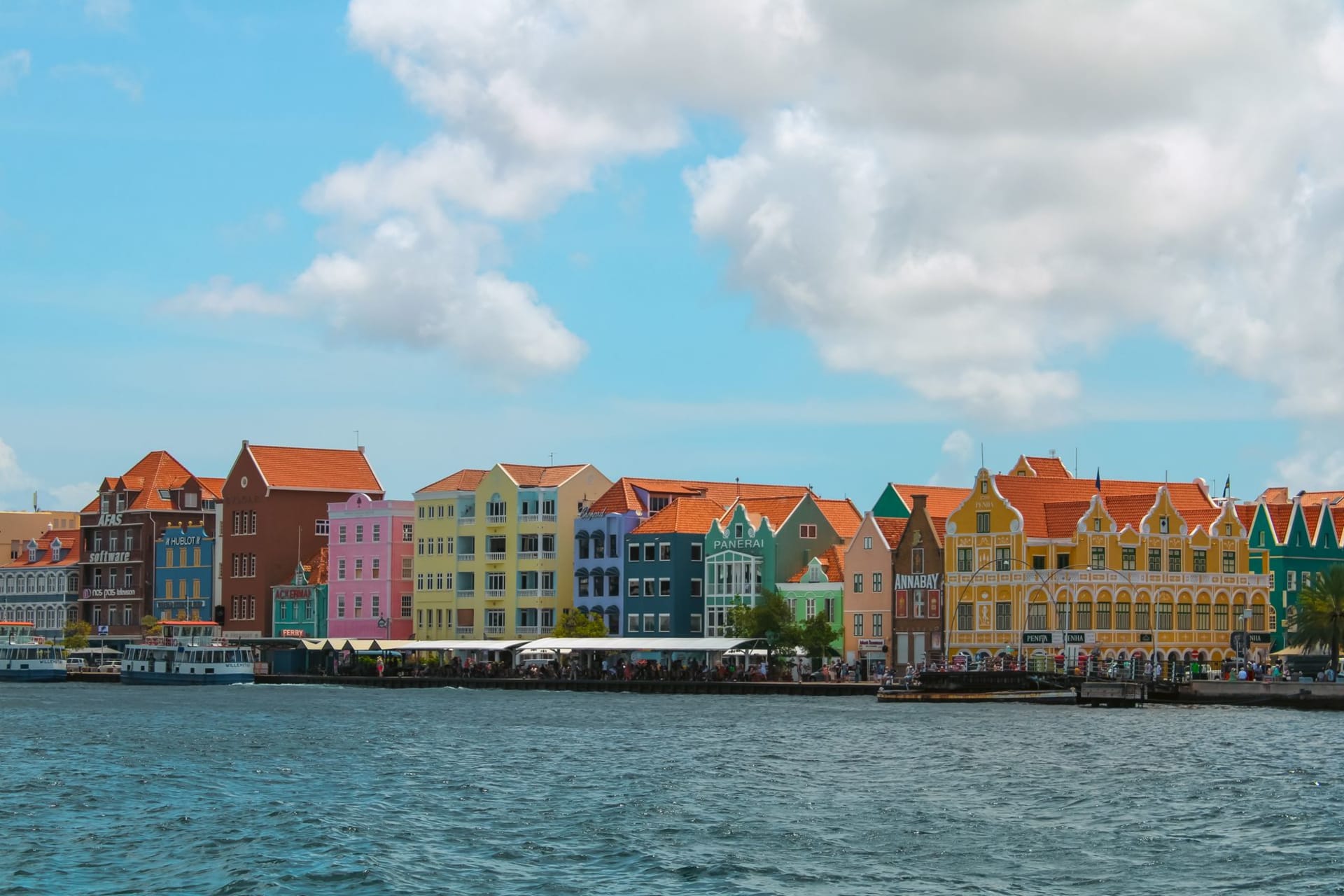
I arrived in Curaçao expecting a beach island with Dutch branding. What I found instead was something far stranger and more interesting — a place where Papiamentu street signs sit beneath pastel merchant houses, where the smell of kabritu stoba drifts from local restaurants that have no interest in serving tourists, and where the harbor of Willemstad functions as an actual working port with a floating pontoon bridge that swings open to let tankers pass. You stand on the Handelskade, that absurdly photogenic strip of eighteenth-century Dutch colonial buildings in every shade of mustard, coral, and turquoise, and you realize it looks exactly like the photographs — and that the photographs never captured why it actually works.
Willemstad is not a preserved historical district. It is a lived-in city where the architecture happens to be extraordinary. Punda and Otrobanda — literally “the other side” — face each other across Sint Annabaai, connected by the Queen Emma pontoon bridge. Cross it on foot and you move between neighborhoods with distinct personalities: Punda is colonial and commercial, Otrobanda is looser, more Afro-Caribbean, its narrow streets hiding small bars, galleries, and the best keshi yena I have eaten anywhere — a whole round cheese stuffed with spiced meat, olives, and capers, baked until the casing turns golden and the filling goes molten. It is a dish that arrived via Dutch Edam wheels and Antillean ingenuity, and nothing about it makes sense until you taste it.
The diving here deserves to be mentioned alongside the Caribbean’s best, but it is the island’s genuinely mixed culture — Dutch, Afro-Caribbean, Latin American, Sephardic Jewish, Lebanese — that makes Curaçao worth more than a reef vacation. The Mikvé Israel-Emanuel Synagogue in Punda, dating to 1732, is the oldest continually active synagogue in the Americas. The sand floor is intentional, a reference to the desert wanderings of the Israelites. The neighborhood around it has a certain quiet weight that the beach resorts never approach.
When to go: Curaçao sits outside the hurricane belt, which makes it genuinely year-round. The trade winds keep temperatures comfortable even in summer. January through April is the driest period and sees the most visitors. I prefer May or November — lower crowds, still pleasant, and the island feels more like itself.
What most guides get wrong: They market Curaçao as a beach destination with a pretty capital. It is a cultural destination that happens to have excellent beaches. Spend less time at the resort pools and more time in Willemstad’s backstreets. Eat at local restaurants, not the waterfront terraces aimed at cruise passengers. Rent a car and drive the northern coast, where the landscape turns arid and windswept and looks nothing like a Caribbean postcard — and is better for it.