Klein Curaçao
"There is no shade, no fresh water, and no reason to be here except that emptiness this complete is its own rare luxury."
Klein Curaçao — Little Curaçao — is a flat, treeless island of about 1.7 square kilometres, sitting alone in the open Caribbean roughly two hours by boat southeast of the main island. Nobody lives there. There is no jetty, no electricity, no fresh water, no shop, and almost no shade. You go by booking a day trip, the boats leave Curaçao before dawn, and the crossing can be rough — the channel kicks up a serious swell and I watched several of my fellow passengers lose their breakfast over the rail on the way out. But the island at the end of it is one of the strangest, emptiest, most beautiful places I have been in this part of the world.
A lighthouse and a wreck
The island has a history, even if it has no inhabitants. In the 19th century it was strip-mined for phosphate, which is part of why it is so flat and bare — the guano and the topsoil were carried off, leaving coral rock and sand. There is a pink-and-white lighthouse, built by the Dutch and now a gutted ruin, its keeper’s house collapsing around it, and you can climb partway up for a view of the whole island, which from above looks like a sandbar that forgot to sink. On the wild eastern shore, where the Atlantic swell hammers in, sits the rusting hulk of a wrecked tanker, half-buried in the sand, slowly dissolving into orange flakes. Lia and I walked the length of the windward side to reach it, the wind constant and loud, not another soul in sight, and it felt genuinely post-apocalyptic in the best possible way.

The leeward beach, and the turtles
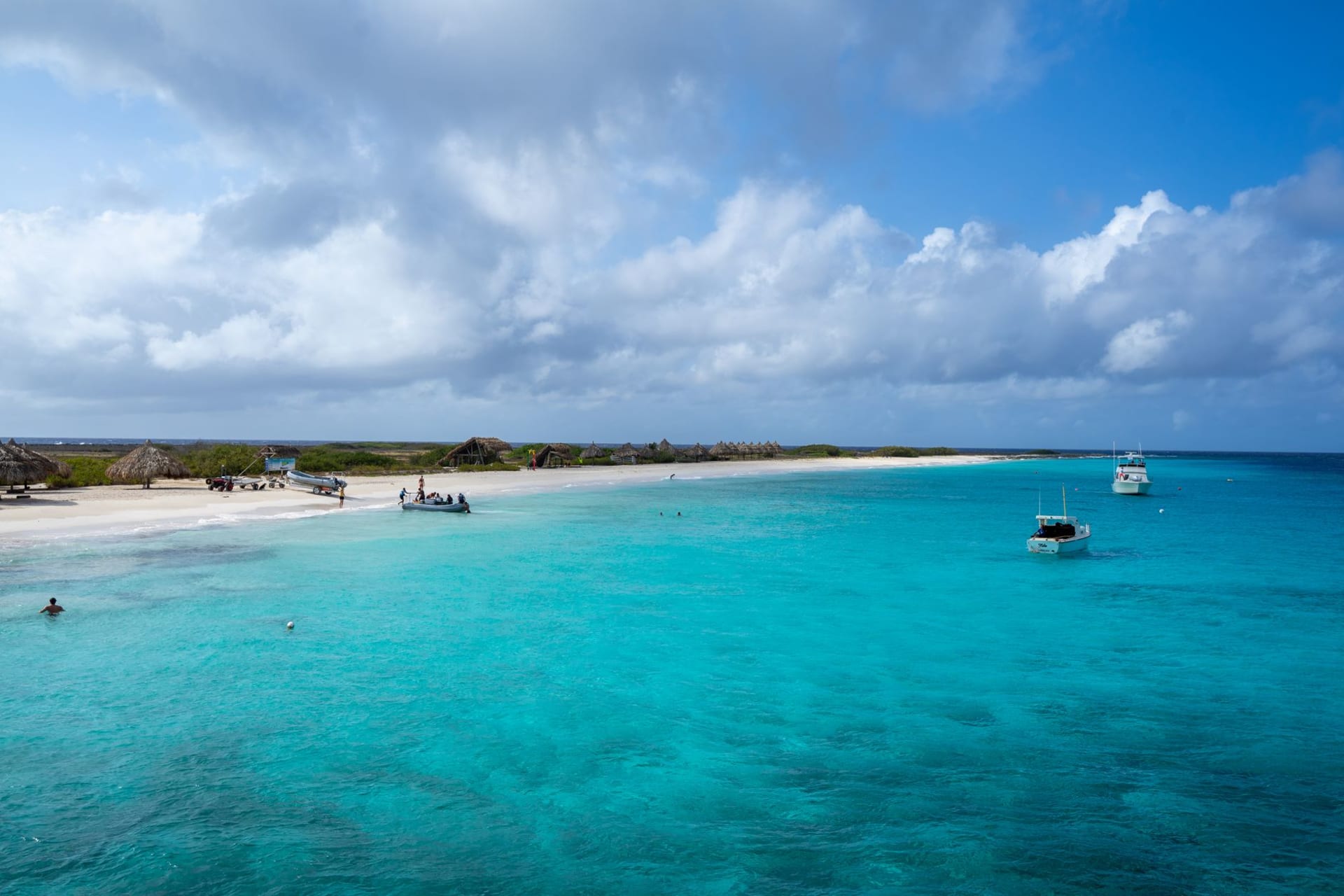
The western side could not be more different: a long curve of fine white sand and water so clear and so improbably turquoise that it looks colour-corrected. This is where the boats anchor and the day unfolds — snorkelling straight off the beach, a barbecue lunch the crew sets up, and a few simple thatched shelters that are the only built shade on the entire island. The snorkelling is the real draw: green and hawksbill turtles graze in the shallows right off the sand, and on a calm day you swim out a few metres and find yourself sharing the water with a turtle the size of a coffee table, entirely indifferent to you. I am not easily moved by snorkelling, having done a great deal of mediocre snorkelling, but floating motionless above a feeding turtle in glass-clear water shut me up completely.

How to do it, and what to bring
This is a day trip and only a day trip — there is no staying overnight. Book a boat that uses a faster catamaran if you are prone to seasickness, take motion-sickness tablets before you leave the dock regardless, and bring everything: sunscreen, a hat, plenty of water, and reef shoes for the coral. Above all, bring sun discipline. There is no escaping the sun here except under those few shelters, and people underestimate it badly. Go for the emptiness, the wreck, and the turtles, and accept that the price of all three is a long, rolling boat ride at either end of the day.
When to go: Any time in the dry season, roughly December to April, when the sea is calmest and the crossing kindest. Avoid days with a strong easterly wind forecast — the swell makes both the trip and the snorkelling miserable.