
Stow-on-the-Wold
"The wind finds you in Stow before the coffee does. Up here everything arrives slightly ahead of itself."
Stow-on-the-Wold is eight hundred feet above sea level, which in the Cotswolds context makes it the top of the world. The wind comes off the wold — that rolling high plateau — with a directness that the lower villages never experience, arriving before you’ve properly fastened your coat, finding the gaps in everything. In November, when I came up from the valley road, there was a low cloud sitting on the market square and the old stone cross emerged from it slowly as I climbed the hill, the way a ship appears in fog. I found this enormously satisfying.
The market square is the largest in the Cotswolds and has been a market place since 1107, when Henry I granted the charter. It still holds a twice-yearly livestock market, though the antique trade has since been its more constant economy: there are dealers in several buildings around the square and on the streets radiating from it, selling Georgian silver, Victorian watercolours, Arts and Crafts pottery, and various categories of the expensive and old that I could not reliably classify but found myself lingering over. One shop had an entire room dedicated to Cornish paintings from the 1920s through 1940s, the canvases stacked and tagged, the dealer reading a novel behind a small desk without looking up. I liked him very much.
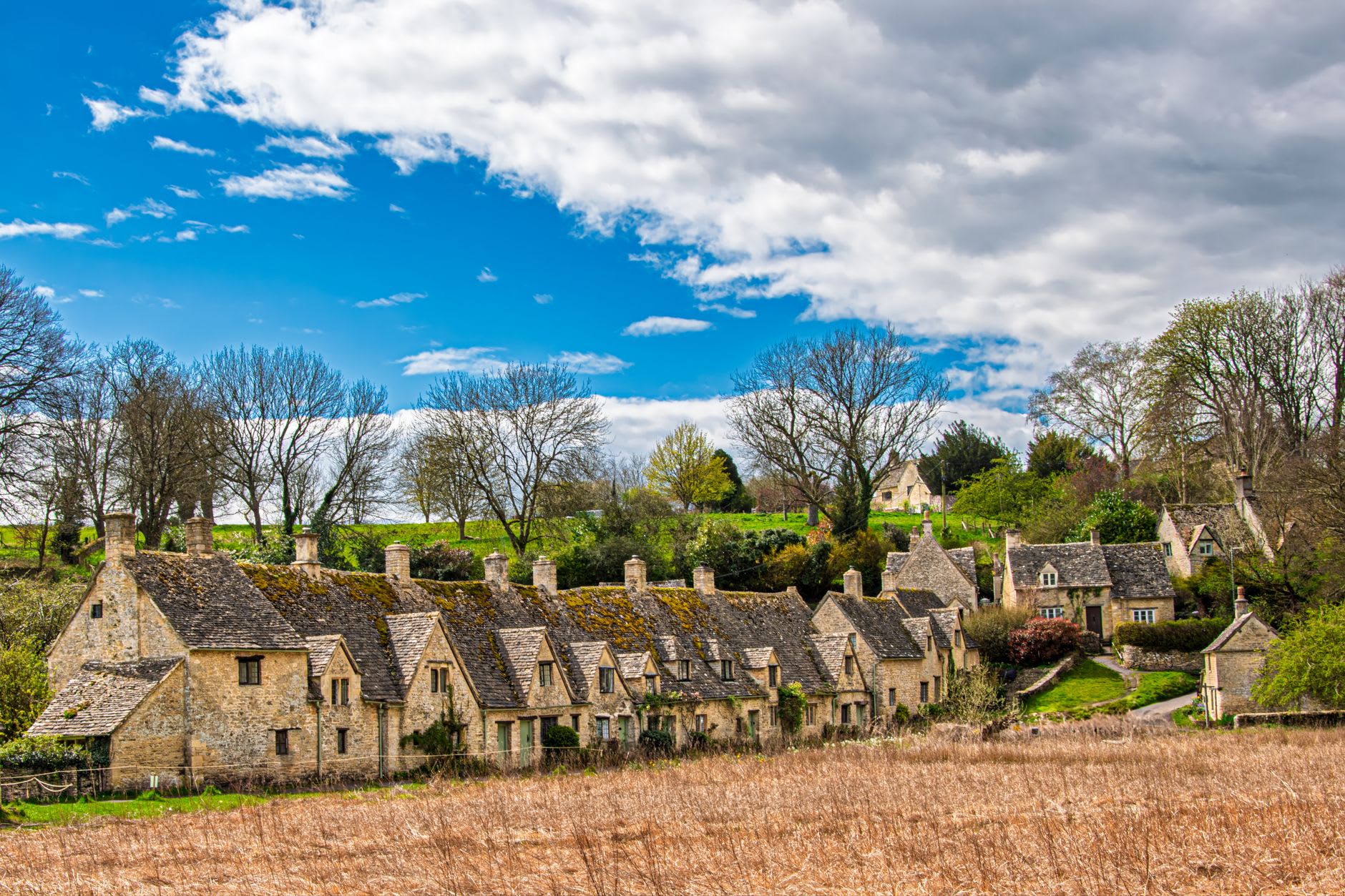
The church of St Edward has a north door framed by two ancient yew trees whose roots have grown through the doorway arch, the trunks pressed against the stone on either side, the branches meeting overhead. This doorway appears in every guide to Stow and has been photographed ten thousand times, but it remains genuinely arresting — the point where something made by human hands and something growing at its own pace have spent eight hundred years finding a compromise. There is a theory that this doorway was the model for Tolkien’s description of the Doors of Moria. The theory may or may not be true, and the door is excellent regardless.
Inside the church, the glass is modern in most of the windows and mediocre in some of them, but the west window is a Geoffrey Webb piece from 1921 that has the specific quality of early twentieth-century English glass — rich colour, slightly flat figures, an earnest confidence. The church was used as a prison for four hundred Royalist soldiers after the Battle of Stow in 1646, one of the last engagements of the Civil War, and there is a plaque commemorating this that has the compressed violence of all plaque-history: everything important, nothing felt.
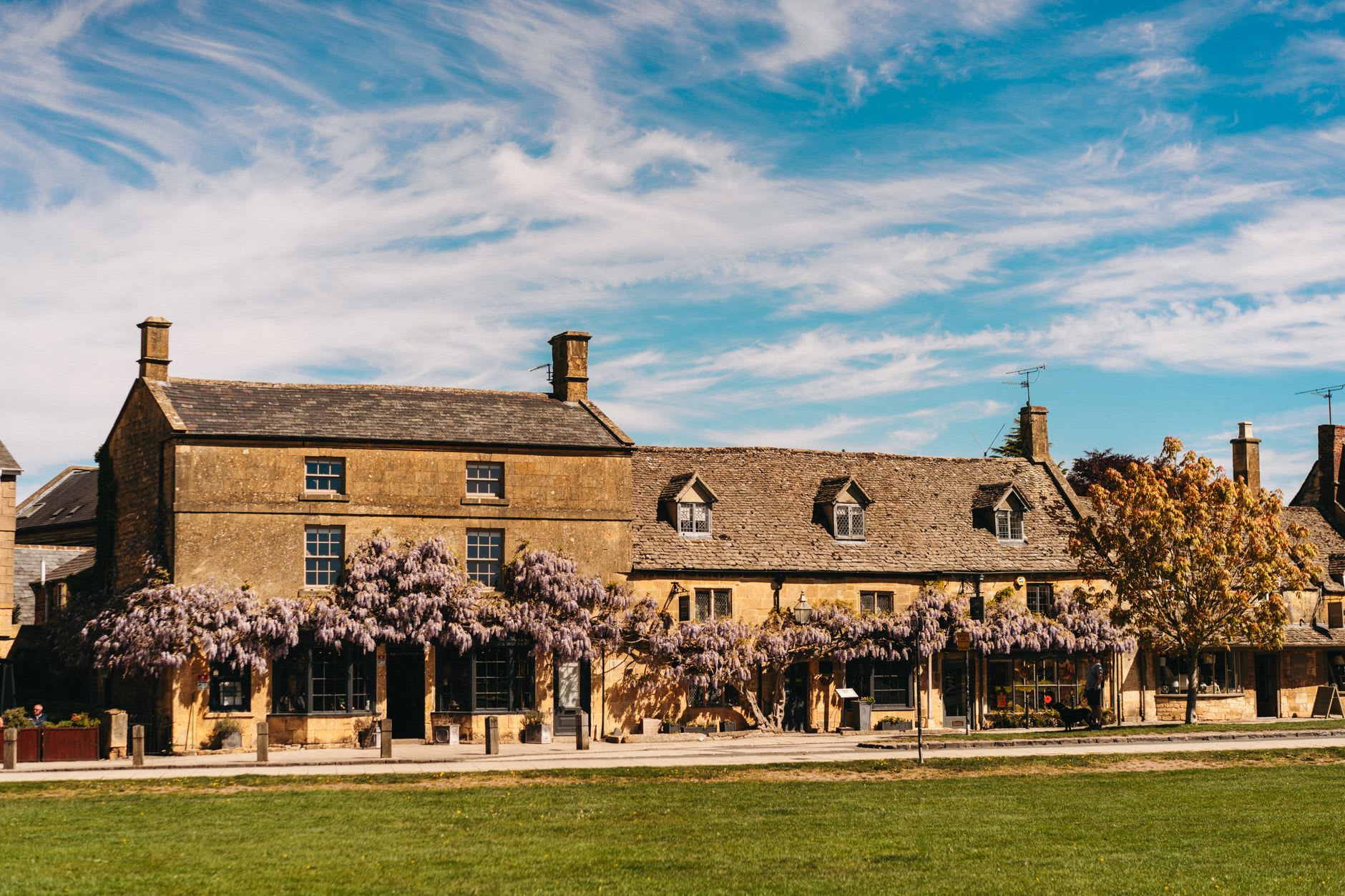
The pubs around the square are competitive in quality, which is the correct situation to be in. The Old Stocks Inn is on the square itself and does a bar menu that veers toward the ambitious — salt-baked celeriac, duck leg confit, a chocolate tart from a pastry chef who appears to have ambitions beyond bar menu status. I had a lamb flatbread there that was better than it had any obligation to be. The wine list was short and good, which is the correct proportion. Outside, the wind was doing something interesting to the church trees, and the square was completely empty, which at half past eight on a November evening is exactly how a medieval market square should be.
When to go: April through June before the summer crowds, and October through November for the atmosphere of a high town in the turn of the seasons. Avoid summer Saturdays when the antique browsers create a traffic problem in the lanes. The twice-yearly horse fairs in May and October are a distinct experience — chaotic, loud, centuries-old, and worth the chaos.