Broadway
"In the 1880s, half the Arts and Crafts movement lived on this one street. The other half visited on weekends."
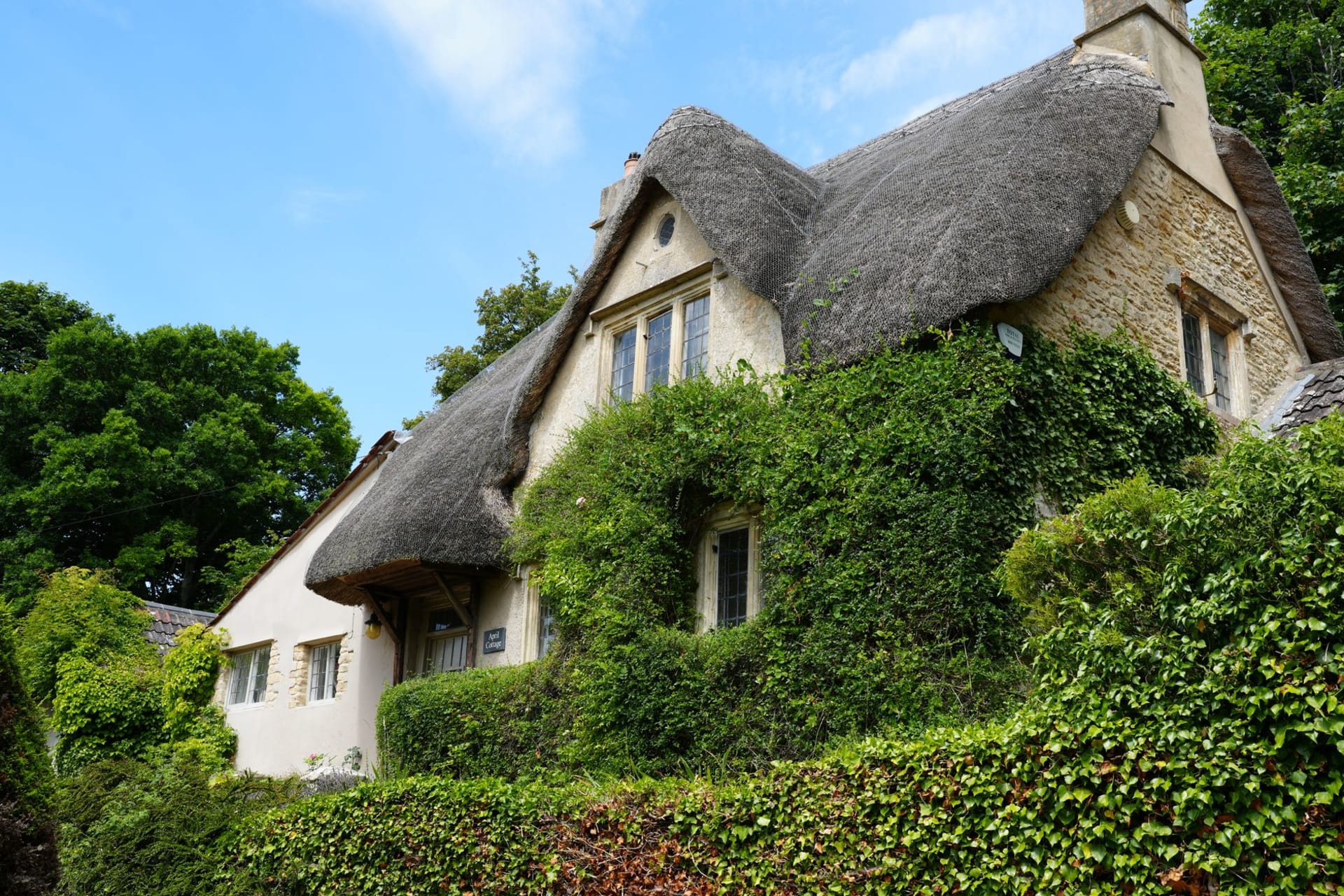
Broadway sits at the foot of the Cotswold escarpment where the limestone plateau drops five hundred feet to the Vale of Evesham, and the village occupies the position of a letter I at the start of a word — the thing that sets everything else off. The high street is the widest village street I have encountered in England, a broad swathe of grass verge and chestnut trees running between two rows of honey-stone cottages and converted manor houses, some of them sixteenth century, some Victorian, and the Victorian ones built in such faithful imitation of the Tudor that you need to look at the eaves and window details to tell them apart.
The Arts and Crafts connection is what makes Broadway distinct in the Cotswold story. In the 1880s, the American painter Francis Millet brought a group of artists — John Singer Sargent among them — to a house at the north end of the village, and what followed was a decade of painting and walking and informal salon culture that turned Broadway into the Cotswolds’ first artist colony. Sargent’s Carnation, Lily, Lily, Rose — that famous painting of two children lighting Japanese lanterns in a garden at dusk — was painted here, and the quality of light he captured, that specific English late-summer dusk with its long horizontal rays, is still available in the fields behind the village every evening in August.

Broadway Tower stands on the edge of the escarpment a mile above the village and is either a folly, a belvedere, or the finest viewpoint in the Cotswolds, depending on how you feel about eighteenth-century romantic architecture. It was built in 1799 for the Countess of Coventry who wanted to know whether a beacon fire lit on the hilltop could be seen from her house in Worcester, thirty-six miles away. (It could.) William Morris lived and worked here for a period, which in the context of a landscape that already felt like the physical embodiment of his ideals, must have been either inspiring or almost too on-the-nose. The tower is now a small museum and the view from its roof on a clear day takes in thirteen counties.
The village has been managing its tourist traffic since before tourism was a word, and it manages it without resentment and without surrendering too much of its character. The Lygon Arms hotel has been operating in one form or another since the sixteenth century and has had Charles I and Cromwell both sleep there (at different times), which either says something about the quality of the hospitality or the limited options for accommodation in the Cotswolds of the 1640s. The bar is dark and beamed and serves a proper Scotch egg with a yolk that runs, which is the test of a Scotch egg that matters.

The walk down from Broadway Tower back to the village through the beech hanger woods on the escarpment edge is one of the better hour-long walks in the Cotswolds. The beeches on the escarpment grow at angles set by the prevailing wind, leaning slightly eastward, and in October they go the precise colour of burnt caramel, the leaves holding the light in a way that beech leaves do differently from every other tree — translucent from below, glowing like stained glass, making the ordinary afternoon feel more than ordinarily lit.
When to go: May for the flowering horse chestnuts along the high street. August for the quality of light Sargent was painting — the long evenings, the horizontal gold. October for the beech woods on the escarpment. Avoid summer Saturdays when the main street becomes a single-file experience. Broadway Tower is worth coming to in December for the clarity of the views over bare countryside.