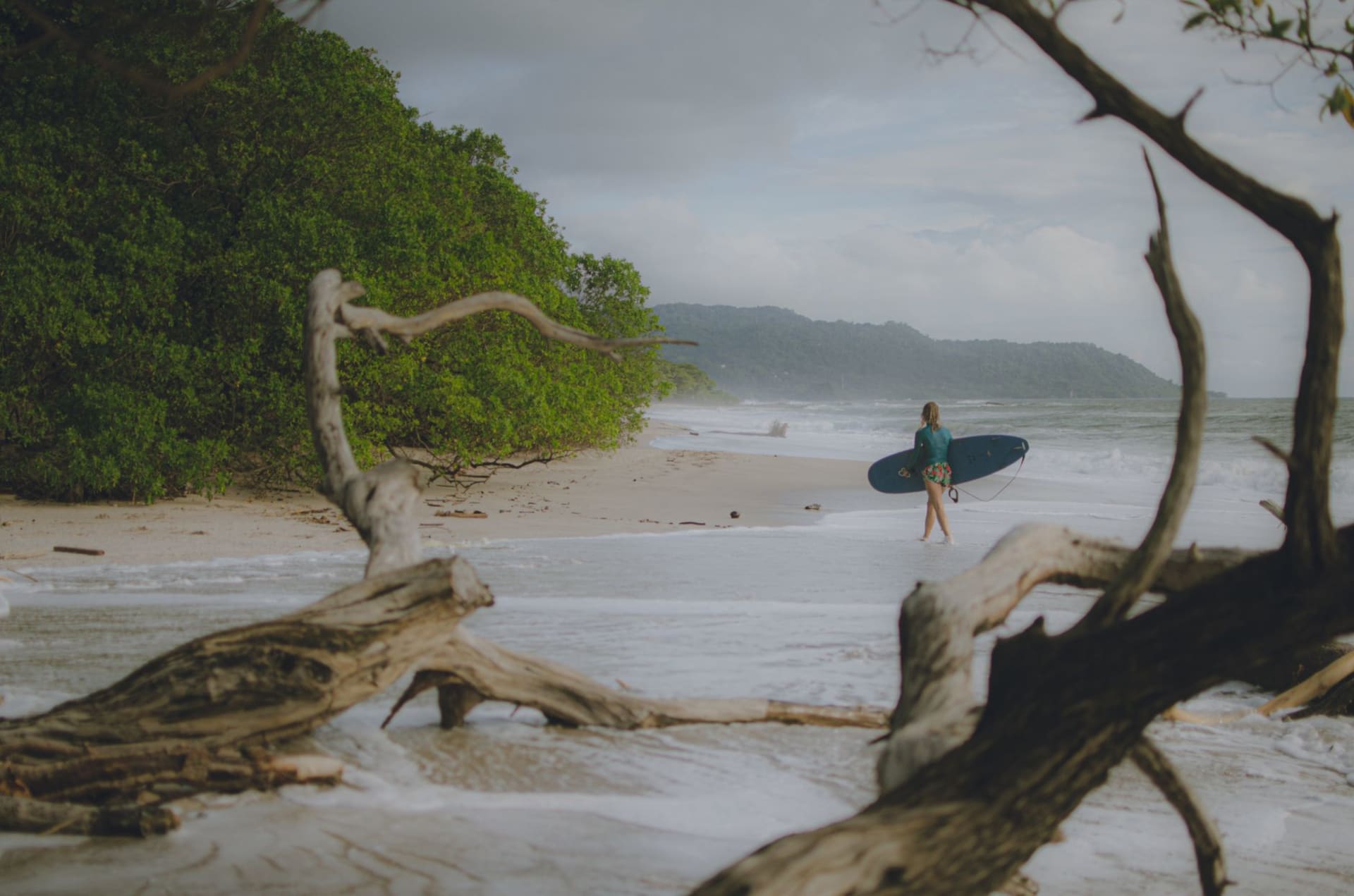
Uvita
"The coast spent a few million years drawing a whale's tail in sand, then filled the water in front of it with whales, just so nobody could call it a coincidence."
Uvita is the kind of place that announces nothing and rewards patience. We rolled in off the coastal highway expecting a beach town and found instead a long, dusty main strip of sodas, surf shops, and fruit stands that gives no hint of what is hiding at the end of the access road. You pay your entrance at Marino Ballena National Park, walk through a corridor of beach almond and sea grape, and step out onto a beach that looks ordinary until you check the tide table and understand the joke the coast has been setting up for several million years.
The tail
At low tide a sandbar runs straight out from the beach and ends in a perfect, symmetrical split — a sandbar shaped exactly like the fluke of a whale’s tail, joining two converging currents at its tip. From the ground you can walk out along it with the Pacific lapping at both sides of your ankles. From the air, which is how the photographs are taken and how the place sells itself, it is uncanny: a flawless whale tail rendered in sand, pointing out into water that turns from brown to jade to deep blue. The part that elevates it from a geological curiosity to something genuinely strange is that this is exactly where humpback whales arrive, twice a year, to calve. The coast spent millennia drawing the symbol and then stocked the water with the real thing.
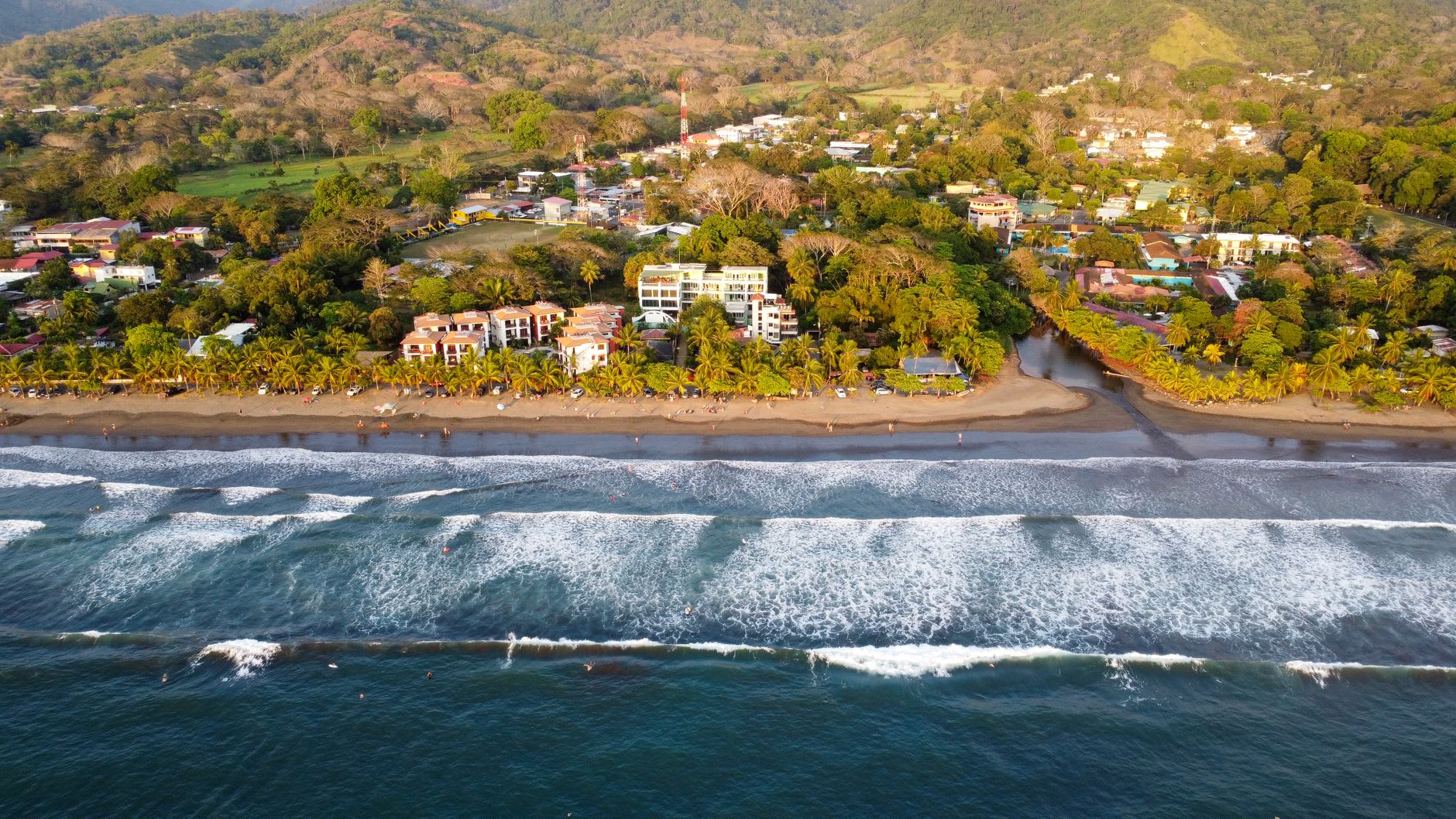
We timed a boat trip for the August season, which I approached with the low expectations I bring to all wildlife outings, having been promised dolphins on three continents and shown, in total, one tired pelican. We were maybe twenty minutes out when a mother and calf surfaced fifty metres off the bow, unhurried, the calf rolling against its mother’s flank, and then the mother lifted her tail clear of the water and held it for a moment before sliding under. Lia made a sound I had not heard from her before. The boat went completely silent. Uvita has two humpback seasons — one set of whales comes north from Antarctica, another comes south from the northern hemisphere — which gives this stretch of coast one of the longest whale-watching windows on earth, a fact the town mentions with the casual pride of people who know they got lucky.
Beyond the beach
What kept us in Uvita longer than planned was everything inland of the highway. The Costa Ballena coast climbs immediately into steep green hills full of waterfalls, and we spent a morning at Nauyaca, where the river drops in two stages into a pool deep enough and cold enough to take your breath away properly. The town itself is unpretentious in a way the slicker Pacific resorts have lost — open-air restaurants where the fish was caught that morning, a Saturday farmers market where I bought a bag of mangosteens and ate every one in the car, and a population of surfers, retirees, and Tico families that has not yet decided to perform its own charm.
I liked Uvita precisely because it does not try. The whale tail is a genuine wonder and the park signage treats it with a kind of shrug. You come for a sandbar and a chance at a whale and you leave having also found waterfalls, good cheap fish, and a town still mostly minding its own business.
When to go: Late July through October for the southern humpback season, with August and September the most reliable; December through March for the northern whales and the driest, sunniest weather. Check the tide tables before visiting the park — the whale tail only reveals itself at low tide.