Saint-Florent
"The Désert des Agriates starts just past where the road runs out. That's when it gets interesting."
I crossed the Col de Teghime from the Bastia side, and the north of Corsica spread below me: the Nebbio valley, the gulf of Saint-Florent, the town itself white and compact on the shore, and behind it the dark irregular profile of the Désert des Agriates stretching west to the horizon. The pass is only 536 meters but it feels like a threshold, the moment when one Corsica becomes another. I coasted down the switchbacks into town and found a place to park and a table at a harbor café, and spent the first hour simply watching the boats and the light working on the water.

The town is genuinely pleasant in a way that resists oversimplification. It has the Genoese watchtower on the hill above the port, and a Pisan cathedral a kilometer outside town — the Cathédrale du Nebbiu — that dates to the twelfth century and sits in a field of dry grass like an architectural accident that turned out perfectly. It has a marina full of sailing yachts and a fishing harbor where the older boats work. It has an evening promenade culture that feels more Italian than French — people walking the waterfront after dinner, stopping mid-path to talk, ordering things they hadn’t planned to order at bars they’d told themselves they wouldn’t stop at. I fell into this rhythm naturally and stayed two days longer than I’d planned.
The Patrimonio wine country begins a few kilometers south, just below the col I’d come over. This is Corsica’s most celebrated appellation: the Nielluccio grape makes reds here with a structure and complexity that surprises people used to encountering it as a beach wine. The Muscat de Cap Corse from the same area — made from small sun-wrecked grapes — tastes of things you can’t quite name. I visited a domaine on a Tuesday afternoon and the owner poured six wines without asking whether I was going to buy anything, which I was. He had the quiet confidence of someone who knows the product doesn’t need defending.

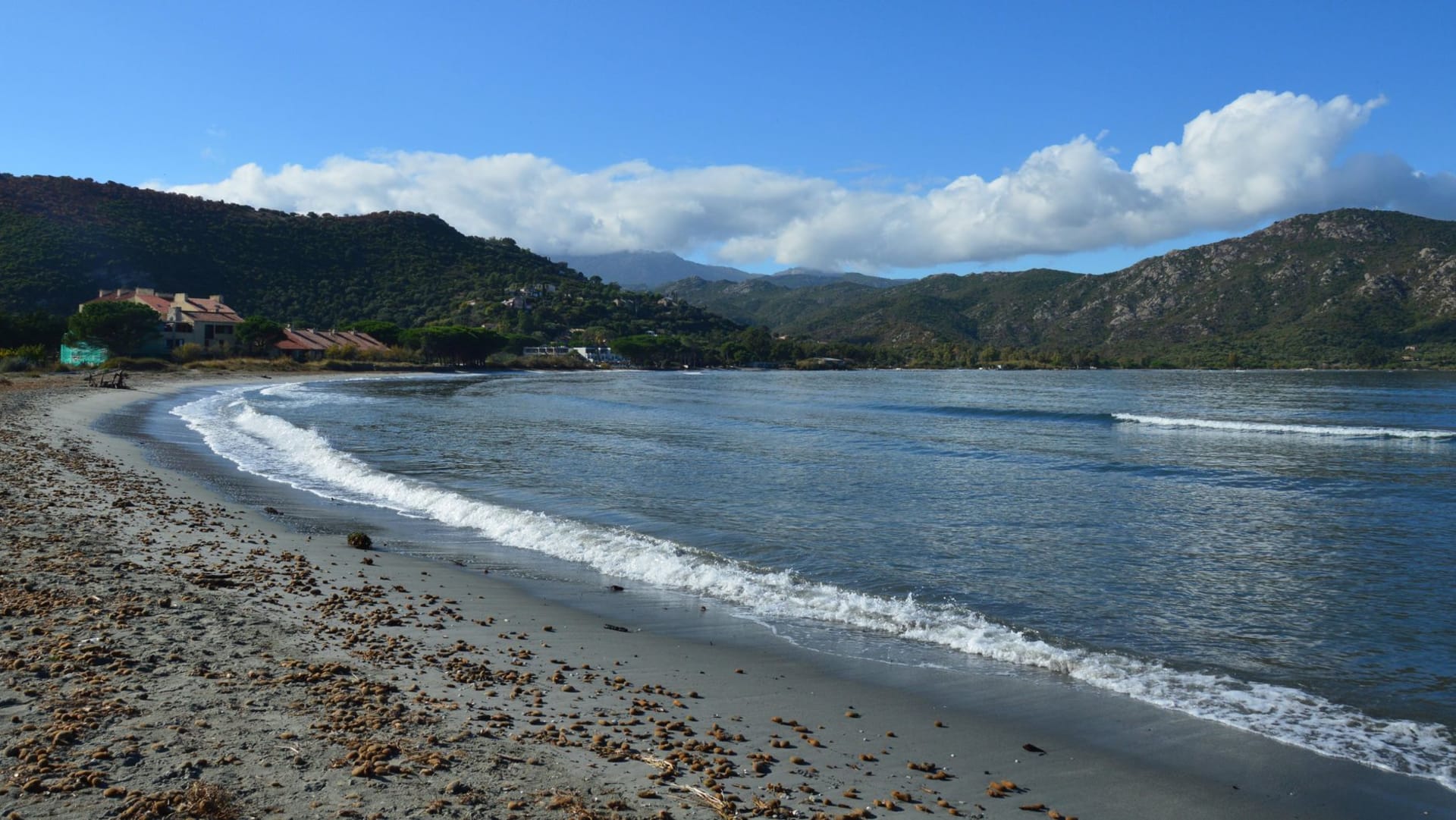
The Désert des Agriates is accessible from Saint-Florent by boat — a fifteen-minute crossing to beaches that have no road access, no development, and in shoulder season no one in them. Plage de Lotu and Plage du Ghignu are separated by cliffs and reached through maquis that smells exactly as maquis should smell: rosemary, cistus, something resinous. I went to Lotu in September. The water was the clearest I encountered anywhere on the island. The beach was empty except for a German couple at the far end and a flock of shearwaters offshore.
When to go: May through June and September. The town is lively in August but the beaches of the Désert des Agriates require more planning that month — the boats fill up. The Patrimonio harvest is in September, and the domaines often pour informally during this period. Spring is extraordinary for wildflowers in the Désert.