Porto-Vecchio
"The pink sand at Palombaggia made me feel like I was being shown something I wasn't supposed to find."
I arrived in Porto-Vecchio from the north, driving south through corridors of cork oak that line the road like a natural arcade. Cork oak is the texture of this part of Corsica — the harvest-stripped trunks go from pale orange to deep red-brown, and on hot afternoons the forests smell of something between resin and mushroom. The town appeared above the gulf: the old fortified section sitting on its promontory, walls facing east, the marina spreading below in a curve of moored boats. I had been warned it would be full of wealthy French and Italian summer people, which was true, and also, it turned out, beside the point.

The haute ville deserves more time than most visitors give it. The Genoese gate opens into a labyrinth of lanes where the salt trade once made this port rich. The old buildings now hold clothing boutiques and wine shops, but the bones of the place are intact — the curved walls, the sudden perspectives, the way afternoon light angles down between buildings that have been here for four hundred years. I sat at a table near the main square and drank a glass of Nielluccio, Corsica’s serious red grape, with a plate of charcuterie, and listened to the mix of Corsican, French, and Italian drifting from other tables. The people running the place didn’t perform warmth for visitors but they didn’t withhold it either. I just had to be patient with the initial register.
The salt pans south of town are the thing almost nobody goes to, which makes them the first thing I’d tell anyone about. These shallow lagoons, pink and white in the morning light, reflect the sky like mirrors and attract a colony of flamingos in summer. I walked the path around them early one morning, the only person in sight, the town still asleep, the birds picking through the shallows with the complete indifference of things that don’t know they’re beautiful.

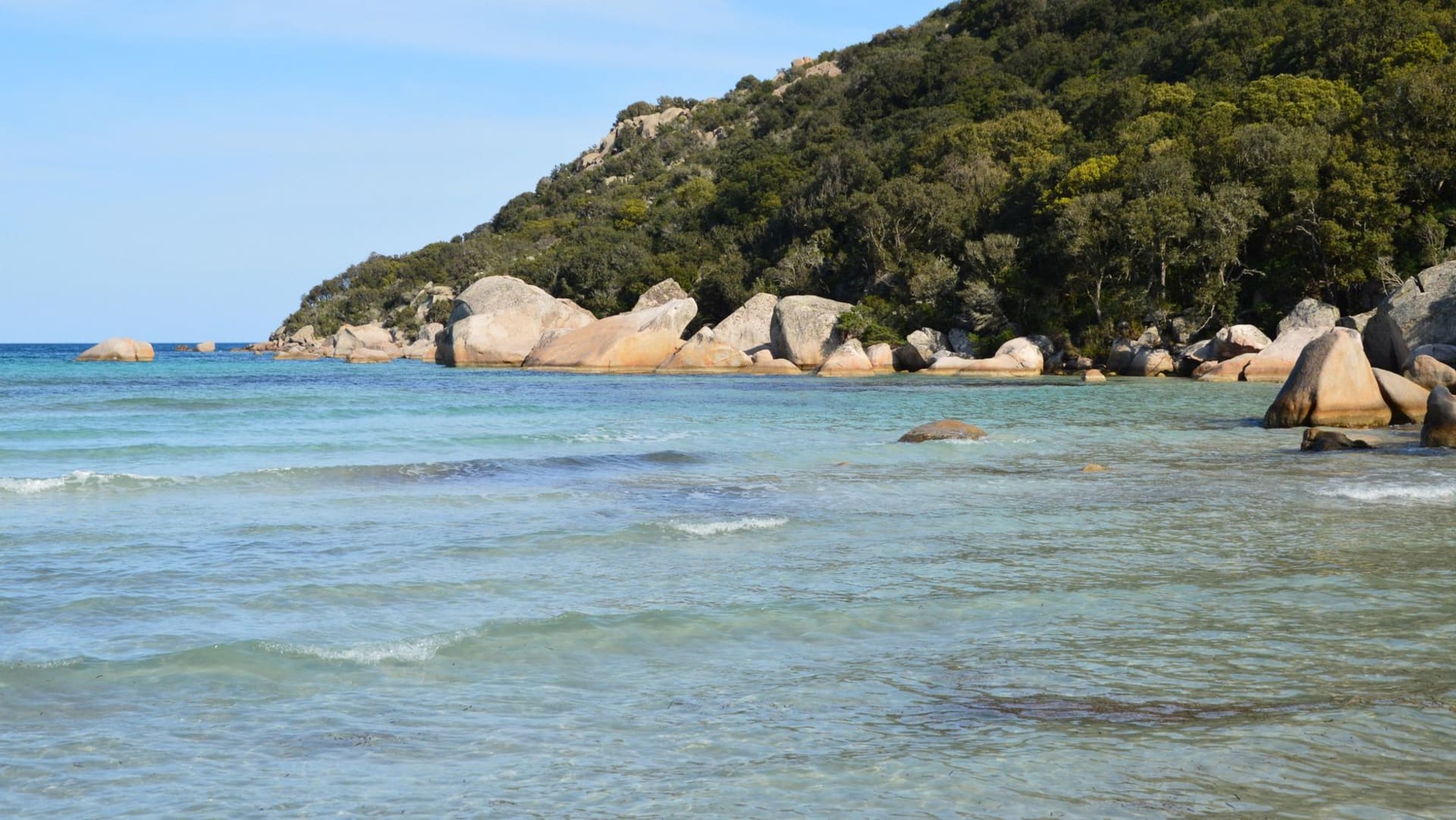
And yes, Palombaggia — the beach three kilometers south that appears on every Corsican postcard. The pink-tinged sand (granite pulverized by the sea into something closer to powder), the parasol pines, the water that goes through ten shades of blue before it deepens. I went in September. In July it would have been a different experience entirely. In September it was one of the most beautiful beaches I have ever seen, and I say that with some reluctance because it already gets enough attention.
When to go: June for quiet and good weather before the season peaks. September for warm sea, navigable roads, and the particular relief of a tourist town returning to itself. July and August the town and its beaches reach capacity — Porto-Vecchio handles the crowds better than some southern Corsican spots, but the roads around Palombaggia become parking lots by ten in the morning.