Penrhyn (Tongareva)
"The lagoon is so large you can lose the far shore entirely and start to believe you're at sea."
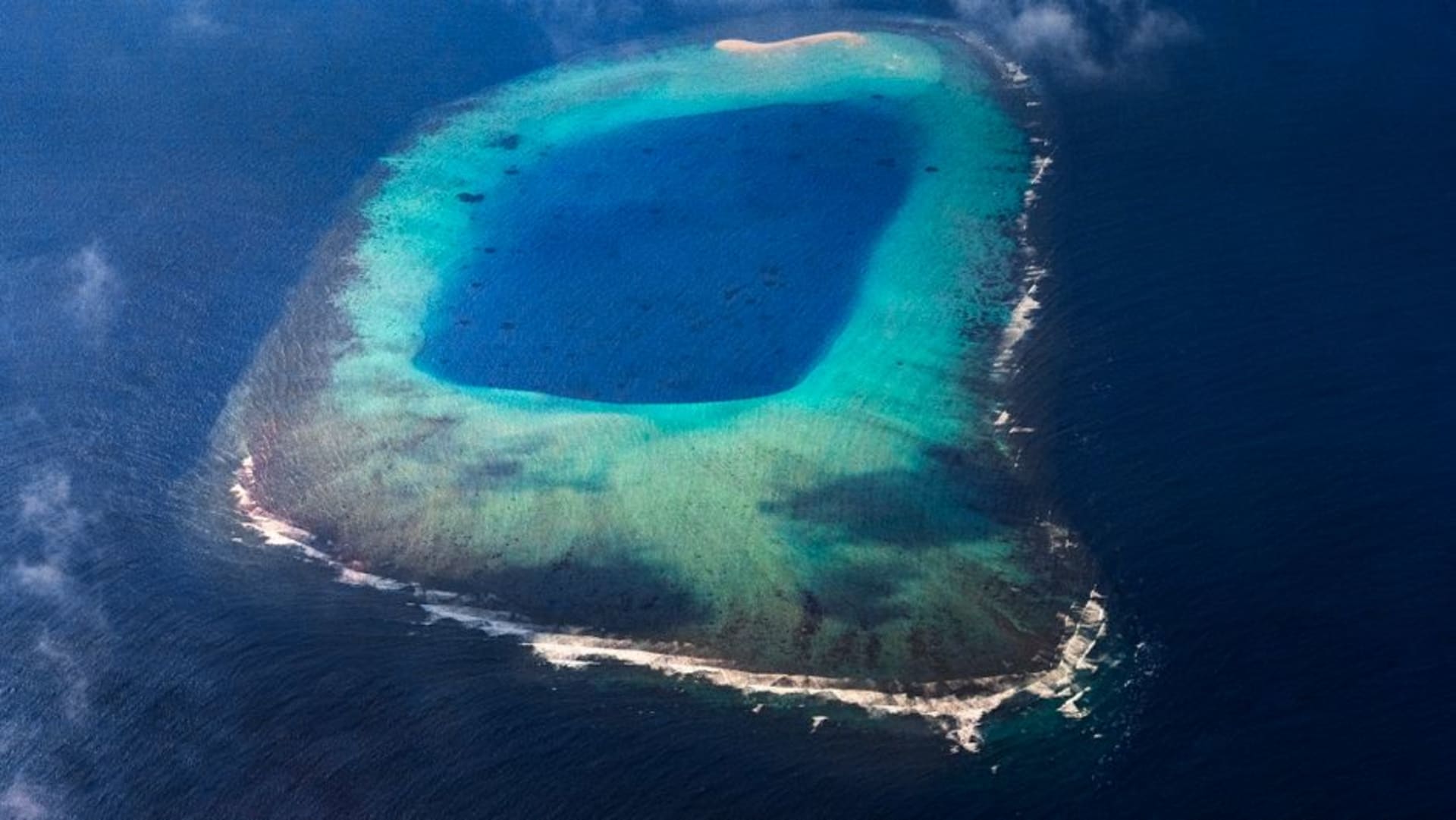
The northernmost and largest atoll in the Cook Islands, with one of the biggest lagoons in the Pacific and a WWII airstrip that still cuts across the reef.
Penrhyn — Tongareva to the people who live there — is about as far from anywhere as the Cook Islands get, a full 1,365 kilometres north of Rarotonga and closer, culturally and geographically, to the Line Islands than to Polynesia’s tourist circuit. The lagoon is the reason it’s worth the effort: at roughly 233 square kilometres, it’s one of the largest in the world relative to its ring of land, so vast that from the middle of it, in a small boat, the palm-lined motus on the horizon shrink to a thin green thread and you genuinely lose your bearings for a moment.
The island’s more recent history sits strangely alongside its remoteness. During the Second World War, the US military built an airstrip here as part of the South Pacific supply chain, cutting a long strip through the coral that is still, decades later, the only usable runway — meaning modern flights land on wartime infrastructure that has simply never needed replacing. Walking the strip’s edge with an elderly local who remembered his father talking about the American servicemen stationed there, I had one of those odd moments travel occasionally hands you, where a place feels simultaneously ancient and startlingly recent.
Pearl farming exists here too, on a smaller and scrappier scale than Manihiki’s, and the two villages of Omoka and Te Tautua sit on either side of the lagoon’s entrance channel, close enough to see each other’s lights at night but far enough that the boat crossing between them, in choppy conditions, is not something you undertake casually. I crossed it once at dusk with a family heading home from church, water slapping hard against the hull, and arrived soaked and laughing with people I’d known for about six hours.
When to go: Access is by infrequent flight or supply ship only, best planned for the drier months between April and November. This is genuine expedition travel — arrange accommodation with a local family well ahead of time, since there is no commercial lodging.