Pacific
Cook Islands
"I came for a week. I left understanding why some people never do."
The plane lands on Rarotonga at night, and the first thing you feel before anything else is the heat — not the humid wall of Southeast Asia, not the dry warmth of the Canaries. Something gentler, floral. The airport is essentially a covered outdoor terrace. A Polynesian band plays somewhere nearby. I remember thinking: this is either deeply charming or deeply staged. After a few days, I realized it was neither. It’s just how things are here.
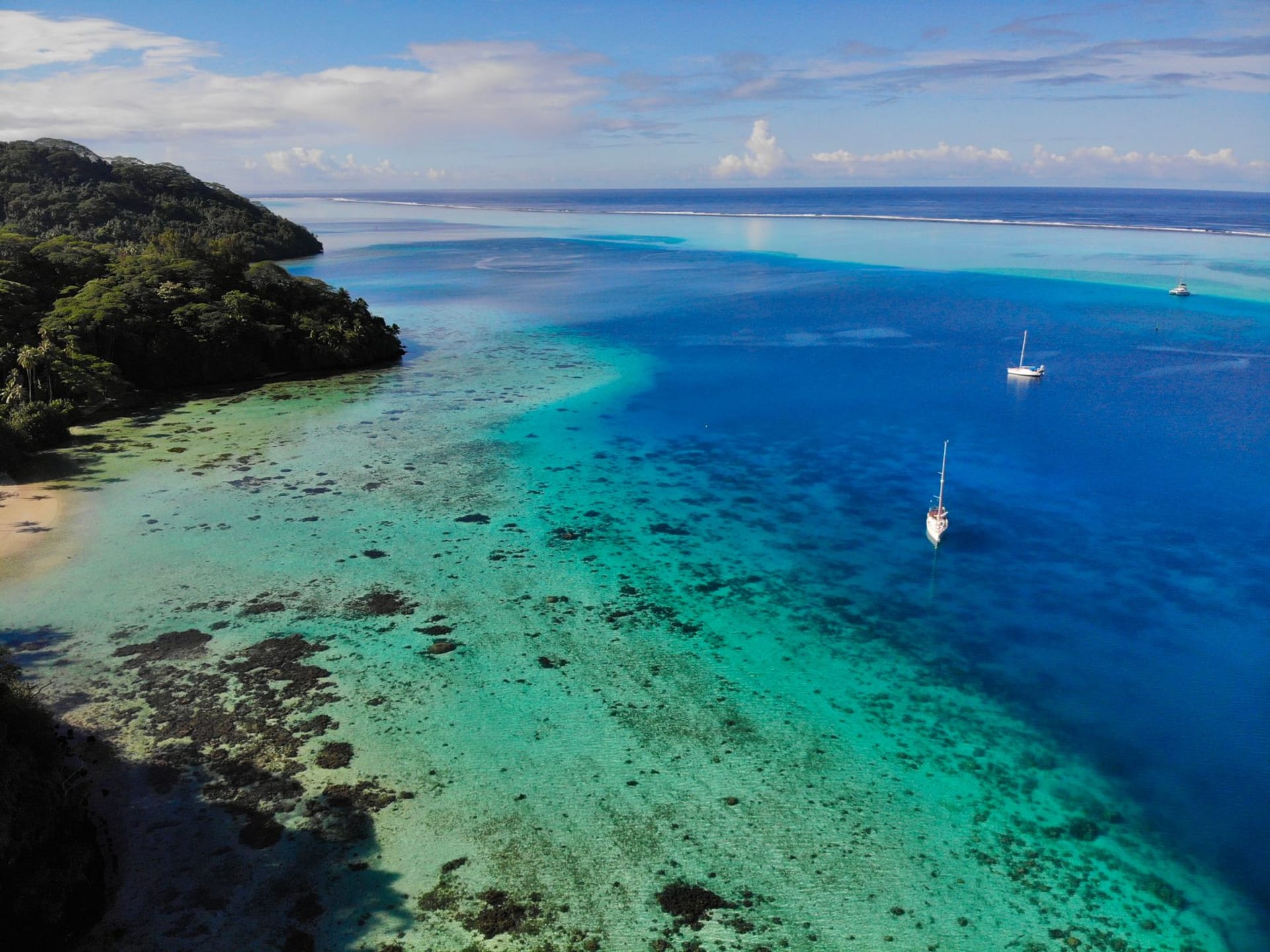
The Cook Islands sits in the South Pacific, about halfway between New Zealand and Tahiti — close enough to French Polynesia in spirit but independent, less manicured, cheaper by a significant margin. Rarotonga is the main island: a single road running the 32-kilometre perimeter, a mountainous interior dense with jungle that almost nobody goes into, and a lagoon protected by a reef that turns the water every shade of green and blue imaginable. I rented a scooter the first morning and drove the whole loop in ninety minutes. Then I drove it again, slower, because I hadn’t quite believed what I’d seen the first time. The beach at Muri isn’t a beach so much as a threshold — you wade out fifty metres and the water is still knee-deep, warm, impossibly clear.
The food surprised me more than anything else. I’d read the standard warnings: expensive, limited variety, eat at the market. All true, but the Friday night market at Punanga Nui is legitimately one of the better food markets I’ve encountered anywhere. Ika mata — raw fish marinated in lime juice and coconut cream — eaten from a paper plate at a plastic table, is the kind of dish that makes you resent every overpriced restaurant that tries to recreate it. On the outer island of Aitutaki, I ate breadfruit roasted over an open fire on a beach with four other people and no signal. That meal doesn’t need commentary.
When to go: April to November is the dry season — lower humidity, cooler nights (relative to the rest of the year), and fewer cyclone risks. July and August see the most visitors. If you want Aitutaki mostly to yourself, go in May or early June. December through March is cyclone season; not impossible, but not recommended unless you’re flexible.
What most guides get wrong: Everything leads you toward Aitutaki as the unmissable day trip, and it is genuinely stunning — but Rarotonga gets written off as “just the hub,” the place you pass through. That’s wrong. The interior cross-island track is a proper jungle hike to a ridge with views in both directions, and the local culture — dance shows, the Cook Islands Christian Church on Sunday morning, the Tuesday night market — is more present and accessible than anything you’ll find on Aitutaki, which is mostly resort infrastructure over a lagoon. Spend at least four days on Rarotonga. Go slow. The island will push back against anything else anyway.