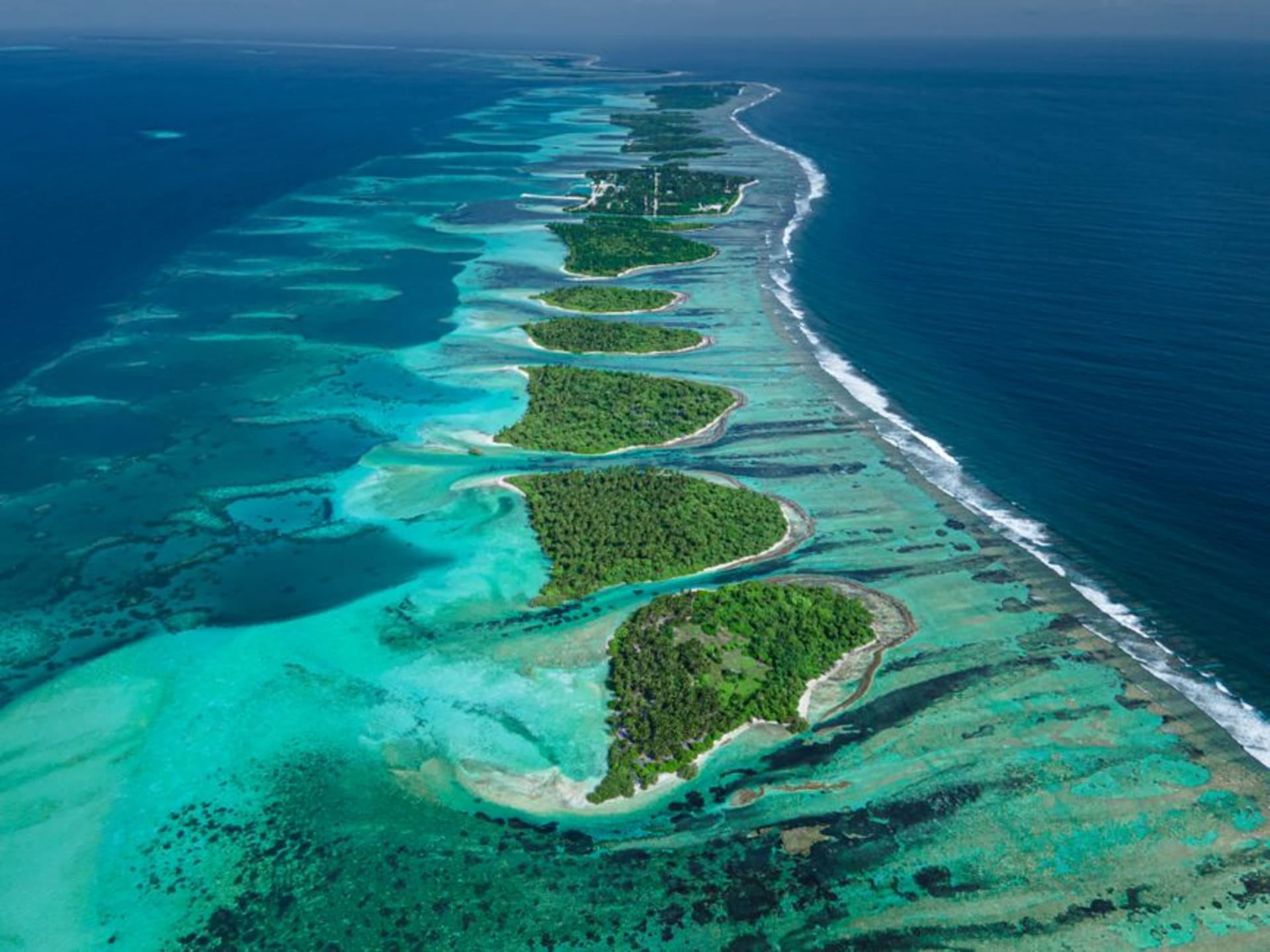
Palmerston Atoll
"Everyone on the island shares a great-great-grandfather. That fact alone rearranges how you think about isolation."
A single-family atoll in the middle of nowhere, populated entirely by the descendants of one English sailor and his three Polynesian wives, reachable only by a supply ship that visits a handful of times a year.
I will admit upfront that getting to Palmerston is closer to an ordeal than a journey, and that is precisely why I wanted to go. There is no airstrip. The only way in, short of chartering a yacht, is the supply ship that runs a few times a year out of Rarotonga, a two-day crossing across open ocean that I spent mostly lying flat and regretting decisions. When the atoll finally appeared — a thin ring of coconut palms and white sand around a lagoon so improbably blue it looked corrected in post — the seasickness evaporated in about four seconds.
Palmerston’s story is the reason anyone comes. In 1863, an Englishman named William Marsters settled here with three Polynesian wives and set about founding what is, functionally, a single extended family of a few dozen people, all descended from him, all sharing three surnames tied to his original three households. The island still runs, more or less, on rules he laid down about how the three family lines share resources and land. It should not still function after more than a century and a half. It does. I was hosted by a family for four days — there is no hotel, you stay with a household, and they feed you, and you fall into whatever rhythm the day has, which mostly means fishing, mending nets, and sitting.
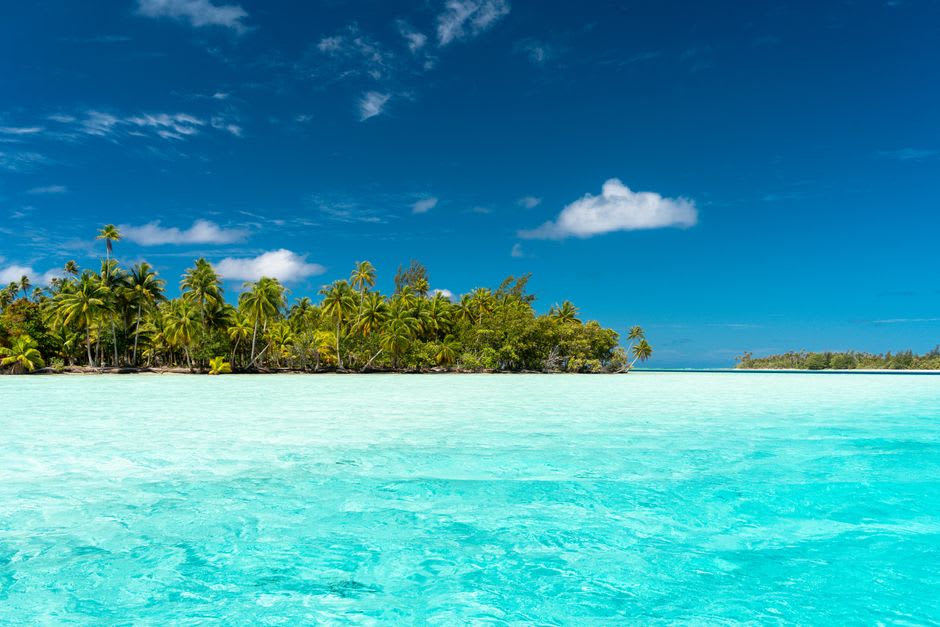
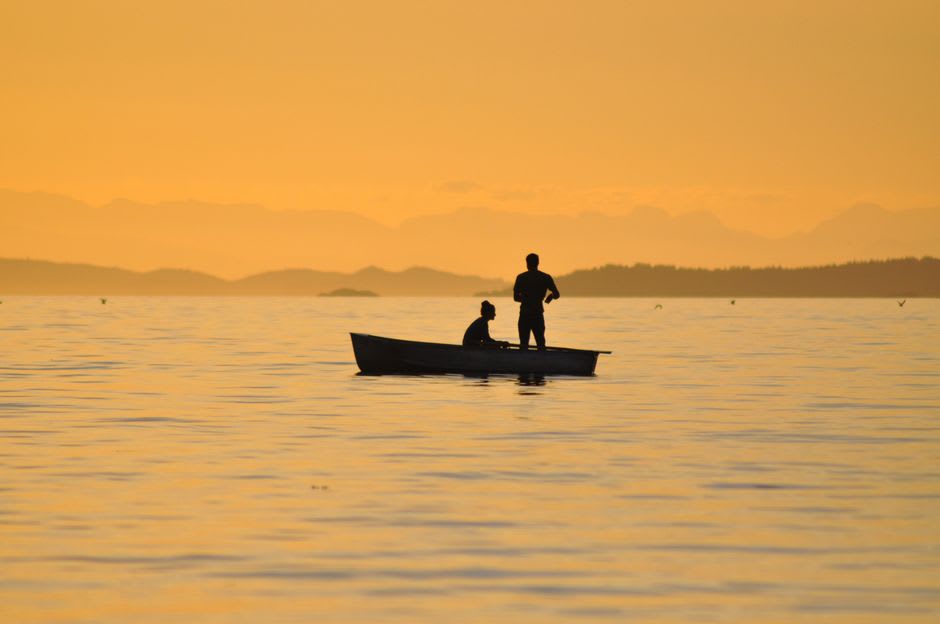
The lagoon itself does most of the heavy lifting for anyone who needs convincing to make the trip. It is enormous relative to the tiny motus scattered around its rim, and shallow enough in places that you can wade across sandbars that seem to appear and disappear with the tide. Parrotfish move through in numbers I haven’t seen matched anywhere else in the Cook Islands, and the water clarity means you can watch them from the surface without ever putting a mask on. One evening I went out with two of the Marsters boys in a small aluminium boat to check a fish trap near the reef edge, and the sunset that came down over that lagoon — every shade of orange bleeding into the turquoise — is one of maybe five sunsets in my life I can still describe without exaggerating.
What stays with me isn’t really the scenery, though. It’s the strangeness of a community this small and this genetically singular functioning as a real, self-governing society, with its own quiet disputes and its own quiet solidarity, three thousand kilometres from the nearest big city, entirely dependent on a supply ship that might not come for months. I have never felt further from anywhere, and I have rarely felt more welcomed somewhere I had no right to expect it.
When to go: Sailings to Palmerston are infrequent and weather-dependent, generally clustering in the dry season from April to November. You need to arrange a homestay with a Palmerston family in advance through Rarotonga contacts — there is no tourism infrastructure, and that is the entire point.