Muri Beach
"The line between sea and sky at Muri dissolves so slowly you stop thinking of them as separate things."
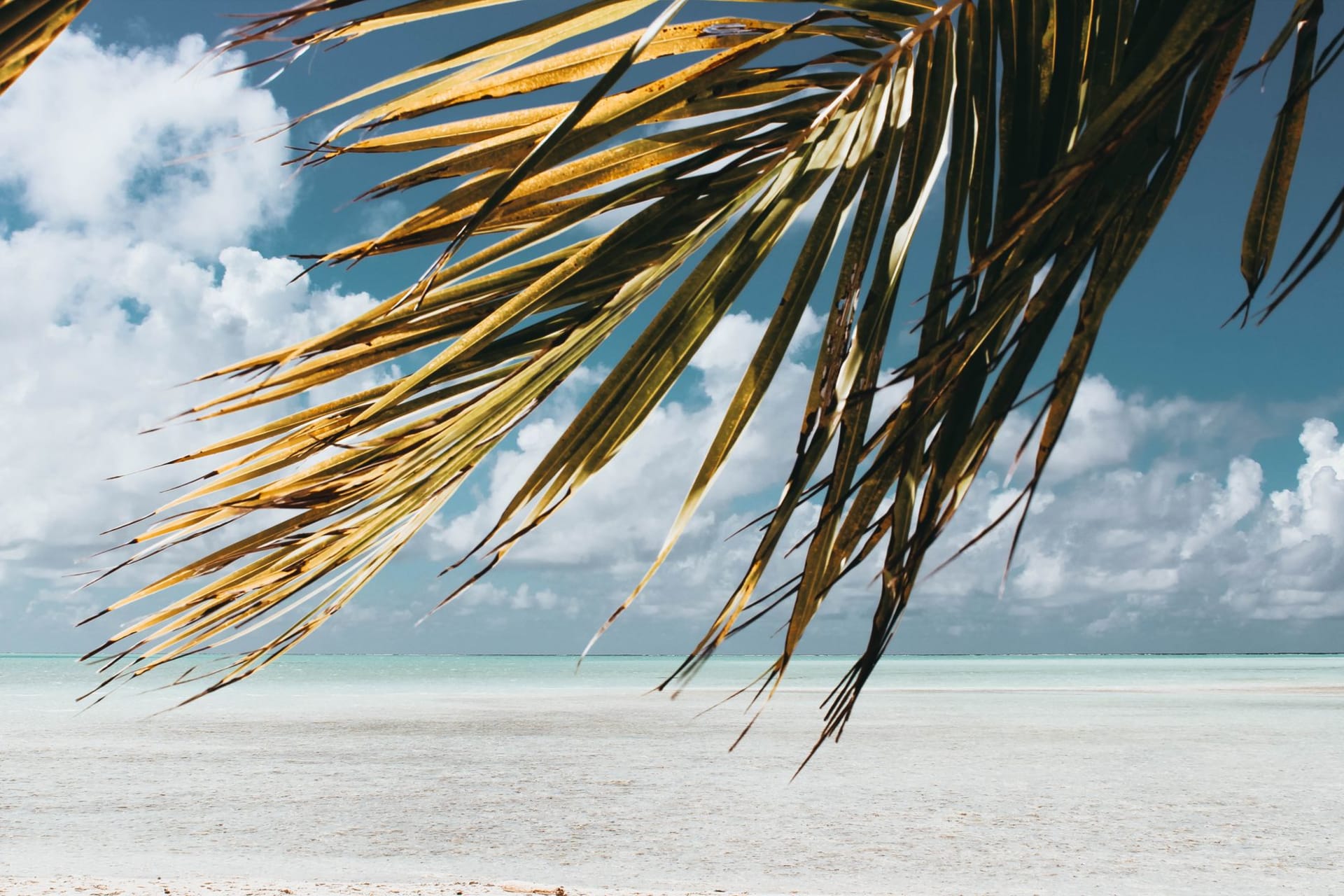
I arrived at Muri in the late afternoon, when the light had gone gold and horizontal and everything it touched looked like it was lit from within. The lagoon stretches east from a thin crescent of sand, and at this hour the four small motus — Taakoka, Koromiri, Oneroa, Motutapu — sit on the water like punctuation marks, dark green against the glow. I waded in without thinking about it, just stepped off the sand and kept walking, and the bottom stayed within reach for far longer than seemed reasonable. Fifty metres out. A hundred. Still knee-deep. Still warm. Still so clear that the rippled sand beneath my feet threw shadows. Some places earn their reputation in photographs. This one earns it with the specific temperature of water against your knees at five in the afternoon.

The next morning I rented a kayak from the beach and paddled out to Koromiri — the closest motu, maybe fifteen minutes across flat water — and walked its perimeter in under ten minutes. The interior is coconut palms and shade. The outer edge, facing the reef, is reef rubble and the sound of open ocean. Standing there, the lagoon at your back impossibly turquoise and the Pacific in front dark navy and enormous, the scale of where you are becomes briefly vertiginous. This is the middle of the South Pacific. The nearest continent is over three thousand kilometres away. The nearest traffic is the perimeter road of Rarotonga, which you can see from here as a faint line of tarmac through the trees.

Evenings at Muri are built around the small clutch of open-air restaurants that face the lagoon. I ate ika mata three nights running — raw fish cured in lime juice, finished in coconut cream, served with raw onion and tomato — and each time it was slightly different depending on which cook had made it and how much lime they preferred. One version was acidic and bright, almost Mexican in its approach. Another was richer and sweeter, the coconut cream dominant. The third was the best, but I could not explain why. Perhaps the light was right. Perhaps I was hungrier. Perhaps Muri rewards repetition. By the third evening I had stopped thinking of it as dinner and started thinking of it as a ritual.
When to go: Muri is at its best April through October, when the trade winds keep the lagoon glassy in the mornings and the afternoons stay warm without becoming oppressive. The snorkelling is excellent year-round along the edge of the reef channel, but visibility is best in the dry season. Come early morning to have the lagoon to yourself before the kayak rentals fill up and the tour boats arrive.