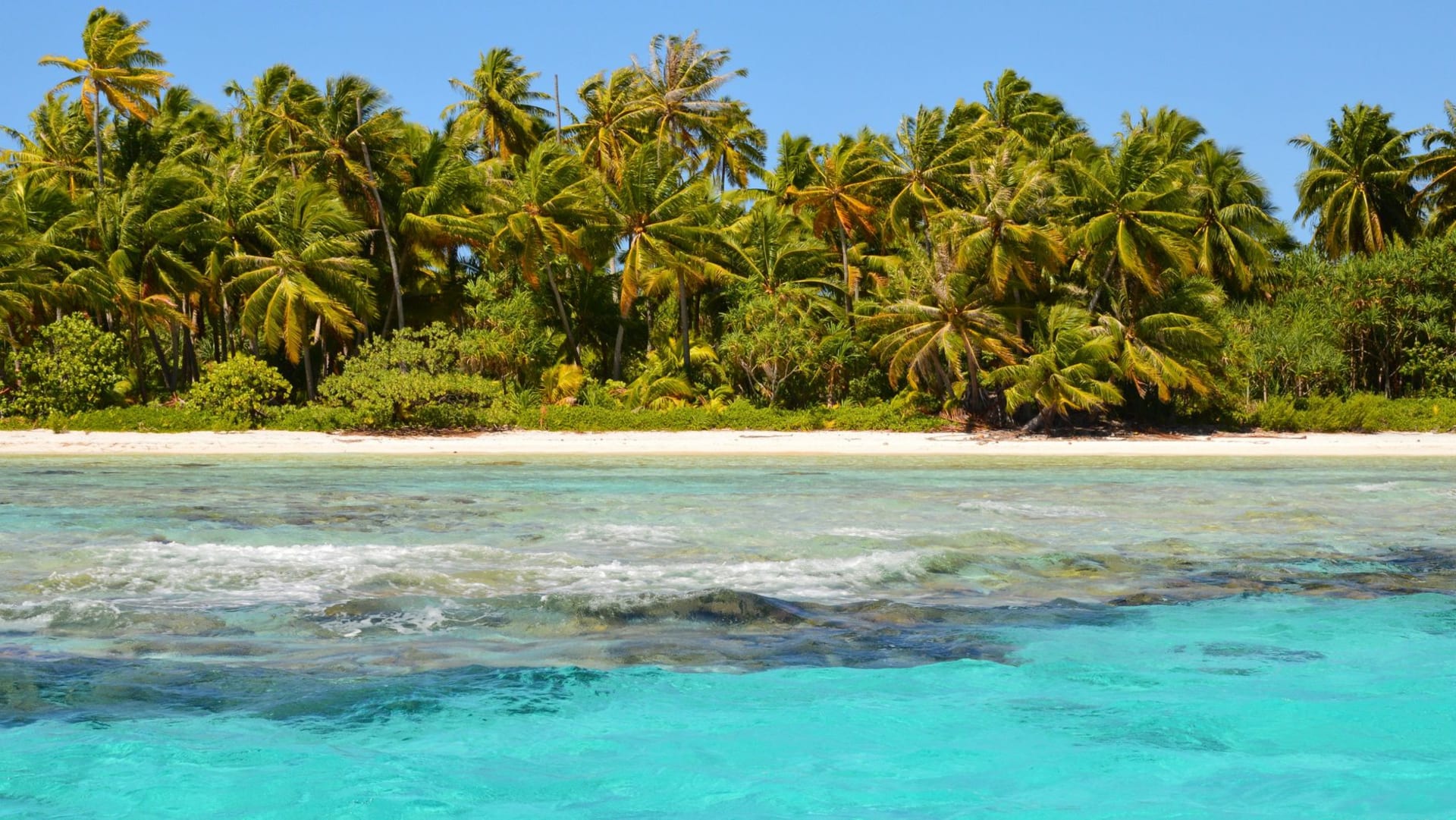
Aitutaki
"The water here is a colour I had no name for before I saw it — somewhere between turquoise and impossibility."
The flight from Rarotonga takes forty minutes on a small propeller plane that seats maybe twenty people, and for the last ten minutes of the approach you can see the atoll from the air: a ragged coral ring enclosing a lagoon that shifts from deep teal at its edges to a pale, almost luminous mint in the shallows near the motus. I had seen photographs. I had looked at them carefully. They had not prepared me. There is a moment as the plane banks and the whole thing fills your window — the lagoon, the reef, the scattered islands — where the word I kept returning to was wrong. Not wrong as in bad. Wrong as in this cannot be the same substance as the ocean I know.
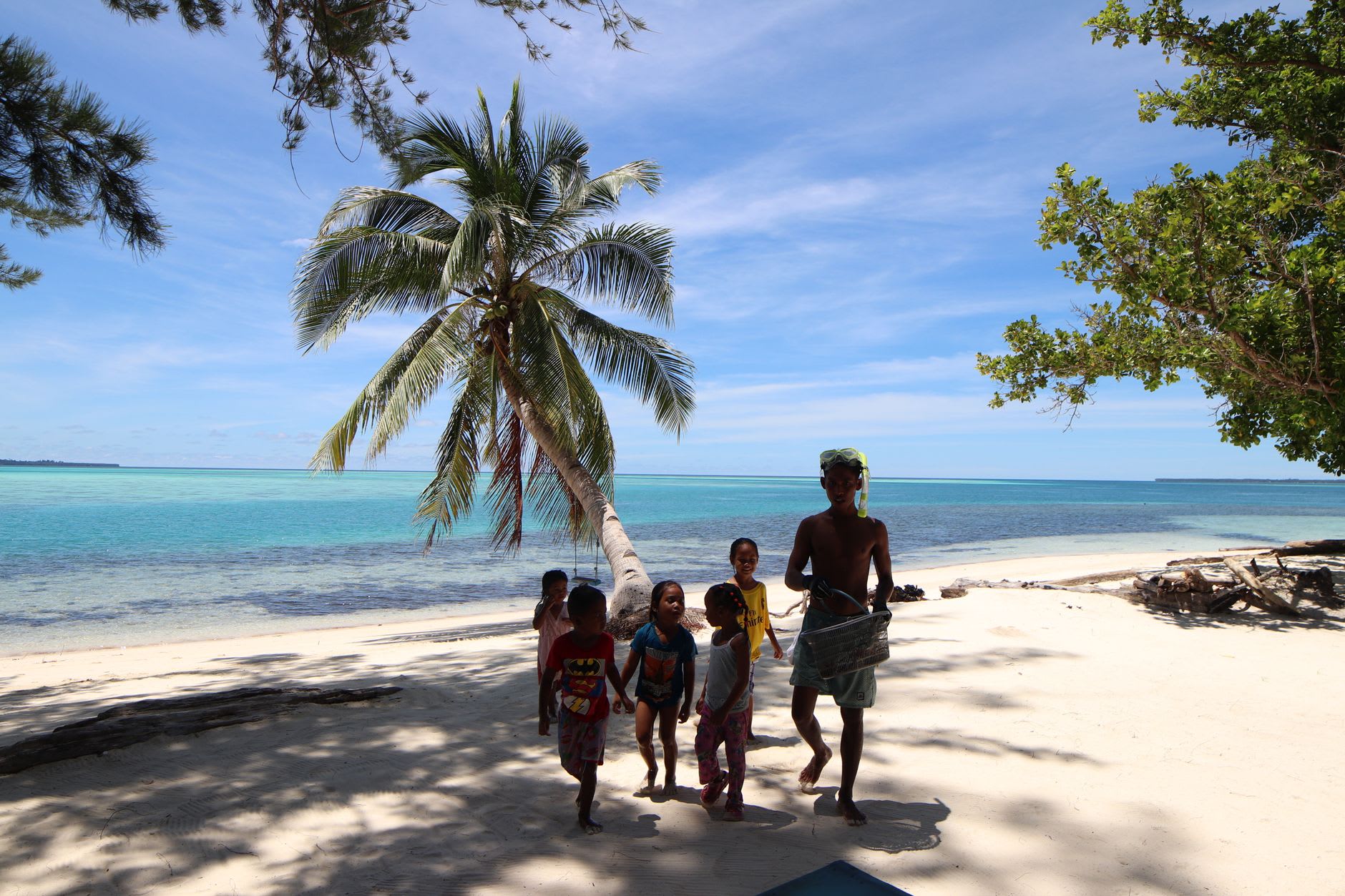
The lagoon tour is the reason most people come, and it earns its reputation without fuss. A local boat captain named Tama — or someone very much like him — takes a small group out at nine in the morning and spends the day winding through the motus, stopping at sandbars, anchoring in water so clear you can count the fish between the hull and the bottom. The coral formations run deep and colourful, and the snorkelling requires no expertise — just a mask, a pair of fins, and the ability to float. I drifted over a garden of staghorn coral while a hawksbill turtle worked its way through the shallows thirty metres to my left, unhurried, not particularly interested in my presence. That is the texture of Aitutaki: the extraordinary presented as ordinary.

What distinguishes Aitutaki from a pure resort experience is that there is still an actual village — Arutanga on the western side, with a church that was built in the 1820s and a handful of family-run guesthouses where the owners cook breakfast and ask whether you want eggs or breadfruit without treating the question as a performance. I stayed in a bungalow set back from the water, owned by a woman whose grandmother had been born on one of the motus. We ate dinner together one night — raw fish in coconut cream, taro leaves cooked in a pot, papaya from the tree in the garden. The meal was simple and exceptional and I have thought about it regularly since. The lagoon is the spectacle. The village is the reason the spectacle feels earned.
When to go: The dry season, April through October, gives the best visibility in the lagoon and the most reliable weather for boat trips. May and June are particularly good — fewer visitors than July and August, and the water is as clear as it gets. Day trips from Rarotonga are possible, but a night or two on the island itself changes the experience entirely; the lagoon at dawn, before the tour boats arrive, belongs to a different category of beauty.