Plateaux Batéké National Park
"The Congo I thought I knew was all canopy. Then the trees just stopped, and the sky opened up."
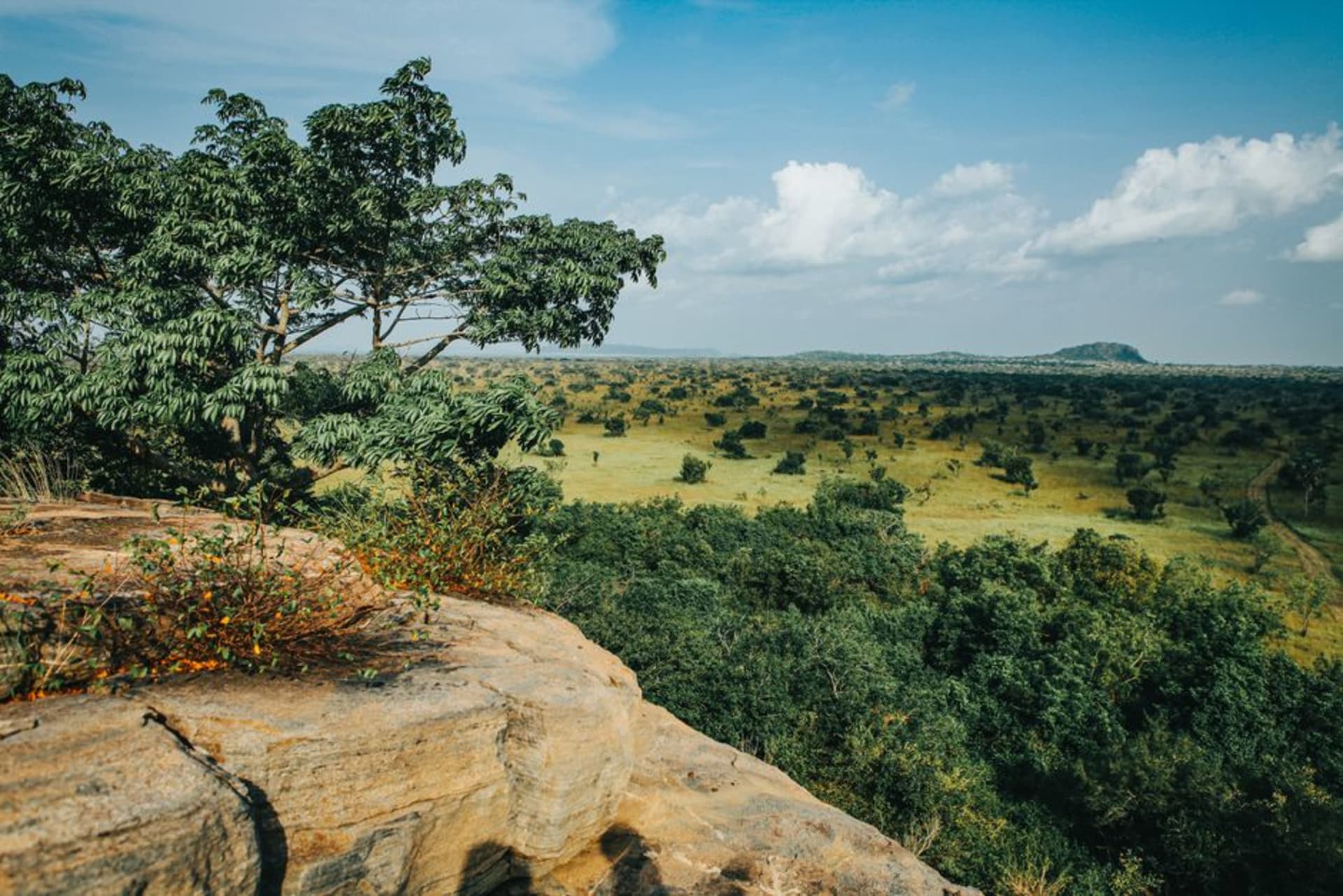
A rolling savanna plateau on the Gabon border where orphaned gorillas are learning to be wild again.
After weeks of feeling swallowed by rainforest in the north, driving into Plateaux Batéké felt like surfacing for air. Lia noticed it before I did — she rolled down the window somewhere past the Gabon border track and said the light had changed. She was right. Odzala and Nouabalé-Ndoki had been a green ceiling pressing down on us; here the land rolled out in open grassland, gold and rust-colored, broken by thin ribbons of gallery forest tracing the rivers. It didn’t feel like the Congo of postcards, and that was exactly the point — this plateau, protected since 2001, is a completely different ecosystem tucked into the country’s southeast corner, and nobody had told me to expect it.
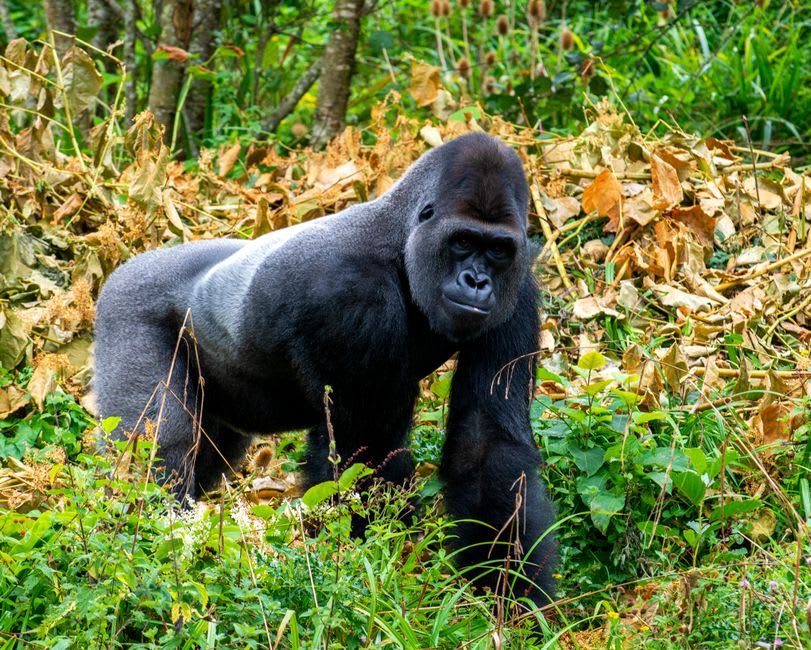
We’d come specifically because of the gorillas. Since 2006, the Aspinall Foundation has been releasing orphaned and captive-bred western lowland gorillas here — animals born in zoos and sanctuaries in Europe and South Africa, given a second life on this plateau. Our guide, who’d worked with the reintroduction team for years, walked us to a ridge overlooking one of the release zones at dawn and told me about a female born in Kent who now forages independently with a troop she helped form. I didn’t expect to feel emotional about it, but standing there with the mist still low over the grass, knowing these animals had come from concrete enclosures to this, I did.
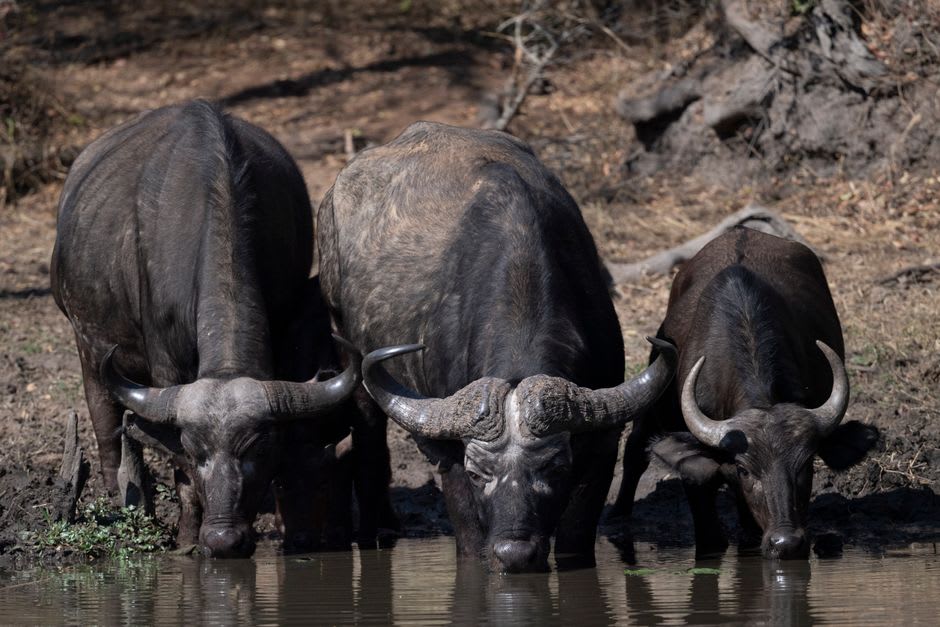
The savanna itself kept surprising us. We tracked buffalo prints along a sandy stretch near camp one morning, and our guide pointed out sitatunga tracks pressed deep into the mud where the grassland met a stream — those long splayed hooves built for wading through swamp. Forest elephants pass through too, moving between the gallery forests like they’re stitching the two habitats together. In the evenings we’d sit outside our tent watching the plateau catch the last light, and Lia kept saying it reminded her of parts of East Africa more than anything else we’d seen in Congo. I think that’s fair. It doesn’t behave like a Congolese park is supposed to.
Getting here isn’t casual — it took real planning and a good local operator, and the tracks across the plateau turn to mush fast — but that’s part of what kept it feeling untouched. We saw no other visitors in four days.
When to go: Aim for June through September, when the drier months keep the plateau tracks passable and pull wildlife toward the rivers and remaining waterholes, which is exactly when we had our best sightings.