Africa
Republic of the Congo
"The forest breathes here — you can hear it at night."
I landed in Brazzaville on a Tuesday afternoon, and by Thursday I was already deep enough into Odzala-Kokoua National Park that I’d stopped checking my phone. Not because there was no signal — there wasn’t — but because the sheer density of the place makes your old habits feel embarrassing. The Congo basin forest has a weight to it, a humidity that isn’t unpleasant so much as absolute. You stop fighting it around day two.
Brazzaville itself surprised me. Most travelers fly straight to Kinshasa across the river and treat the Republic of the Congo as an afterthought — a transit point, at best. But Brazzaville has a rhythm I didn’t expect: a proper restaurant scene along the Corniche, cold Primus beers at dusk, old colonial buildings dissolving gracefully back into the equatorial air. The Bacongo and Poto-Poto neighborhoods are loud and alive in a way that feels completely unperformed. I ate grilled capitaine fish with plantains at a place with no sign, sitting on a plastic chair in the road. It was one of the better meals I had in months.
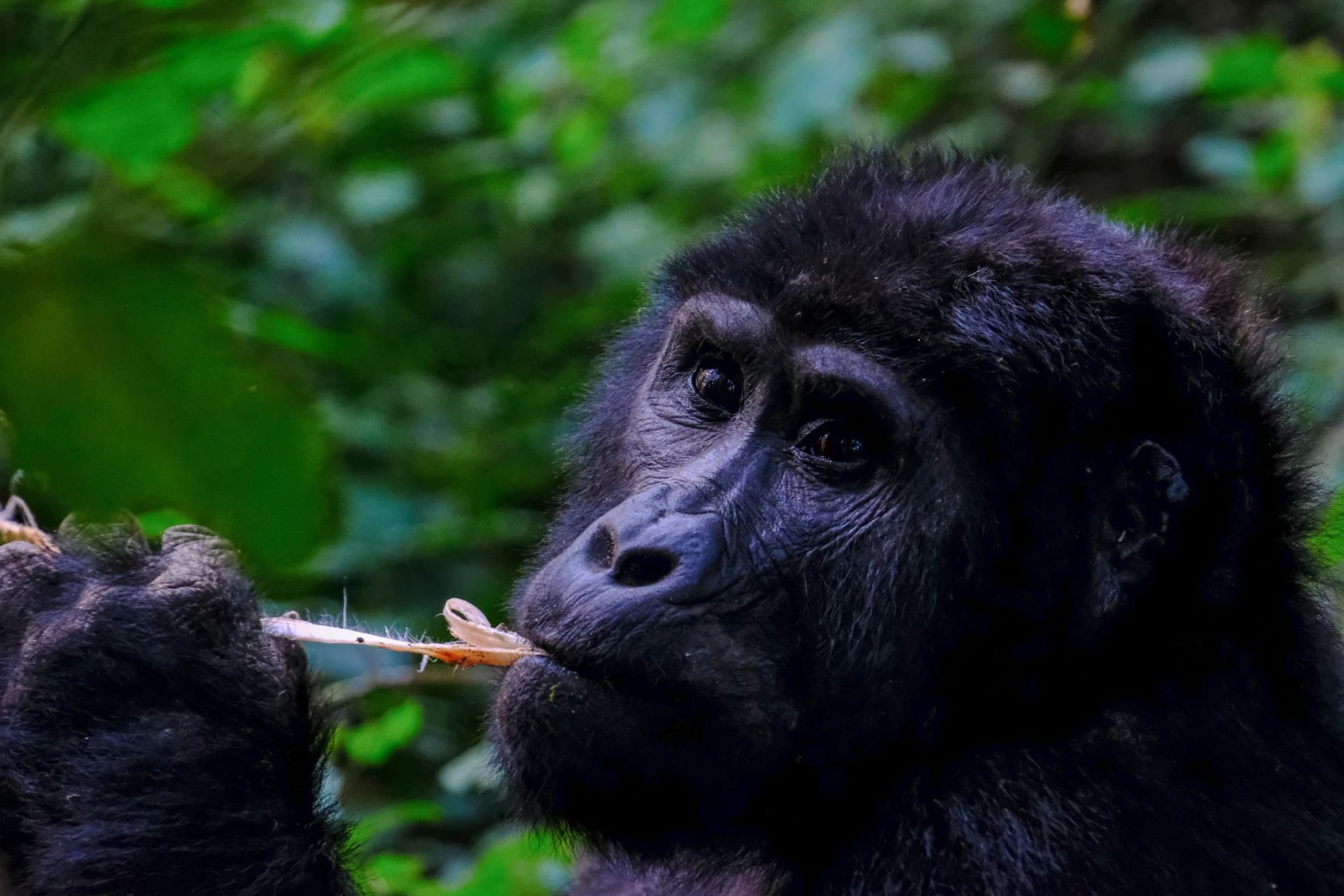
What nobody tells you is how logistically complicated the interior is — and how completely worth it. Getting into the Sangha region, up near the border with Cameroon and the Central African Republic, involves a combination of small planes, dugout pirogues, and a lot of waiting. But the Dzanga-Sangha forest complex in that corner of Central Africa is shared across three countries, and the Congo side, specifically around Bomassa, has a quality of access to wildlife that I’ve rarely experienced elsewhere. You don’t chase animals here. You sit at forest clearings called bais and wait, and eventually the forest decides to reveal itself — forest elephants, bongos, sitatungas, and sometimes, unhurried western lowland gorillas feeding at the edge of the water. The gorillas in Odzala have been habituated over years, and encountering a silverback at close range — close enough to smell him — is the kind of thing that recalibrates your sense of what travel is actually for.
When to go: June through September is the dry season and by far the most practical time to travel — roads become slightly less apocalyptic, and the bais in the national parks are more accessible. The short dry season in January and February also works if you’re flexible. Avoid March through May when rainfall peaks and the forest tracks turn to mud that will eat your boots.
What most guides get wrong: Every piece of writing about the Republic of the Congo leans hard on danger and difficulty, which creates a self-fulfilling prophecy — only the most hardened travelers bother, and so it remains underseen and underinvested. The country is not without real challenges, but Brazzaville is a functioning, interesting city, and the gorilla trekking infrastructure at Odzala is genuinely professional. The experience isn’t rough in the way people imagine. What it is, is remote — and that remoteness is entirely the point.