Loufoulakari Falls
"Fifty kilometres from the capital and you're swimming in something that looks entirely unreal."
A friend in Brazzaville — a journalist who’d been in the city for three years — mentioned the Loufoulakari Falls in the same tone people use for places they assume everyone knows about. I didn’t know about it. I went the following Sunday in the back of a bush taxi with four other passengers and a bag of cassava roots that took up more space than any of us. The road west from Brazzaville deteriorates gradually and then all at once, and the driver navigated the worst sections with a cheerful fatalism that I found either reassuring or alarming, depending on the moment.
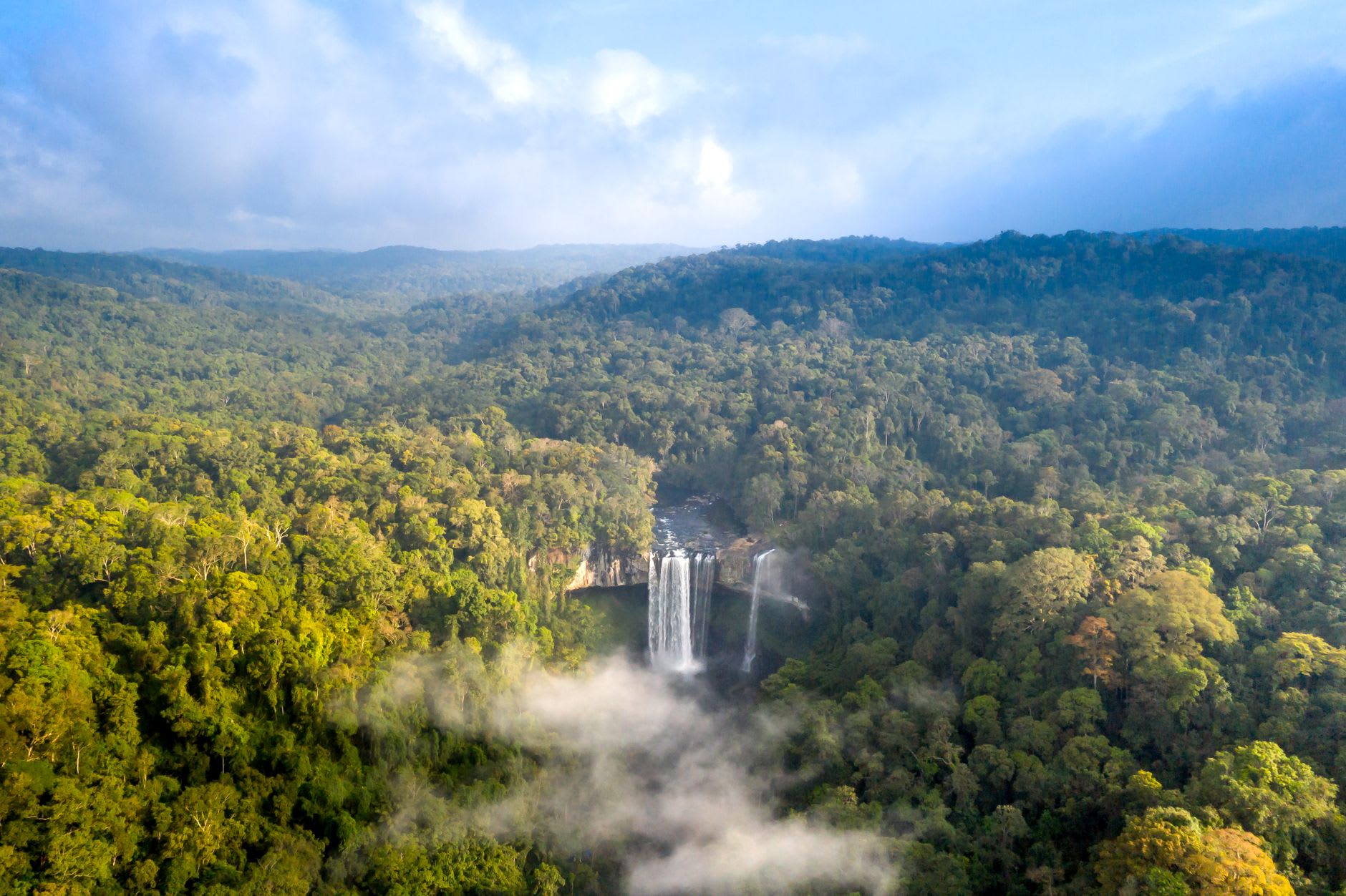
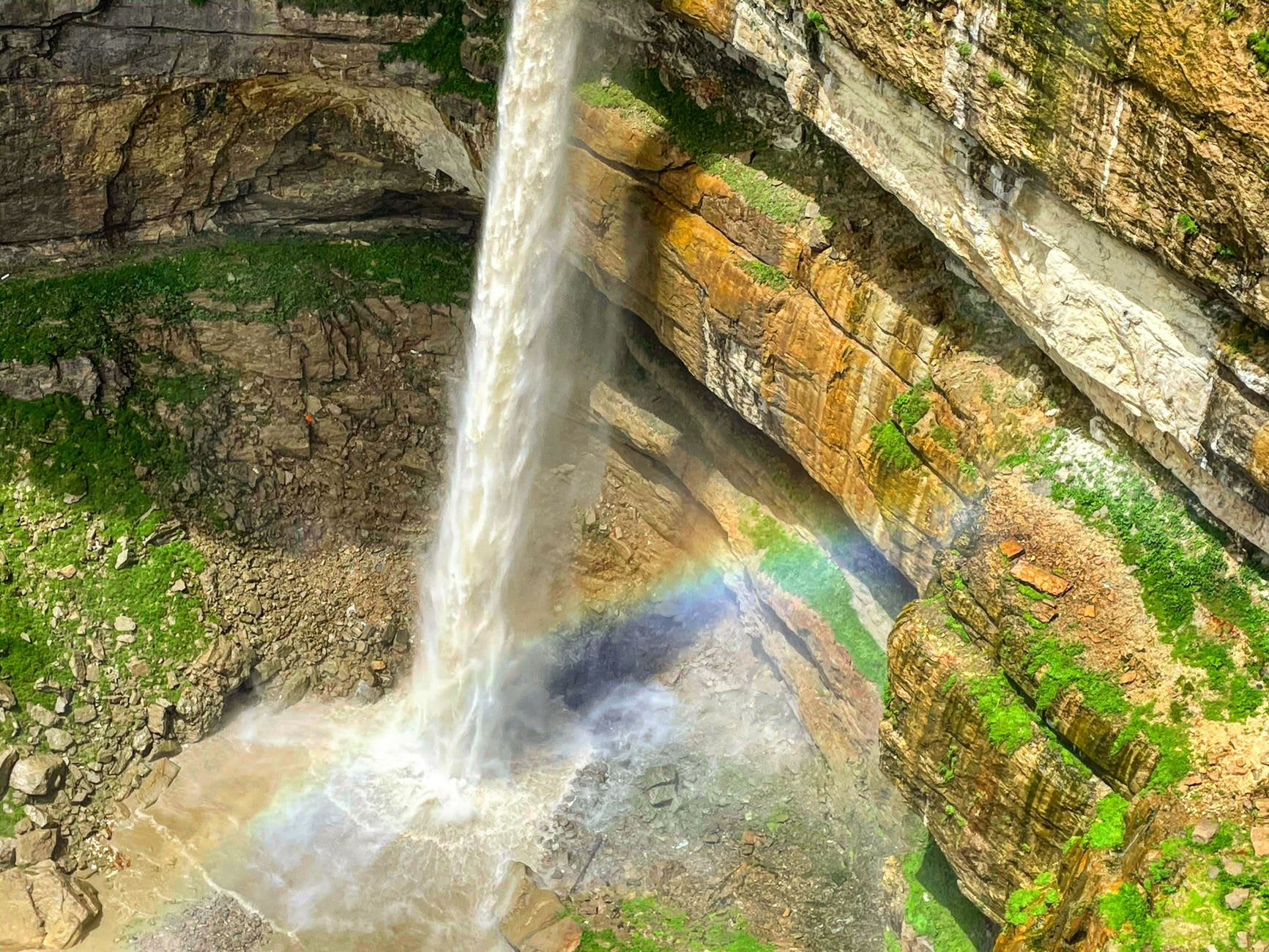
The falls are about fifty kilometres from the capital, accessible by road to a point and then by a short walk through forest that grows denser and louder as you approach the water. You hear the falls before you see them — a sustained white roar that changes character as you get closer, gaining texture and bass. The Loufoulakari River drops over a shelf of ancient laterite rock and falls into a series of dark jungle pools below, the water stained a deep reddish-brown by the iron-rich stone it has been moving through for a very long time. The effect, with the jungle pressing close on all sides and the mist from the falls catching the light between the trees, is operatic in a way that doesn’t require any prompting.
On Sundays, the falls attract Brazzavillois in quantities that restore your faith in people choosing things that are actually worth choosing. Families spread on the rocks above the lower pools. Young men jump from ledges into the water below with the elaborate casual precision of people who have been doing this since childhood. Women from nearby villages sell grilled freshwater fish and cold sodas from cool-boxes. Children who have clearly never been told to be careful about waterfalls scramble up the wet rock beside the main cascade. The whole scene has the quality of a ritual that predates tourism and has absolutely no interest in becoming it.
I swam in the lower pools for an hour. The water is cool despite the equatorial heat outside the shade, and the depth makes it impossible to see the bottom, which adds a certain commitment to the exercise. At one point a group of teenage boys decided to compete at jumping from a ledge about six metres above the pool and spent the next thirty minutes performing for an audience that quickly included everyone in the vicinity. The best jumper had clearly spent time developing his entrance to the water — a half-twist and a perfect vertical entry — and he knew it.
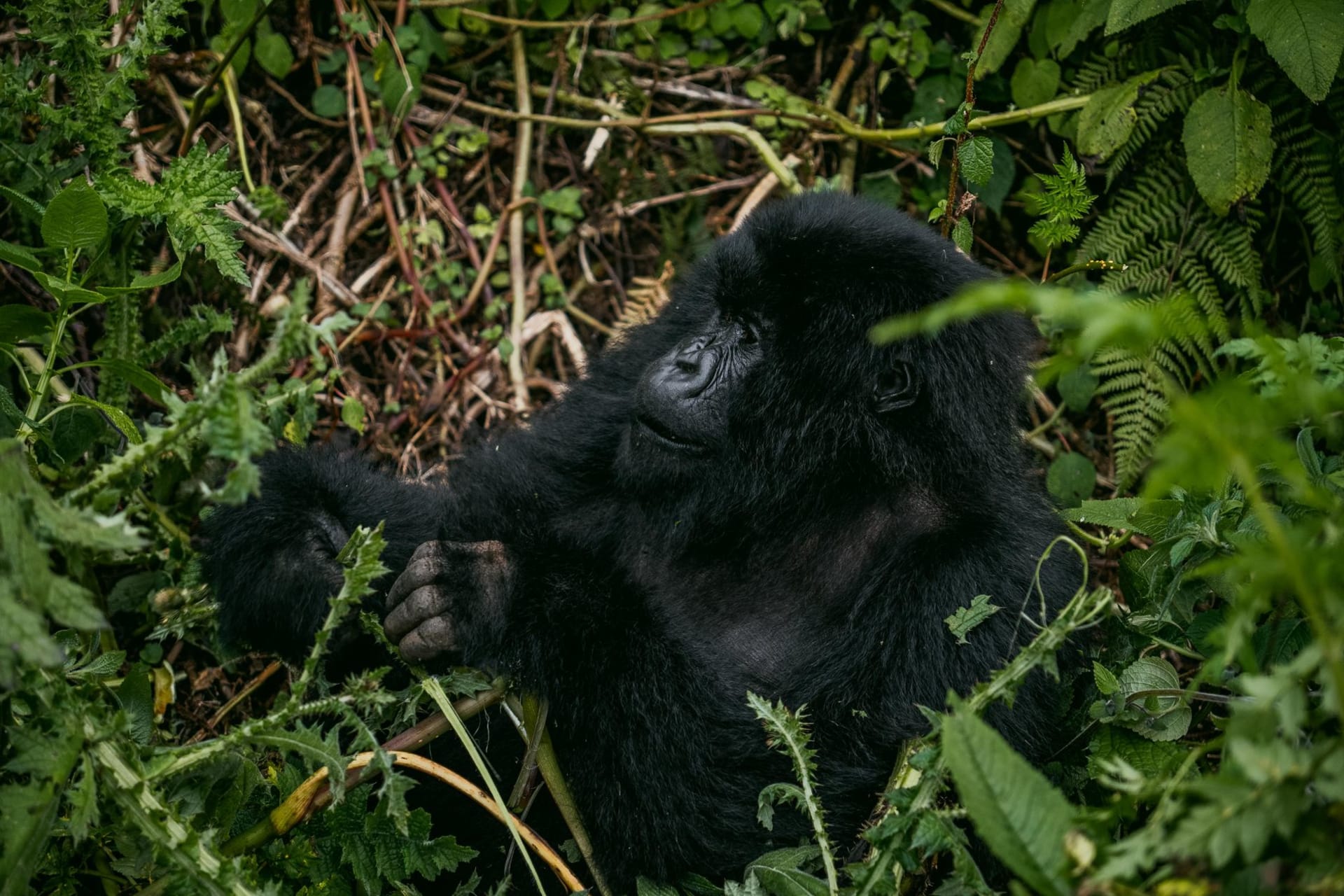
The walk from the road to the falls passes through secondary forest where birds are constantly audible and occasionally visible. The forest floor here has the deep, loamy smell of places that are very alive — decomposition and growth happening at the same pace, which is the fastest pace. There’s a quality of active biological business that cities don’t have and that you forget exists until you step into it again.
When to go: The falls are accessible year-round but most rewarding at the end of the dry season (August–September), when water levels are still good but the tracks are manageable. Avoid April–May when the approach road can become genuinely impassable. Go on a Sunday for the full social experience.