Mitsamiouli
"Some beaches earn their reputation. Mitsamiouli's reputation is so local it barely has one, which means the beach is yours."
Getting to Mitsamiouli from Moroni meant finding a shared taxi on the road north — a car that leaves when full, which here means six people in a vehicle intended for four, plus whatever is balanced on the roof. The road north hugs the coast, passing villages of coral-stone and corrugated iron that announce themselves with the smell of frying cassava or the sound of a generator, then retreat back into palm and casuarina. The sea appears and disappears to the right, sometimes shockingly blue, sometimes grey under passing cloud, always present. After about an hour and a half, the driver pointed at a turn-off and said something in Comorian that I chose to interpret as “this is where you get out,” which it was.

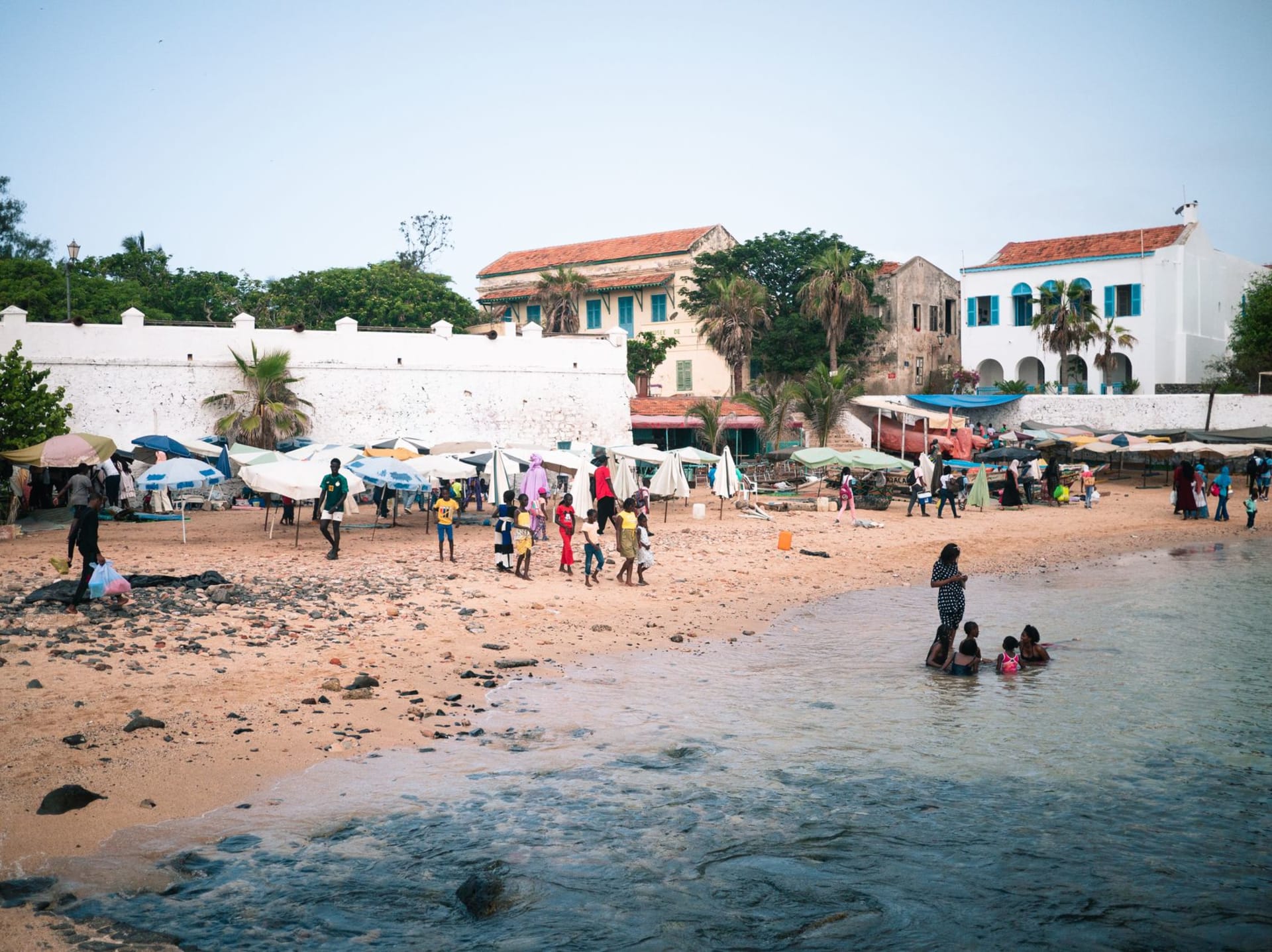
The beach at Mitsamiouli is not a secret — it is known, within the country, as the best beach on Grande Comore, which in a country this size is a meaningful claim. But “known within the country” in the Comoros means something different from what it means elsewhere. There was no beach bar. There were no sunbeds. There were local women gathering something at the tide line, and a group of teenage boys playing in the surf with the unselfconscious energy of people who have not been told beaches are for relaxing, and two old men playing checkers on a wall above the sand. The water was the particular shade of turquoise that photographs badly because it looks improbable, a blue-green so saturated it seems like an editorial choice. I swam for an hour and saw a reef shark, small and indifferent, moving through the deeper water twenty metres out.
The town behind the beach is modest in the way Comorian towns generally are — a market, several mosques, houses behind walls where life happens invisibly. What it offers that Moroni does not is a certain northern stillness: the volcano’s influence on this part of the island gives the landscape a sculptural quality, the basalt formations running down to the sea in dark ridges, the vegetation thicker and more varied. I ate at a woman’s house — she cooked for visitors from a small room off her courtyard — a plate of rice with coconut chicken and a fried plantain that arrived without being ordered and was the best thing on the table.

In the evenings the beach changes character — the tide comes in, the swimmers leave, the fishermen return. Outrigger canoes are pulled above the tide line. The smell of grilling fish drifts from somewhere in the settlement. The call to prayer carries across the water at just the right volume, neither intrusive nor distant. I walked south along the shoreline until the lights of the town were small and the only sound was the reef. It occurred to me that this was, technically, a tourist beach, in the way that any beautiful thing eventually becomes a tourist attraction — but that the tourism had not yet arrived in any form that changed it. I had no idea how long that would last.
When to go: May through October is the dry season and the beach at its most consistent — the sea is calmer and the skies clearer, though the volcanic highlands behind Mitsamiouli can cloud over at any time. The north of Grande Comore receives slightly less rainfall than the south, making it reliably pleasant. Shared taxis from Moroni run throughout the day; the journey takes roughly ninety minutes depending on how quickly the car fills.