
Vernazza
"Every village here is beautiful, but Vernazza is the one that makes you want to stay."
The village with the only true harbor, where the anchovies are genuinely fresh and the piazza fills with the sound of children at dusk.

Vernazza announces itself from the trail before you see it. You’re walking the Sentiero Azzurro, the path climbing and dipping along the cliff face, and then the village appears around a bend below you — a horseshoe of colored buildings encircling a small harbor, a castle tower rising from the headland, the whole thing so precisely composed that it looks like someone painted it there. I stopped walking. There was nothing to say. I just stood and looked.
The harbor is what makes Vernazza different from its four neighbors. It’s the only village in the Cinque Terre with a proper natural port — deep enough for actual fishing boats, sheltered enough to actually use — and that one geographic advantage has shaped the whole character of the place. The piazza opens directly onto the water, which means you drink your espresso watching boats maneuver and the sea conditions change with the afternoon wind. I find that proximity to working water does something to the quality of time. It stretches it.

The anchovies here are serious business. Vernazza has fished them for centuries, and the difference between what you eat here and what comes in a tin is roughly the difference between a vine-ripened tomato and its supermarket cousin. I ate them at lunch at a place with three tables crammed against the harbor wall: raw and dressed with lemon and good oil, then fried in a batter so light it seemed apologetic about its own existence, then stuffed with herbs and baked. Three preparations, same fish, all different conversations. The local Cinque Terre Bianco, slightly mineral and cold from the fridge, was exactly what the heat called for.
The castle on the headland is open and worth the climb not for the ruins — which are unremarkable — but for the view back down onto the village rooftops and the harbor below. At dusk, that view becomes something close to hallucinatory. The facades catch the last light and hold it, the water in the harbor turns the color of old bronze, and the village sounds — children, someone’s radio, the slap of water against stone — rise up with a particular evening clarity. I stayed up there until the light was gone, then came down and had dinner at a table outdoors and felt like I’d gotten away with something.

The hike from Vernazza to Corniglia is one of the longer and less-walked sections of the coastal trail, through maquis and terraced hillside with views that keep opening and closing as the path winds. It takes about ninety minutes at a comfortable pace and deposits you above Corniglia’s promontory with aching calves and a clear conscience about whatever you’re planning to eat for lunch. The trail can be muddy after rain; the views make this worth it.
When to go: Late April through early June is ideal — spring wildflowers on the cliffs, warm enough for the harbor to swim in, quiet enough to find a table. September through October is the second window: grape harvest in the terraces, sea still warm, and the village belonging again to people who actually live there. Midwinter is strangely lovely if you’re fine with most things being closed — the light is extraordinary and you’ll have the piazza to yourself.
Keep exploring
More from Cinque Terre
 cinque-terre
Via dell'Amore
The mythologized cliff-cut path between Riomaggiore and Manarola — reopened in part, still carrying its reputation for inducing declarations.
Explore cinque-terre
Volastra
The forgotten hamlet above Manarola where the vineyard terraces begin and the only sound is wind and the occasional tractor.
Explore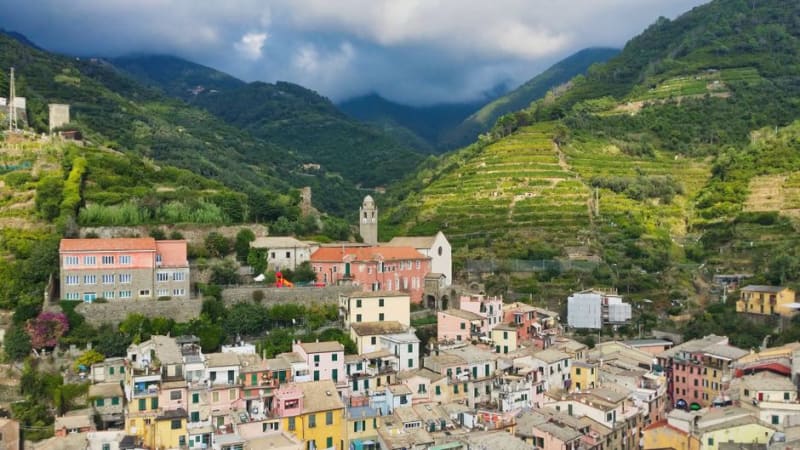 cinque-terre
Campiglia
A quiet hillside hamlet above Portovenere, reachable by a winding minibus, with sweeping views over the whole Cinque Terre coastline.
Explore cinque-terre
Corniglia
The only village that turns its back on the sea, perched on a promontory where the wine is better and the crowds haven't quite figured it out.
Explore cinque-terre
Guvano Beach
The hidden pebble cove below Corniglia that requires a commitment to reach and rewards it with genuine isolation.
Explore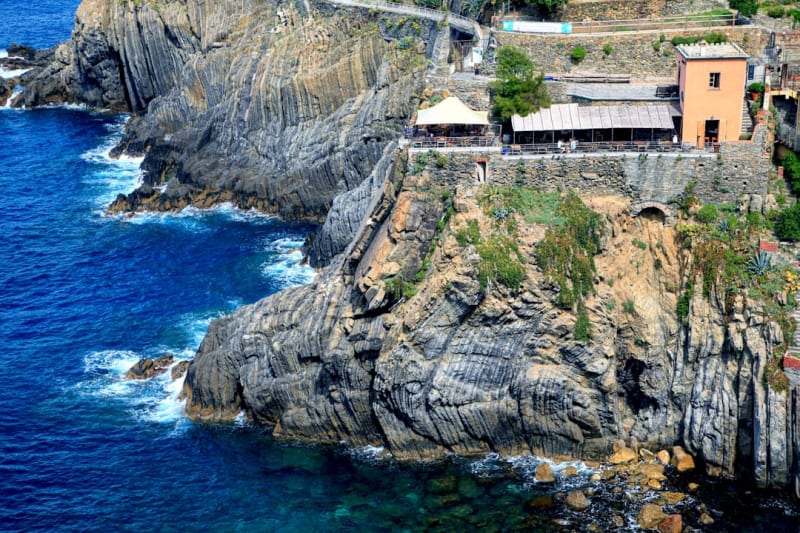 cinque-terre
La Spezia
The naval port city and rail-and-ferry gateway to the Cinque Terre, with a working shipyard, a decent museum, and none of the tourist gloss.
Explore