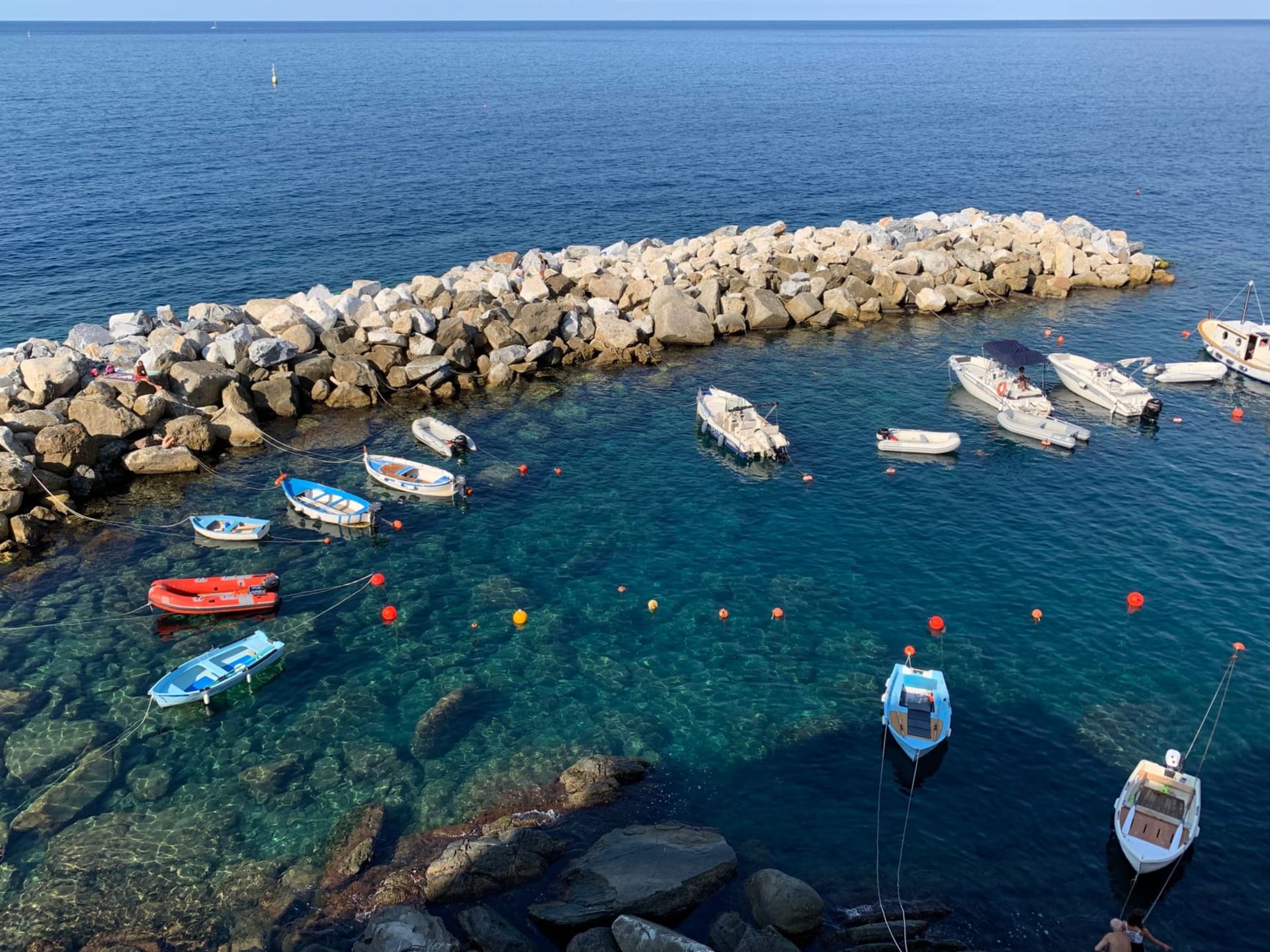
Punta Bonfiglio
"I've fought a crowd for a view before, but rarely has the crowd been so collectively silent."
There is a ritual that occurs every evening at Punta Bonfiglio, the headland promontory east of Manarola’s harbor, and I participated in it unironically. Perhaps a hundred people gather on the path and platform above the village from about an hour before sunset. They come from the hotels and rental apartments scattered across the five villages, from the agritourism places on the ridge above, from the campground at the edge of the national park. They bring wine in plastic cups and small portions of focaccia wrapped in paper. They find spots along the railing and they wait.
To get to Punta Bonfiglio from Manarola, you walk through the harbor and up a short path that begins beside the cemetery and climbs through a grove of maritime pines. The pines are large and old and smell of resin in the afternoon heat, and their needles cover the path in a soft rust-colored layer that muffles footsteps. It takes less than ten minutes. The viewpoint itself is a series of terraces cut into the headland, with benches and a railing and that famous prospect of the village stretching up the gorge to the left, the sea to the right, the whole thing arranged in a composition so exact it makes you wonder whether the village was built to be looked at from this exact spot.

What actually happens at sunset is this: the sun drops toward the ridge line in the west, and for about twenty minutes, the light that hits the south-facing facades of Manarola’s tower houses is the particular concentrated gold of late-afternoon Mediterranean sun. The pinks and oranges and yellows of the paint, which look merely colorful during the day, turn briefly incandescent. The water in the inlet below turns from blue-green to copper. The whole village looks like it is producing light from inside. Then the sun goes below the ridge and the color fades in about thirty seconds, and everyone turns to each other with the expression of people who have just watched the same magic trick.
I went back the next morning before nine, when the headland was empty except for one woman walking a small dog with great purpose. The morning view is different — cooler, bluer, the sea flat and the village in shade except for its upper floors where the sun first touches. The cemetery, which is visible from the path, turns out to be beautiful in its own right: small marble buildings painted white and hung with photographs and plastic flowers, the local dead keeping excellent views from their hillside positions. I spent half an hour there, reading names and dates, before the first tour group of the day arrived below and the sounds of the harbor reached me.

Beyond the main viewpoint, the headland path continues further along the cliff through the pines, becoming less maintained and more genuinely wild. The trail eventually merges with the Sentiero Azzurro heading north toward Corniglia. Walking this section in either direction at shoulder-season gives you stretches of path that the crowd at the main viewpoint never discovers. The cliff drops away dramatically, the maquis closes in, and the sound of the village fades behind you.
Bring something to drink and arrive an hour before sunset to secure a position without stress. The prime railing spots go fast after six o’clock in summer. The benches in the pines a tier back have a slightly different angle but equal light and are almost never contested.
When to go: The sunset ritual here works in every season that the park is open. October is the finest month for it: the harvest light is extraordinary, the crowd is smaller and more composed, and the color of the facades during the last half-hour of sun achieves something that I have not seen equaled. April and May come second, with softer spring light and the pine grove at its most fragrant.