Monterosso al Mare
"When you need to remember what flat ground feels like, Monterosso is waiting."
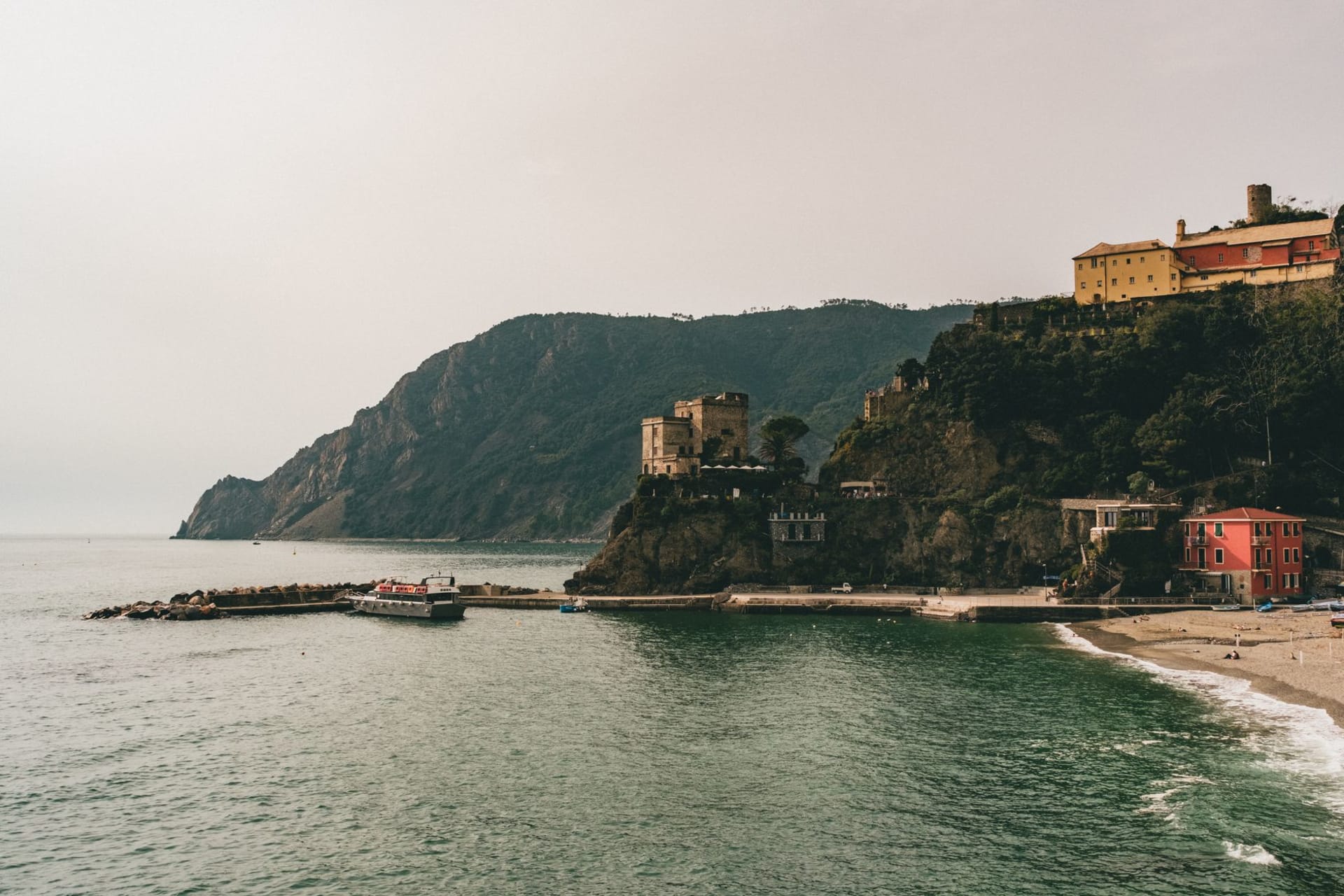
After two days of staircases and cliff-hugging paths, Monterosso al Mare felt almost recklessly flat. I walked out of the train station into a proper street — wide enough for a car to pass in each direction — and then onto a beach that extended further than I could see, and I stood there for a moment recalibrating. Monterosso is the northernmost of the five villages and the largest, and it carries its size without apology. It has a medieval quarter and a newer resort section and a beach long enough that you can actually find a spot on it in June. After the compressed beauty of Manarola and Vernazza, this was a revelation.
The beach is the fact that shapes everything here. Real sand, not the polished rock and concrete slipways of the other villages, which means actual beach culture: sunbeds and umbrellas rented by the season, a crowd of Italian families who come for a week and read novels and argue mildly about what to have for lunch. The northern section nearest the old town is partially free; the central stretch is all private beach clubs that charge for the pleasure of a sunbed. On a hot morning in late May, the free section was already occupied and the paid section was nearly empty, and I spent the ten euros gladly.

The anchovies at Monterosso are the reason to come here for food. The town has fished them seriously for centuries, and the restaurants along the seafront serve them in the form they deserve: marinated in local lemon juice and olive oil for twenty minutes, no heat, no complication. The result is the color of old silver and tastes of the sea with an acidity that opens something in the back of the throat. I ate a plate of them at a table under an awning while the beach crowd moved past, and then ordered another plate, because there is a moment in travel when restraint stops being a virtue.
The granita di limone sold from the cart near the beach entrance deserves its own sentence. It’s made from Monterosso’s lemons — Sfusato Amalfitano variety, grown on the terraces — and achieves a purity of lemon flavor that tastes simultaneously like the fruit and like the memory of the fruit. It is the coldest, sourest, most reviving thing I consumed in Cinque Terre and I think about it sometimes during Mexican summers when the heat is similarly merciless.

The old town is separated from the newer beach section by a rocky headland and a short tunnel, and it holds most of the architecture worth looking at: the Church of San Giovanni Battista with its striped marble facade in the Genoese Gothic style, the Torre Aurora medieval tower at the headland edge, and the castle ruins on the hill above. In the old quarter’s lanes, the tourist infrastructure gives way to residential life and the odd trattoria that opens only for dinner and doesn’t need a sign.
Walking north from Monterosso along the coastal trail, the landscape changes character — less cliff-hugging, more Mediterranean scrub, with views back over the village and the beach that recontextualize the whole geography. The trail continues to Levanto, about an hour and a half away, and exits the national park into a slightly different world.
When to go: June is the sweet spot — sea warm enough for swimming, beach clubs open, and the summer crowds not yet at their worst. May is quieter and the lemon trees are in bloom, which fills the terraces above the beach with a smell that makes you want to sit down somewhere and write something. October also works well, especially for eating, when the anchovies are at their seasonal best.