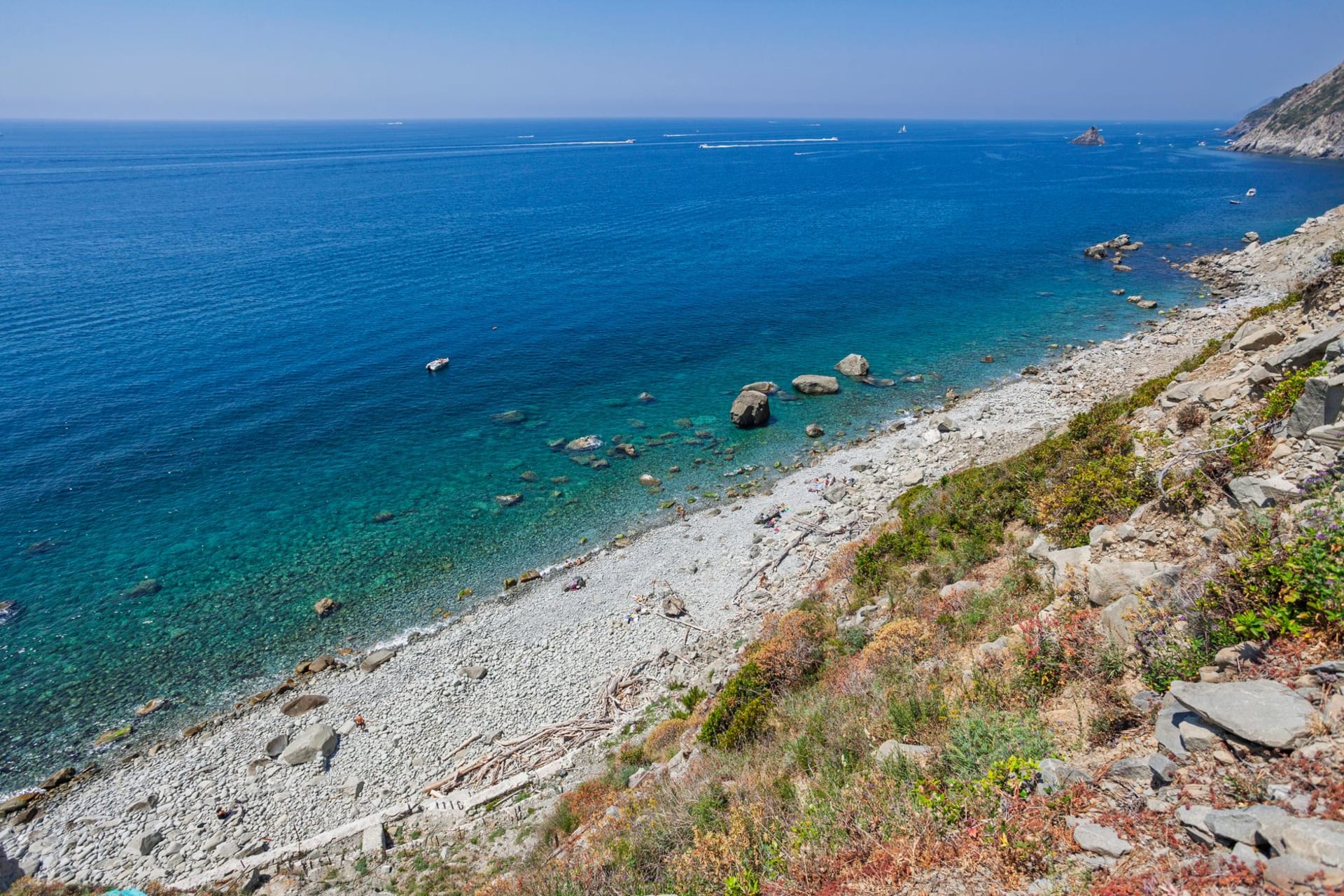
To reach Guvano Beach you have two options, both of them instructive about the kind of place this is. The first is the trail that drops from the ridge above Corniglia, a steep and loose-surfaced descent through scrub that takes about thirty minutes and requires some confidence on uneven ground. The second used to be an abandoned railway tunnel, an unofficial passage that the locals knew and kept semi-quiet for years before the authorities made it more regulated. I came by the trail. My knees reminded me of this for two days afterward.
The beach itself is about two hundred meters of polished grey-green pebbles enclosed by sheer limestone cliffs that rise forty meters on both sides. There is no road access, no café, no sunbed rental operation. The cove faces south-southwest, which means the afternoon sun reaches it fully and the light on the rock faces in the late afternoon has a reflective quality that makes the whole cove feel like the inside of an oven — not unpleasantly, because the sea is right there and the water is cold enough to make the heat irrelevant. I swam for a long time, floating on my back looking up at the cliff faces while small lizards moved on the rocks near the waterline.
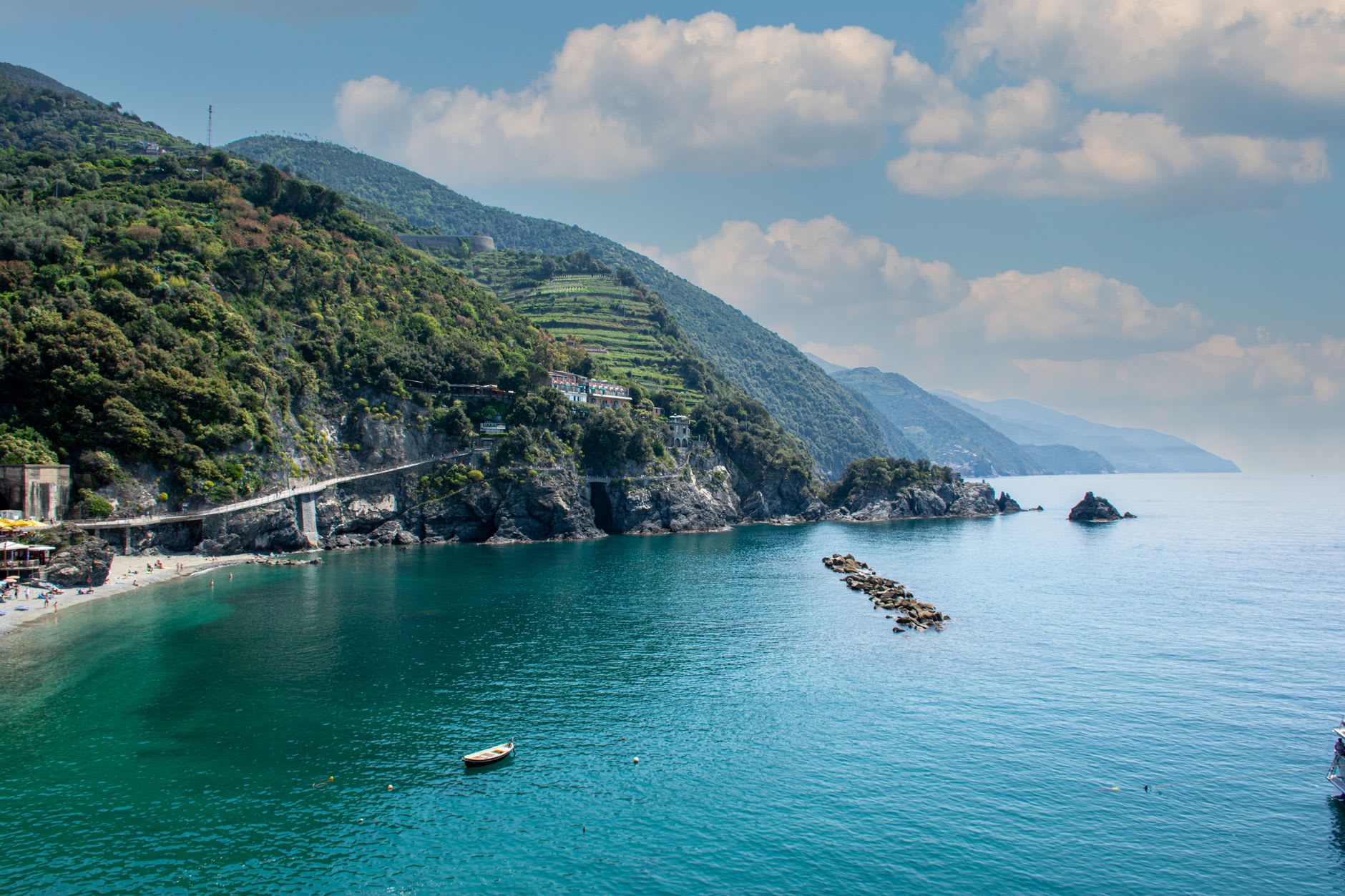
The water at Guvano is the clearest I found anywhere in the Cinque Terre. The absence of boats and the depth of the cove relative to its size keeps it pristine, and swimming here in early morning, before the handful of hikers who know about the place have made their descent, is an experience of such improbable silence that it takes a while to relax into. The sea sounds against the pebbles are the only sound. Small fish approach the shore in the shallow sections. The cliffs hold the heat from the day before.
There were perhaps twenty people on the beach during my visit, on a Saturday in late May. The demographic was almost entirely Italian — the local population who have known this place their whole lives and are not entirely pleased to see me here, which I understood and respected. Two older men were spearfishing along the cliff face with casual competence. A woman had arranged herself across a smooth boulder in a position suggesting this was a weekly practice of long standing. I set up on a patch of pebbles near the water and spent four hours reading and swimming and doing absolutely nothing productive.

The climb back up at the end of the day is the price you pay, and it is a real price. By five in the afternoon, after a day in the sun and several hours of swimming, the thirty-minute ascent to Corniglia demands a focus that is hard to summon. I stopped three times and drank the last of my water and arrived at the top with the slightly hallucinated clarity of someone who has been in the sun too long. Then I walked straight to the bar on the main piazza and drank a glass of cold Vernaccia di Corniglia in approximately forty seconds. The man behind the bar refilled it without being asked.
Bring everything you need. There is no infrastructure down there and no way to get anything once you’re in the cove. Water, food, sun protection, a towel to lie on, something to read if you’re going to be there for hours. Don’t go on a high-sea day — the pebble beach can become unsafe when the swell runs. The best access information is from the Corniglia tourist point near the church.
When to go: May and June before the word gets fully out to summer visitors; September after the August crowds have gone. The cove is accessible year-round but pointless in winter when the sea is cold and the trail is muddy. Aim for a day with a light northeast wind for the calmest water conditions.